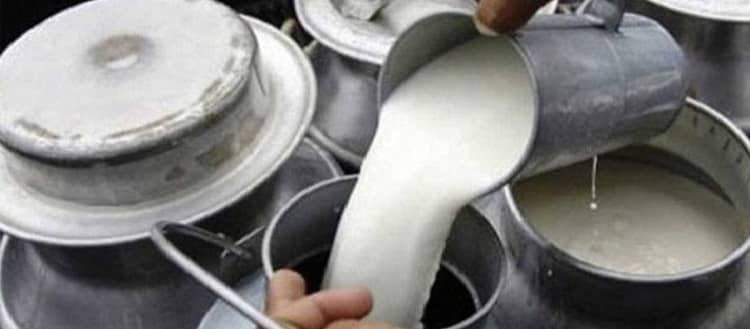
Dairy farmers in Nepal's Kaski district are demanding a minimum procurement price of NPR 80 per litre, arguing that rising production costs and stagnant farm-gate prices are putting increasing pressure on their livelihoods.
The demand was raised by the Saptagandaki Milk Producers Cooperative at a press conference in Pokhara. Farmers said they currently receive between NPR 68 and NPR 71 per litre, depending on milk quality, and that these rates are no longer sufficient to cover production expenses.
Rising Input Costs Squeeze Dairy Farmers
Farmers have highlighted increasing expenditure on several essential inputs, including:
- Animal feed, grain and bran
- Green fodder
- Veterinary medicines
- Labour
- Transportation
- Livestock management
According to dairy farmer Trilochan Lamichhane, milk prices have remained unchanged for three years, while the cost of grain and bran has increased by more than 25%.
He also pointed to monthly increases of NPR 10–15 in grain and bran prices, questioning how farmers could sustain dairy operations without a corresponding revision in milk procurement rates.
Farmers warn that continued pressure on margins could force some producers to leave dairy farming.
Kaski Produces Around 100,000 Litres of Milk Daily
The cooperative highlighted the importance of Kaski's dairy economy and its contribution to local livelihoods.
According to cooperative chairperson Nawaraj Baral:
- Cooperatives collect and distribute approximately 28,000 litres of milk daily.
- Private farms and dairies produce around 70,000 litres daily.
- Total district milk production is estimated at approximately 100,000 litres per day.
Baral said milk production supports not only farmers' incomes but also the rural economy and Nepal's broader economic development.
He cautioned that if procurement prices fail to reflect increasing production costs, farmers may reduce or discontinue dairy activities, potentially affecting national milk availability.
Farmers Seek Fairer Share of Consumer Milk Prices
The demand for a minimum NPR 80 per litre procurement price is also linked to concerns about the gap between consumer prices and the payments received by milk producers.
Farmer Krishna Prasad Adhikari questioned why consumers pay relatively high prices for milk while producers struggle to recover their production costs.
Farmers argue that procurement prices should account for geographical conditions, feed availability, labour expenses, transportation distances and livestock management practices.
The Central Milk Producers Cooperative Organisation has also been pressing the government to increase milk prices, but its demand has not yet been addressed.
Beyond Price Hikes, Farmers Demand Policy Support
In addition to a procurement-price revision, dairy farmers have called for a broader support package to improve the financial sustainability of dairy farming.
Their demands include:
- Timely payments for milk supplied to dairies.
- Better animal healthcare and vaccination services.
- Subsidies on animal feed.
- Financial assistance linked to milk production.
- Free artificial insemination services for livestock.
These measures, farmers believe, would help reduce production risks and improve the long-term viability of dairy operations.
What the Demand Means for Nepal's Dairy Industry
The Kaski farmers' demand highlights a familiar challenge across developing dairy economies: balancing affordable milk for consumers with sustainable returns for producers.
When feed, fodder, labour and transportation costs rise faster than procurement prices, farmers face declining margins. Over time, this can affect investment in animal nutrition, herd management and milk production.
For Nepal's dairy sector, the issue extends beyond an immediate price revision. It raises important questions about procurement-price mechanisms, input-cost support and the role of cooperatives in protecting farmer incomes.
The central challenge is clear: a sustainable dairy supply chain cannot be built if milk producers are unable to cover the cost of producing milk.
Source: Read full story here 29 Nov, 2026 Edited and Reported by
#NepalDairyIndustry #DairyFarmers #MilkProcurement #DairyEconomics #FarmerIncome #DairyNews7x7
Never miss an important dairy update
Follow DairyNews7x7 on Google to get live milk prices, policy alerts, and daily headlines directly in your feed.