
Milk import ban may be lifted in Nepal to prevent shortages
The government plans to lift import restrictions on fluid milk briefly to avert possible shortages during the lean season, officials said.
The Ministry of Agriculture and Livestock Development said it was discussing opening imports for two months. The period April-November is the lean season for milk production and December-March is the flush season.
“The paperwork has been held up as the agriculture secretary is currently on a foreign visit,” said an unnamed ministry official.
“We have received reports that the dairy industry is operating at 30-40 percent capacity due to lack of milk. Imports from India could avert possible shortages in the market,” the official said.
A status report has been prepared and it has been approved by the Nepal Dairy Association, Dairy Industry Association and representatives of cooperatives and farmers.
“The decision to allow imports will be made based on the report,” the official added. “If 120 tonnes of milk is allowed to be imported daily, it will not only fill the supply gap but also leave enough to be processed into butter, chocolate and biscuit.”
Last September too the Agriculture Ministry had lifted the import ban for a month to fulfil domestic demand. Traders had been permitted to import 120 tonnes of milk daily, but they were able to obtain only 800 tonnes in one month because of shortages in India, said an official.
Nepal’s dairy industry is currently facing a milk shortage of 300 to 350 tonnes daily, according to the Agriculture Ministry.
On April 18, state-owned Dairy Development Corporation (DDC) and private business organisations Nepal Dairy Association and Dairy Industry Association had jointly written to the ministry to lift the ban on milk imports.
“The import cost of a 20,000-litre tanker of milk is around Rs2 million,” said Prahlad Dahal, president of the Nepal Dairy Association. “Only big dairies are able to import fluid milk. Powdered milk can be imported from other countries too,” he said.
“More than 3,000 tonnes of milk arrive in the market daily formally and informally. Currently, there is a shortage of 150 tonnes of milk daily,” he said.
According to a report of Commercial Agriculture for Smallholders and Agribusiness, the consumption requirement of milk in Nepal is 92 litres per person annually while the country produces 72 litres per person, fulfilling 80 percent of its requirement.
The report estimates that the country’s average current deficit is around 550 tonnes of fluid milk per day with 10-20 percent variability during the lean season and the flush season.
The Department of Livestock Services says milk production is rising at the rate of 4 percent annually, but demand has been growing at 8 percent.
In India, milk production remained stagnant in 2022-23 due to lumpy skin diseases in cattle across several states and the effect of the Covid-19 pandemic in the form of stunting of the animals, according to the Financial Express.
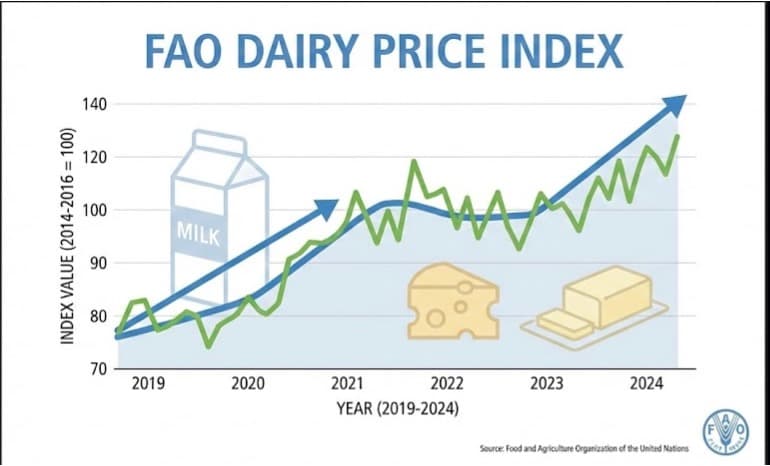
India’s milk production was reported to be 221 million tonnes in 2021-22. According to the latest data, prices of milk and milk products in India have risen by 14 to 15 percent in the past 15 months mainly due to the higher demand.
In Nepal, milk prices have increased twice in a year, reaching Rs110 per litre. As per DDC, its standard milk sold in blue packets costs Rs97 per litre and full cream milk sold in green packets costs Rs130 per litre.
In March, private dairy associations jacked up the retail price of milk by Rs14 per litre after the government raised the price of raw milk paid to farmers by Rs9 per litre. DDC also raised the price of different types of milk by up to Rs8 per half-litre.
According to the Commercial Livestock Survey, a report published by the National Statistics Office in 2021, there are 6,486 medium and large commercial livestock enterprises in Nepal.
According to the survey, 15,380 dairy cows produce 45,803 tonnes of milk during their average lactation cycle, while 10,841 buffaloes give 23,231 tonnes of milk on average.
When milk was in abundance, DDC would produce powdered milk and store it for use during the lean season. But this year, it could not produce powdered milk owing to a short supply of raw milk.
In 2017, Nepal imported milk worth $18.7 million. The government imposed import restrictions on skimmed milk powder in 2018 after imports started to balloon. The ban was briefly lifted in 2019.
But in April that year, farmers objected to the re-opening of imports saying that they could not sell their milk. The government then placed a total ban on the import of skimmed milk powder from India.
Nepal has maintained a ban on Chinese milk and dairy products since 2008.
Rajendra Prasad Yadav, executive director at the National Dairy Development Board, said in a recent interview with the Post that milk output had dropped because the industry had not been able to recover after Covid-19 and the prevalence of lumpy skin disease among the dairy animals.
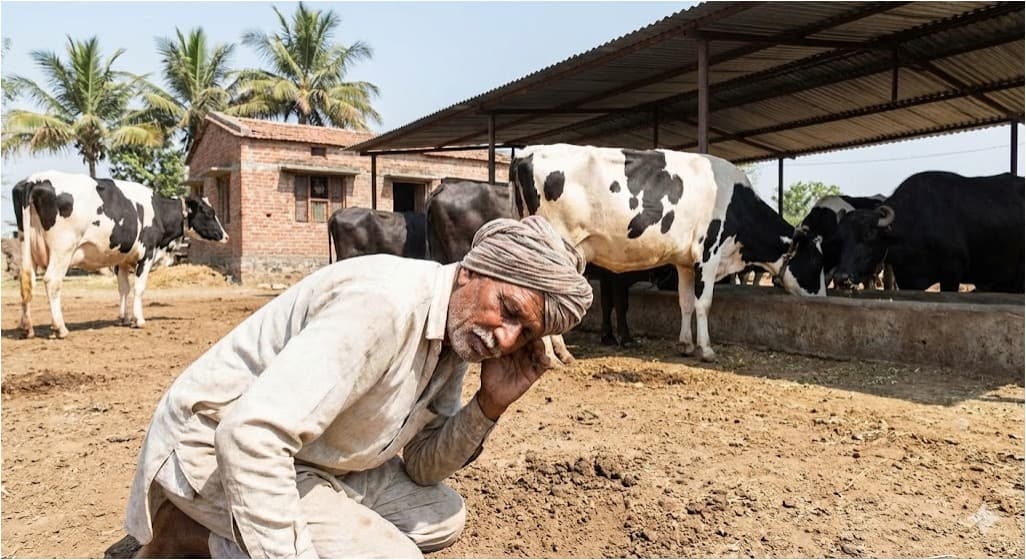
Commercial animal husbandry has been badly affected by the Covid-19 pandemic as many farmers abandoned it after incurring massive losses.
The reduction in demand during the pandemic also caused financial stress to the farmers and they started cutting their budgets to buy expensive animal fodder.