
Logo
IndianGlobalBlogsPublicationsPodcastsMarketAboutContact
Logo
IndianGlobalBlogsPublicationsPodcasts
7News
TN Minister Urges Farmers to Adopt Tech for Value Addition in DairyListen to the Farm, Not the Farmer—The New Productivity LensWhat’s Driving Change In Beverages, FMCG And Dairy in 2025ED begins money laundering probe in dairy investment fraud caseIndo-Brazil pact aims to boost cattle genetics and dairy yield

Indian Dairy News

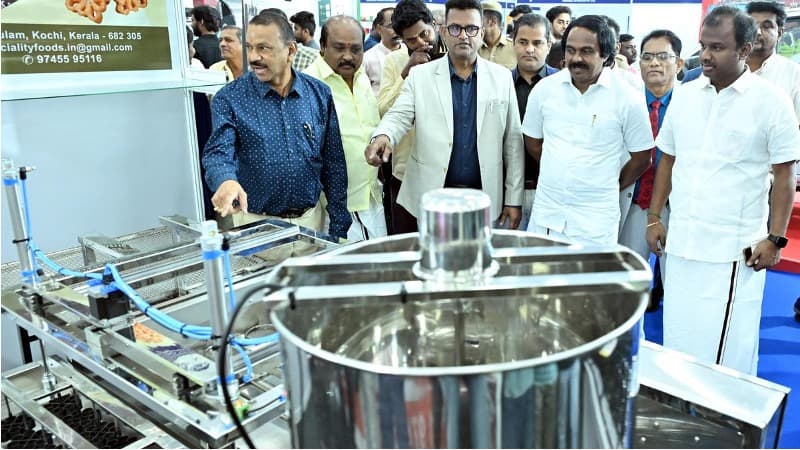
TN Minister Urges Farmers to Adopt Tech for Value Addition in Dairy
Dec 12, 2025

TN Minister Urges Farmers to Adopt Tech for Value Addition in Dairy

In Coimbatore this week, Tamil Nadu’s Minister for Milk and Dairy Development, Mano Thangaraj, called on dairy farmers to embrace modern technologies to boost productivity and value addition across th...Read More

Listen to the Farm, Not the Farmer—The New Productivity Lens
Dec 12, 2025

Listen to the Farm, Not the Farmer—The New Productivity Lens

India’s dairy sector, valued at nearly $30 billion, has reached a point where incremental changes will not deliver the next breakthrough. For decades, improvement programs have focused on what farmers...Read More

What’s Driving Change In Beverages, FMCG And Dairy in 2025
Dec 12, 2025

What’s Driving Change In Beverages, FMCG And Dairy in 2025

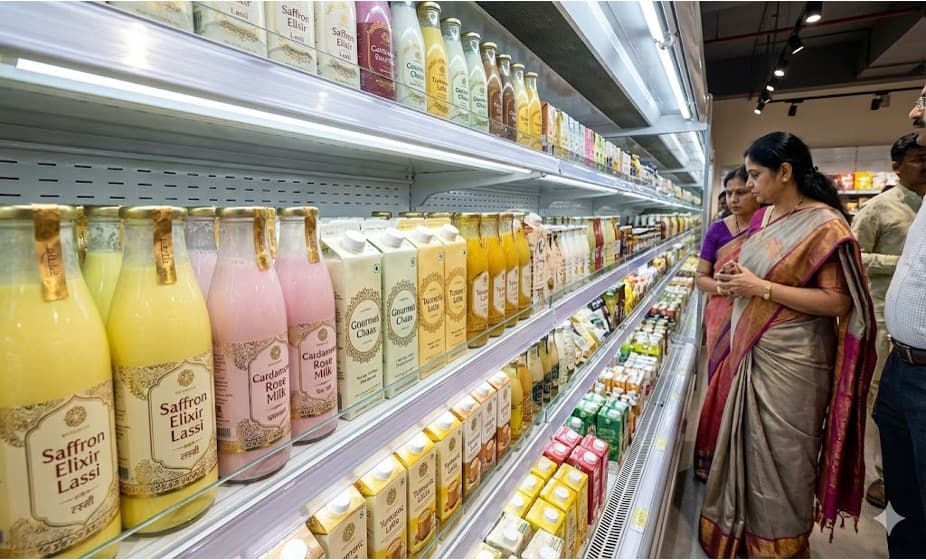
India’s retail landscape in 2025 was marked by a decisive shift in how consumers choose, consume and connect with brands. From beverages to daily nutrition and even the most essential dairy products,...Read More

Latest Blogs

See More
More Milk, Less Money: India’s Dairy Crisis
Dec 01, 2025

More Milk, Less Money: India’s Dairy Crisis

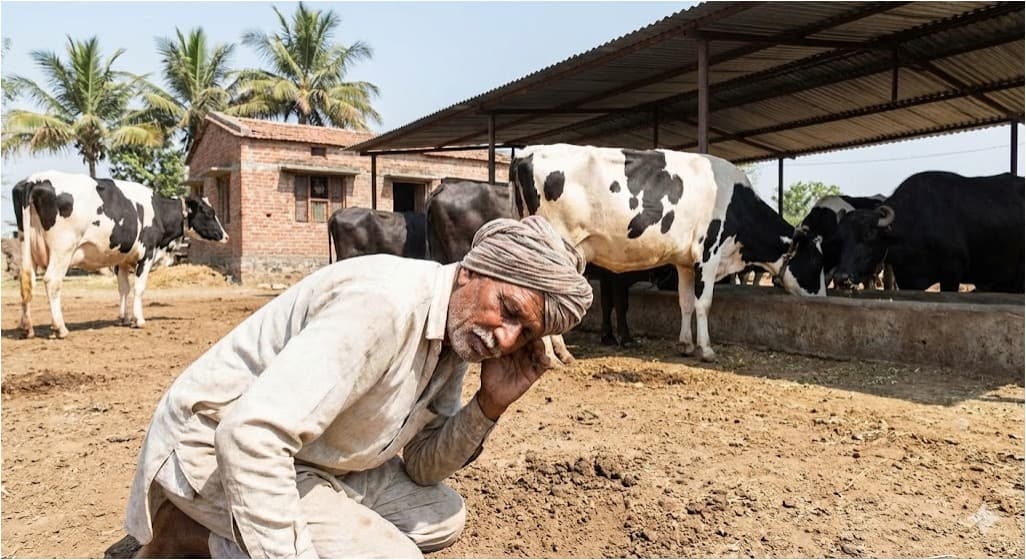
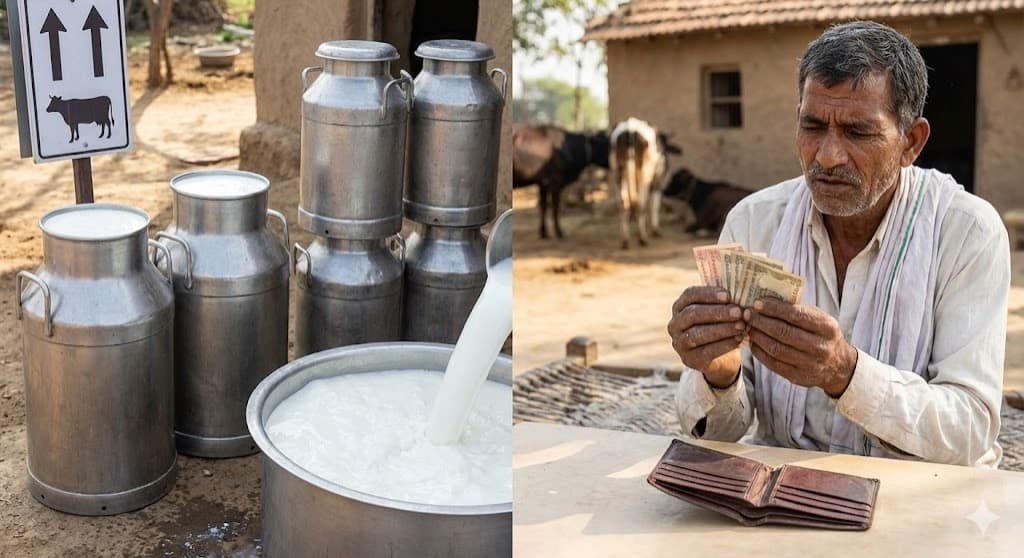
With the release of the BAHS 2025 summary report, I felt compelled to deep dive into its findings and reflect on the real progress and challenges facing India’s dairy sector. Over the last six years,...Read More

India Milk Prices: Cost Shock and Procurement Pressure
Nov 28, 2025

India Milk Prices: Cost Shock and Procurement Pressure

Milk prices in India face upward pressure as rising feed costs and procurement hikes reshape farm economics. Insight on dairy procurement, feed costs, and market outlook. Official government and coope...Read More

Stop Blaming, Start Claiming: Livestock’s Carbon Credit Future
Nov 16, 2025

Stop Blaming, Start Claiming: Livestock’s Carbon Credit Future

This week, I had the opportunity to attend an Agri Carbon Masterclass conducted by CII FACE. The deliberations, case studies, and discussions presented during the session were both insightful and thou...Read More

India Powers the Gulf’s Dairy Revolution -Gulf Food 2025
Oct 31, 2025

India Powers the Gulf’s Dairy Revolution -Gulf Food 2025

As Gulf Food Manufacturing prepares to open its doors from November 4–6 in Dubai, Indian dairy product and equipment manufacturers have a unique opportunity to explore one of the most promising region...Read More

Global Dairy News

Why the global milk business needs a structural shake-up
Dec 08, 2025

Why the global milk business needs a structural shake-up

The New Zealand dairy stalwart Fonterra has sold its consumer dairy-brands (milk, butter, cheese) — including “Anchor” and “Mainland Cheese” — to French agribusiness giant Lactalis in late October 202...Read More

Raw-milk prices in Europe hit 5-yr low; ripple effect looms
Dec 07, 2025

Raw-milk prices in Europe hit 5-yr low; ripple effect looms

European raw-milk prices have plunged to their lowest in five years, as oversupply and weak demand weigh on dairy markets across the region. According to recent data from DCA Market Intelligence B.V.,...Read More

Global food prices ease; FAO dairy index slips — impact looms
Dec 06, 2025

Global food prices ease; FAO dairy index slips — impact looms

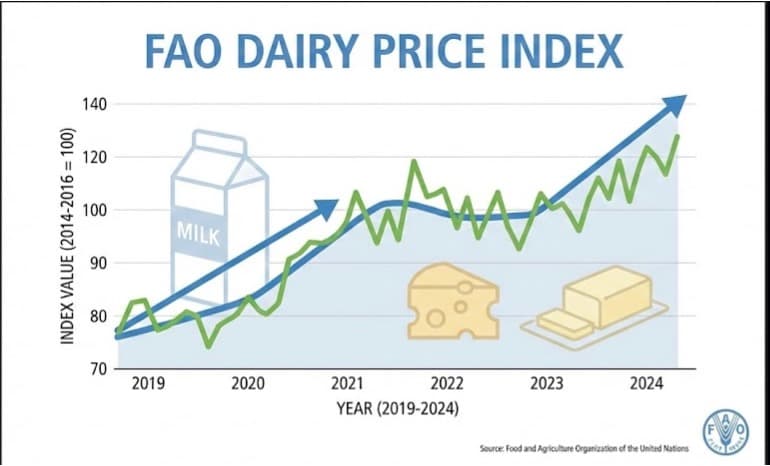
The FAO Dairy Price Index averaged 137.5 points in November, down 4.4 points (3.1 percent) from October and 2.4 points (1.7 percent) from its value a year ago. International dairy prices fell for the...Read More

Dairy News 7x7

Your trusted source for all the latest dairy industry news, market insights, and trending topics.

FOLLOW US
CATEGORIES
  • Global News
  • Indian News
  • Blogs
  • Publications
  • Podcasts
SUBSCRIBE TO OUR NEWSLETTER

Stay informed with the latest updates and trending news in the dairy industry.

No spam, unsubscribe at any time

GET IN TOUCH
C-49, C Block, Sector 65,
Noida, UP 201307
+91 7827405029dairynews7x7@gmail.com

© 2025 Dairy News 7x7. All Rights Reserved.

Terms of ServicePrivacy Policy

Milk Cooling Tank Compatible with  Revised F-Gas Regulation Introduced by Wedholms

By DairyNews7x7•Published on April 24, 2024

  • Wedholms is introducing the first milk cooling tank in the European market to use CO2 as refrigerant in a standard cooling system of the direct expansion cooling type

    •    Natural refrigerants, such as CO2, will be required under the revised F-gas Regulation, signed into EU law on March 11 this year

    •    From January 2025, all new self-contained refrigeration equipment, except chillers, installed in the EU must use refrigerants with a GWP (Global Warming Potential) value of less than 150

The first milk cooling tank in the European market to use CO2 as refrigerant in standard cooling systems of the direct expansion cooling type has been introduced by Wedholms. The tank is compatible with the revised F-gas Regulation that will be mandatory in the European Union from January next year.

The DFC 953 range of milk cooling tanks is available for robotic milking with 1-8 robots and with capacity ranging from 3,200 litres to 30,000 litres.

Synthetic refrigerants, such as hydrofluorocarbons, are currently being phased out by the European Union. According to the revised F-gas Regulation, recently signed into EU law, all new self-contained refrigeration equipment, with the exception of chillers, installed from January 2025 must use refrigerants with a GWP (Global Warming Potential) value of less than 150. Existing systems may still be used and repaired for the remainder of their economic life. However, effective from 2032, refrigeration systems using refrigerants with a GWP value above 750, apart from chillers, can no longer be refilled during maintenance and service.

From 2027, further restrictions on the maximum amount of synthetic refrigerants that can be placed in the EU market will be introduced, capping the amount at around 20 million tonnes CO2 equivalent per year. This will increase the price of synthetic refrigerants, making milk cooling tanks with outdated technology more costly to purchase and operate, thus incentivising investments in milk cooling tanks using technology that is more modern and environmentally sustainable.

“Refrigerants that are environmentally friendly are being introduced across the board and milk cooling tanks is no exception. Refrigeration is an essential process in the farming and dairy industries and we need to use processes that work in harmony with the natural environment that we depend on,” says Stefan Gavelin, managing director of Wedholms.

Early refrigerants back in favour

The phasing out of harmful refrigerants is a process that has been ongoing for nearly 40 years. During the 1980s, the first evidence of holes in the ozone layer started to emerge. Since then, successive regulatory regimes have heralded new product generations of refrigerants, each less harmful than the previous one.

Early refrigeration systems, back in the 1800s, used natural refrigerants such as CO2, ammonia or hydrocarbons. However, these refrigerants were not practical to use with the manufacturing technology and safety practices used at the time. In the 1930s, freon was introduced, providing effective refrigeration at low pressure while also improving safety.

Freon started to be phased out by the ratification of the Montreal protocol in the 1980s, due to its high ozone depletion potential. Since then, there has been a shift of focus back towards natural refrigerants again. CO2 has a GWP of 1 and an ozone depletion potential of 0, making its environmental impact neutral.

“We are coming full circle, with natural refrigerants once again becoming the norm. CO2 refrigeration requires a high operating pressure, but thanks to technological advancements, such systems have, over the last decade, become viable for both commercial and industrial use, in many different applications.”

“At Wedholms, we have chosen to work with CO2 as refrigerant. Ammonia is toxic as well as corrosive; hydrocarbons, such as propane, are flammable. CO2 have none of these disadvantages. In addition, it is readily available in large quantities and at low cost,” says Gavelin.

Swipe to continue reading

Previous Article

Next Article