
Lumpy Skin Disease:A livelihood crisis for India’s small dairy farmers
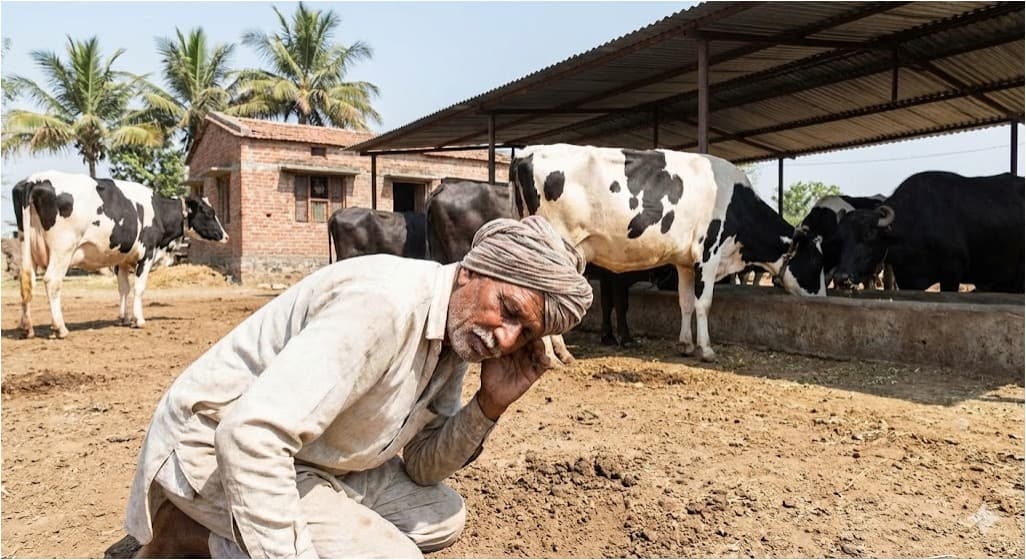
It was on a July day that Lakshmi Devi noticed swelling on her cow Laalri’s legs. The next day, the animal’s body was covered with lumps. Devi called the local veterinarian to find out that a viral illness by the name of lumpy skin disease (LSD) has been spreading in her district of Bikaner in Rajasthan.
She was advised by the doctor to isolate the sick cow. But since her house doesn’t have much space, she created a 20 feet distance between Laalri and other cows. In the next five days, the infection spread to two of her other cows.
“We got very tense because it happened so suddenly. The cow was alright a day before the lumps started to appear. And then, it just fell sick and stopped producing milk. We later got to know that other cows in the village were also falling sick,” Devi, who hails from 1 LKD (Lunkaransar Distributary) village in Lunkaransar taluka, told Down To Earth.
Devi’s family of five is dependent on livestock breeding for their livelihood and LSD has caused a serious dent on their income. The family does not own any agricultural land and hence leases some land for farming. But selling milk is their main source of sustenance.
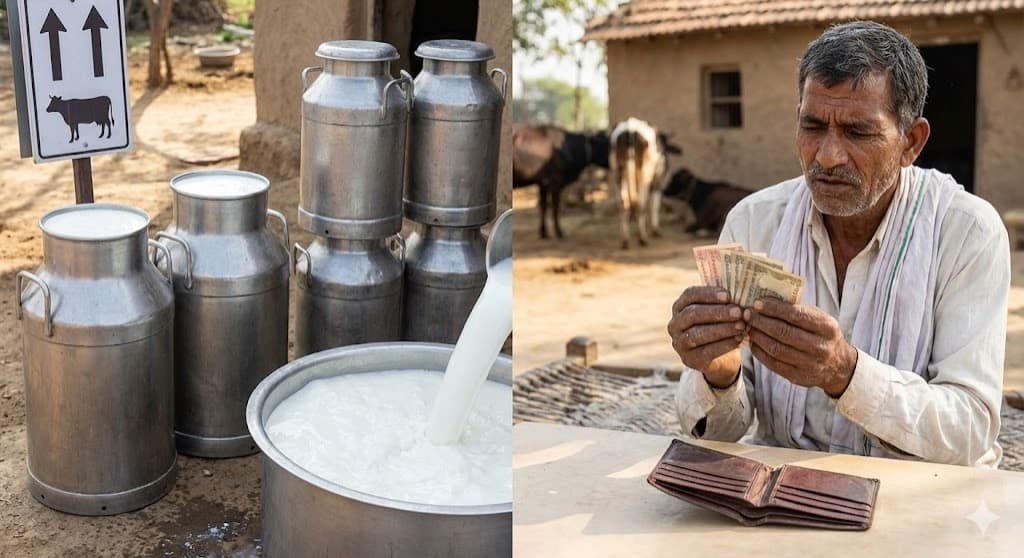
However, the family’s total milk supply to the local dairy has come down by a huge 33 litres per day, a direct income loss of Rs 1,155 daily since the epidemic began.
The family has 13 cows, of which four were producing 40 litres milk before the virus struck. This resulted in an income of Rs 1,400 per day. Now, only two cows are producing just seven litres milk per day.
Laalri, who was named for her red coat colour, has not recovered even in the second week of September and has now lost the colour and the shine of her hair.
She was a healthy cow before the disease, weighing above 250 kilograms and producing 10 litres of milk on average daily. Since the disease, she has lost over 100 kg and now requires assistance to stand on her own feet.
Most families in Rajasthan have recorded losses in milk production after the epidemic. This has dented their livelihood.
Livestock farming is the mainstay for most of India’s poorest farmers, especially in arid and semi-arid regions. The sector contributed 4.35 per cent of total gross value added in 2019-20.
It acts as an insurance during environmental stresses and has been more dependable than crops, especially for small and marginal farmers.
Small and marginal farmers (who have less than two hectares (ha) of land) have a higher share in livestock farming than their medium and large counterparts.
For instance, 10.9 per cent of those having 0.01 ha of land are engaged in livestock production, as opposed to 1.2 per cent and 0.8 per cent of those having 4-10 ha of land and above 10 ha land respectively.
This is according to Situation Assessment of Agricultural Households and Land and Livestock Holdings of Households in Rural India, 2019 prepared by the National Statistical Office.
The dependency on livestock for their income is also more among marginal farmers, as is visible from survey data. Livestock share in total farm income is higher among smallholders and even more than the cultivation of crops for marginal farmers, according the survey.
Rajasthan has the highest livestock population in the country (56 million). The sector is critical for scores of farmers like Devi in the state. The LSD outbreak poses a threat to their livelihood.
The maximum deaths due to the epidemic have happened among pregnant cattle, with farmers losing out both on productive cattle and on the opportunity cost from the calf.
Iqbal Singh and his wife Harpinder Kaur lost their Holstein-Friesian (HF) dairy cow, the only dairy cattle they own, to LSD in August. HF are known to be one of the world’s highest producing dairy animals.
“We bought it for Rs 55,000 last year and its cost was Rs 80,000 in the market currently. It was a very healthy cow, giving about 10-11 litres of milk two times a day. It was about to deliver before it got the infection,” Singh said.
In India, nearly 100,000 cattle have died from LSD and a rough calculation would suggest a direct economic loss of Rs 300 crore till now. This is given the minimum market value of an indigenous or a cross-breed cow was Rs 30,000.
This excludes opportunity cost like the loss on account of milk production due to the cattle deaths, loss in milk yield of recovered cattle, delay in next conception, loss in body mass, abortions in pregnant cattle and infertility in others.
According to the Food and Agriculture Organisation, the animals may become debilitated for up to six months, with a drop in milk production, caused by loss of feed intake due to mouth lesions.
The milk production loss could be between 26 per cent and 42 per cent in indigenous cattle and up to 50 per cent in exotic breeds.
LSD could cause huge economic losses in affected Asian countries, with direct livestock and production losses estimated to be worth up to $1.46 billion, according to a research paper published in January 2022 in The Veterinary Journal.
Indirect losses resulting in trade barriers including the export of live animals, meat and meat products, dairy products and hides are likely to be higher than direct losses and are estimated at $5.51 billion.
Another worry among cattle owners is that marks and lesions will remain on the animals’ skin even after recovery. This will deteriorate the value of the cow if it is to be sold and also the value of leather in case of animal hides.
Source : Down To Earth 30th Sep 2022 by Shagun