


Is avian influenza a threat to the dairy industry?
The ongoing highly pathogenic H5N1 avian influenza – commonly known as bird flu – outbreak is one of the hardest hitting in history. Since 2020, it has led to the deaths of “an unprecedented number of deaths in wild birds and poultry”, according to the WHO. It spread to North America in 2021 and has wreaked havoc on poultry populations since then, leading to the suspension of meat sales from certain states earlier this month.
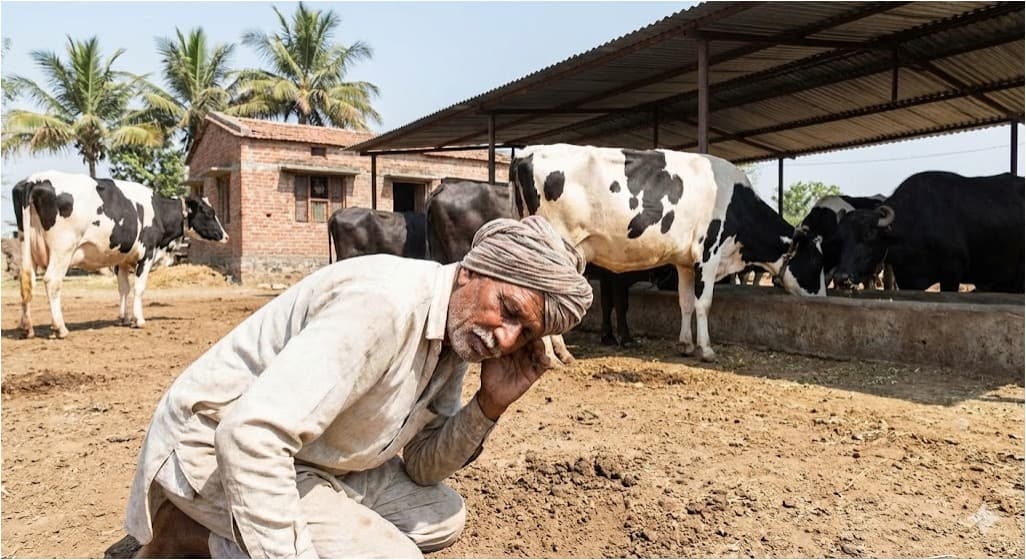
More concerning still is the spread from poultry to mammal populations, particularly cows. At the time of writing, 34 herds of dairy cattle across nine US states are confirmed to be affected, raising fears in the media over a lack of testing. This is due in part to the confirmation that the disease has spread in at least one case from cattle to humans. Since the Covid-19 pandemic, governments and the general public are naturally worried about the costs of ignoring up-and-coming public health risks, especially of the zoonotic kind.
There is good news, however. Only dairy cattle have been infected so far and the spread of the infection, too, appears to be low.
In an interview with Just Food, Alexander Anton, secretary general of the European Dairy Association (EDA), said: “You have 33 dairy holdings that are affected out of around 30,000 in the US. In Europe, in terms of poultry – the species that is most concerned by avian influenza – we haven’t seen a lot of outbreaks last year. We’ve known for at least ten years that it spreads to other animals. We had foxes ten years ago but we haven’t seen anything at European level [for cattle].”
Anton also noted that it is currently flu season and expects the spread to slow as the weather warms.
From the available evidence, it also seems pasteurisation is capable of deactivating the virus, keeping milk and cheese safe even if unknowingly taken from sick cows. This is good news for producers, as the US Food and Drug Administration has also found that one in five of its tested retail samples contain viral fragments of HPAI.
Mitigation
Tracking and containing the virus remains vitally important. While many cows appear to be asymptomatic, and still capable of producing milk, the risks of further mutation increase the more widely the disease is spread.Dr. Daisy May, veterinary surgeon and current writer for All About Parrots, told Just Food: “The public health risks remain relatively low for the time being. But we have to take this incursion into the cattle industry extremely seriously from a food supply standpoint.
“Intensive testing and monitoring on farms, at auctions, processing facilities – anywhere cattle co-mingle – will be absolutely critical for early detection and containing hot spots. Depopulation and virus elimination protocols may need to be activated at any newly identified infected premises to prevent further spread.”
Testing will reduce international fears over US beef and dairy supplies, Dr. May said. “You can bet international trade partners will be scrutinising the US response closely, too, looking for any chance to rationalise import restrictions that could devastate the beef and dairy industries economically.”
The US dairy export market is worth around $8bn and the beef market nearly $10bn. Beef currently seems unaffected by the virus according to USDA tests, but that hasn't stopped Colombia becoming the first country to impose restrictions on US beef from states where dairy cattle are infected.
Despite the low public health risk, Dr. May still sees the coming months as key to maintaining faith in the industry. “From my point of view, this is one of those make-or-break moments where coordination between state/federal animal health officials, industry groups, producers and veterinarians on the ground is paramount. We can't afford a disjointed, piecemeal effort against a virus continuing to prove its ability to adapt and find new hosts.”
US domestic outlook
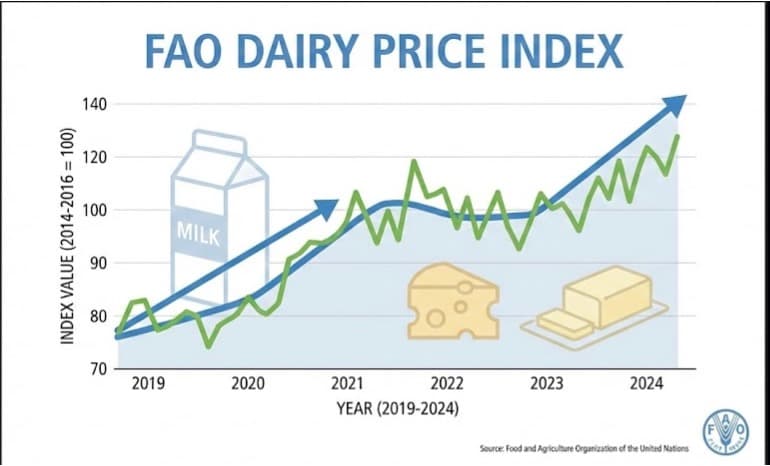
The export market for dairy, while large in absolute terms, is minimal compared to its domestic sales. Luckily for producers, there do not appear to have been any notable impacts on supply.The latest US Department of Agriculture (USDA) report, published on 17 April, suggests that dairy yield was down around 0.4% year-on-year in February, continuing an eight-month-long trend, and makes no mention of avian flu as a cause. Dairy prices remain stable, with decreases in wholesale milk and cheese costs and minor increases in those of butter.
The major industry association National Milk Producers Federation (NMPF) is also keen to highlight that thus far risks to public health and the supply chain remain low.
“It’s important to remember what this situation is and what it isn’t,” Alan Bjerga, the NMPF's executive vice president of communications and industry relations, said.