
Logo
IndianGlobalBlogsPublicationsPodcastsMarketAboutContact
Logo
IndianGlobalBlogsPublicationsPodcasts
7News
TN Minister Urges Farmers to Adopt Tech for Value Addition in DairyListen to the Farm, Not the Farmer—The New Productivity LensWhat’s Driving Change In Beverages, FMCG And Dairy in 2025ED begins money laundering probe in dairy investment fraud caseIndo-Brazil pact aims to boost cattle genetics and dairy yield

Indian Dairy News

TN Minister Urges Farmers to Adopt Tech for Value Addition in Dairy
Dec 12, 2025

TN Minister Urges Farmers to Adopt Tech for Value Addition in Dairy

In Coimbatore this week, Tamil Nadu’s Minister for Milk and Dairy Development, Mano Thangaraj, called on dairy farmers to embrace modern technologies to boost productivity and value addition across th...Read More

Listen to the Farm, Not the Farmer—The New Productivity Lens
Dec 12, 2025

Listen to the Farm, Not the Farmer—The New Productivity Lens

India’s dairy sector, valued at nearly $30 billion, has reached a point where incremental changes will not deliver the next breakthrough. For decades, improvement programs have focused on what farmers...Read More

What’s Driving Change In Beverages, FMCG And Dairy in 2025
Dec 12, 2025

What’s Driving Change In Beverages, FMCG And Dairy in 2025

India’s retail landscape in 2025 was marked by a decisive shift in how consumers choose, consume and connect with brands. From beverages to daily nutrition and even the most essential dairy products,...Read More

Latest Blogs

See More
More Milk, Less Money: India’s Dairy Crisis
Dec 01, 2025

More Milk, Less Money: India’s Dairy Crisis

With the release of the BAHS 2025 summary report, I felt compelled to deep dive into its findings and reflect on the real progress and challenges facing India’s dairy sector. Over the last six years,...Read More

India Milk Prices: Cost Shock and Procurement Pressure
Nov 28, 2025

India Milk Prices: Cost Shock and Procurement Pressure

Milk prices in India face upward pressure as rising feed costs and procurement hikes reshape farm economics. Insight on dairy procurement, feed costs, and market outlook. Official government and coope...Read More

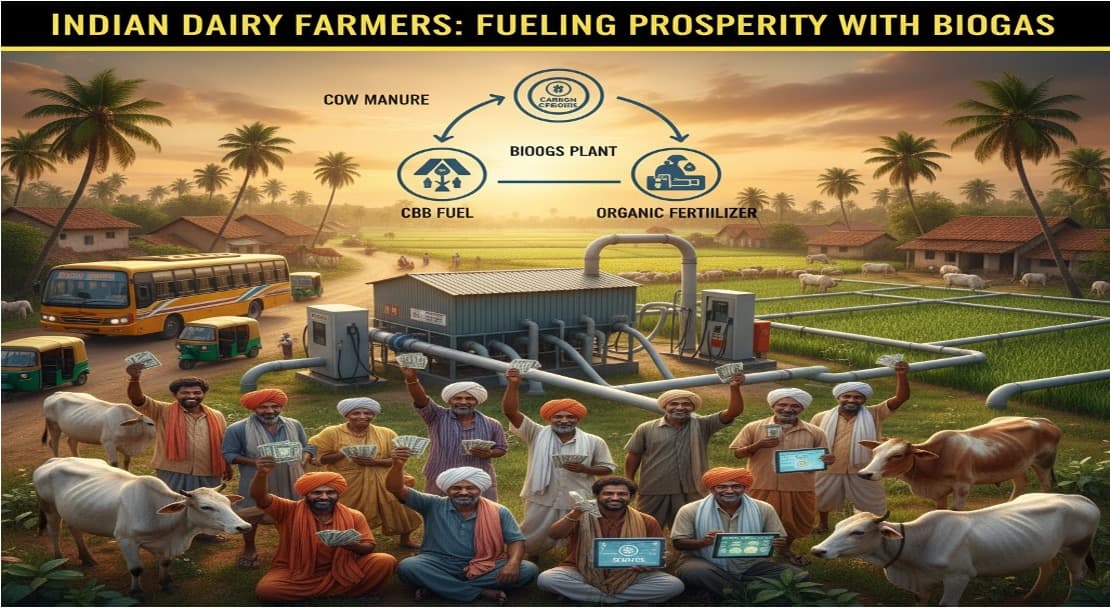
Stop Blaming, Start Claiming: Livestock’s Carbon Credit Future
Nov 16, 2025

Stop Blaming, Start Claiming: Livestock’s Carbon Credit Future

This week, I had the opportunity to attend an Agri Carbon Masterclass conducted by CII FACE. The deliberations, case studies, and discussions presented during the session were both insightful and thou...Read More

India Powers the Gulf’s Dairy Revolution -Gulf Food 2025
Oct 31, 2025

India Powers the Gulf’s Dairy Revolution -Gulf Food 2025

As Gulf Food Manufacturing prepares to open its doors from November 4–6 in Dubai, Indian dairy product and equipment manufacturers have a unique opportunity to explore one of the most promising region...Read More

Global Dairy News

Why the global milk business needs a structural shake-up
Dec 08, 2025

Why the global milk business needs a structural shake-up

The New Zealand dairy stalwart Fonterra has sold its consumer dairy-brands (milk, butter, cheese) — including “Anchor” and “Mainland Cheese” — to French agribusiness giant Lactalis in late October 202...Read More

Raw-milk prices in Europe hit 5-yr low; ripple effect looms
Dec 07, 2025

Raw-milk prices in Europe hit 5-yr low; ripple effect looms

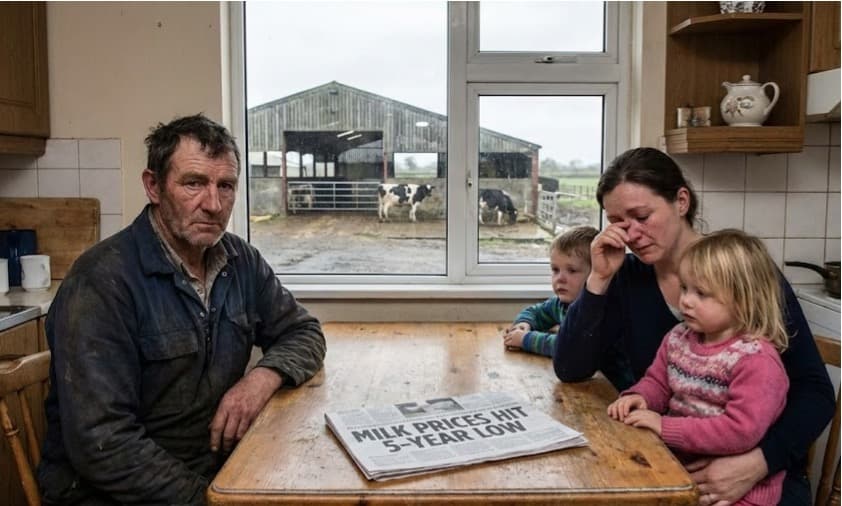
European raw-milk prices have plunged to their lowest in five years, as oversupply and weak demand weigh on dairy markets across the region. According to recent data from DCA Market Intelligence B.V.,...Read More

Global food prices ease; FAO dairy index slips — impact looms
Dec 06, 2025

Global food prices ease; FAO dairy index slips — impact looms

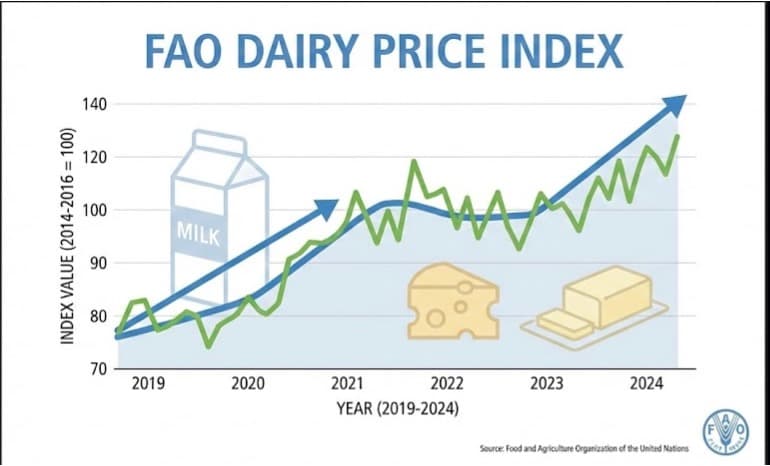
The FAO Dairy Price Index averaged 137.5 points in November, down 4.4 points (3.1 percent) from October and 2.4 points (1.7 percent) from its value a year ago. International dairy prices fell for the...Read More

Dairy News 7x7

Your trusted source for all the latest dairy industry news, market insights, and trending topics.

FOLLOW US
CATEGORIES
  • Global News
  • Indian News
  • Blogs
  • Publications
  • Podcasts
SUBSCRIBE TO OUR NEWSLETTER

Stay informed with the latest updates and trending news in the dairy industry.

No spam, unsubscribe at any time

GET IN TOUCH
C-49, C Block, Sector 65,
Noida, UP 201307
+91 7827405029dairynews7x7@gmail.com

© 2025 Dairy News 7x7. All Rights Reserved.

Terms of ServicePrivacy Policy

Indian agriculture must balance profits with sustainability

By DairyNews7x7•Published on August 15, 2023

As we consider the imperative global food transition, a nuanced understanding of India’s agricultural  landscape is crucial. India’s “White Revolution” or “Operation Flood,” initiated in the 1970s, ushered in a dairy boom that transformed India into the world’s largest milk producer.

But while this has enhanced milk productivity, it has also raised significant environmental and societal challenges. The shift towards intensive dairy farming practices has led to overgrazing, degradation of grazing lands, and higher emissions of methane – a potent greenhouse gas. Research by the Indian Institute of Science demonstrates that livestock farming accounts for 7.8% of India’s total green house gas emissions  , with dairy farming being a significant contributor.

Moreover, the concentration of dairy cooperatives in India’s western and southern regions has created economic disparities. While the White Revolution aimed to augment rural incomes and offer nutrient-rich food to the masses, it unintentionally marginalised small farmers, who found themselves unable to compete with larger, better-equipped dairy cooperatives. Notwithstanding Operation Flood’s success, it has led to lopsided wealth distribution in India’s dairy sector.

This begs the question: why aren’t businesses listening? Why is there a seeming disinterest in sustainable practices?

The myopia of profit-driven corporations often obscures the long-term need for sustainability. The current economic system, with its focus on growth and shareholder value, propels businesses towards cost-cutting and resource exploitation. Environmental degradation, animal welfare, and  public health  are typically sidelined in the pursuit of maximising profits.

Take India’s poultry industry, for instance, which was valued at ₹900 billion ($12 billion) in 2019, according to the National Institute of Food Technology Entrepreneurship and Management. It is characterised by intensive farming practices that lead to environmental degradation and animal welfare concerns. The profit question often overshadows these pressing issues, leaving them largely unaddressed.

However, the mantle of change should not be shouldered solely by the corporate world. The Indian government has an indispensable role in incentivising sustainable practices. While India’s action plan on climate change  acknowledges the necessity for sustainable agriculture, enforcement to ensure corporate accountability requires bolstering.

The global food system’s complexity adds another layer of challenge. Governments, corporations, civil society organizations, and international entities such as the United Nations all play a part, each with their distinct interests and agendas. Meaningful change demands a concerted and collective effort—a challenge that often leads to an impasse.

In his book “Sixty Harvests Left,” Philip Lymbery explores the economic consequences of ignoring planetary boundaries in food production . He highlights the conflict between short-term corporate profits and environmental sustainability. Lymbery ends with a call for a global shift at the UN level from industrial agriculture towards planet-friendly diets. This transformation involves regenerative production practices, halving global meat and dairy production within 30 years, and embracing better land-use strategies, such as rewilding and ending deforestation. His analysis underscores the urgent need for collective action from corporations, governments, civil society, and the UN to safeguard our planet.

Corporations need to shift from being merely profit-centric to embedding sustainability as a core business value. Governments need to enact and enforce robust regulations, hold corporations accountable, and incentivise sustainable practices. Civil society, with its power to mobilise and sway public opinion, should continue advocating for change and holding governments and corporations accountable. The United Nations must foster dialogue and instigate necessary policy reforms.

Only through collective efforts can we hope to secure a future that truly embraces sustainability.

Swipe to continue reading

Previous Article

Next Article