

Logo
IndianGlobalBlogsPublicationsPodcastsMarketAboutContact
Logo
IndianGlobalBlogsPublicationsPodcasts
7News
TN Minister Urges Farmers to Adopt Tech for Value Addition in DairyListen to the Farm, Not the Farmer—The New Productivity LensWhat’s Driving Change In Beverages, FMCG And Dairy in 2025ED begins money laundering probe in dairy investment fraud caseIndo-Brazil pact aims to boost cattle genetics and dairy yield

Indian Dairy News

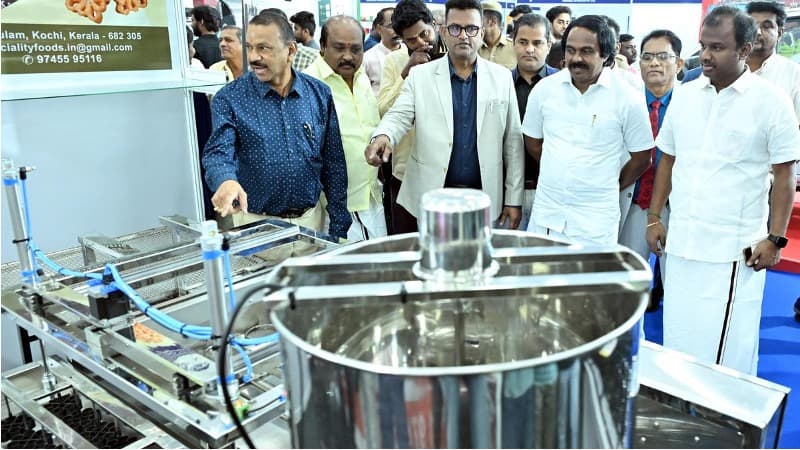
TN Minister Urges Farmers to Adopt Tech for Value Addition in Dairy
Dec 12, 2025

TN Minister Urges Farmers to Adopt Tech for Value Addition in Dairy

In Coimbatore this week, Tamil Nadu’s Minister for Milk and Dairy Development, Mano Thangaraj, called on dairy farmers to embrace modern technologies to boost productivity and value addition across th...Read More

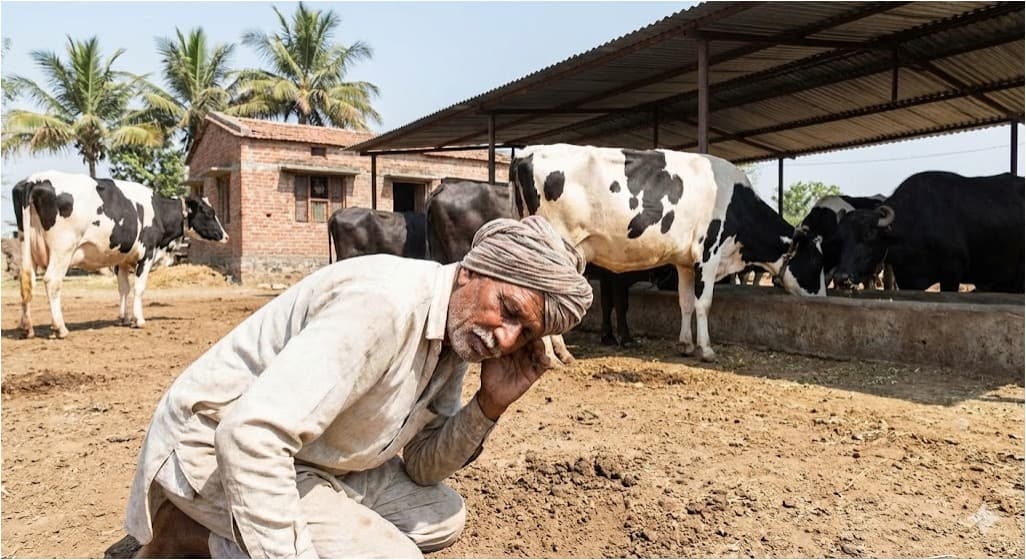
Listen to the Farm, Not the Farmer—The New Productivity Lens
Dec 12, 2025

Listen to the Farm, Not the Farmer—The New Productivity Lens

India’s dairy sector, valued at nearly $30 billion, has reached a point where incremental changes will not deliver the next breakthrough. For decades, improvement programs have focused on what farmers...Read More

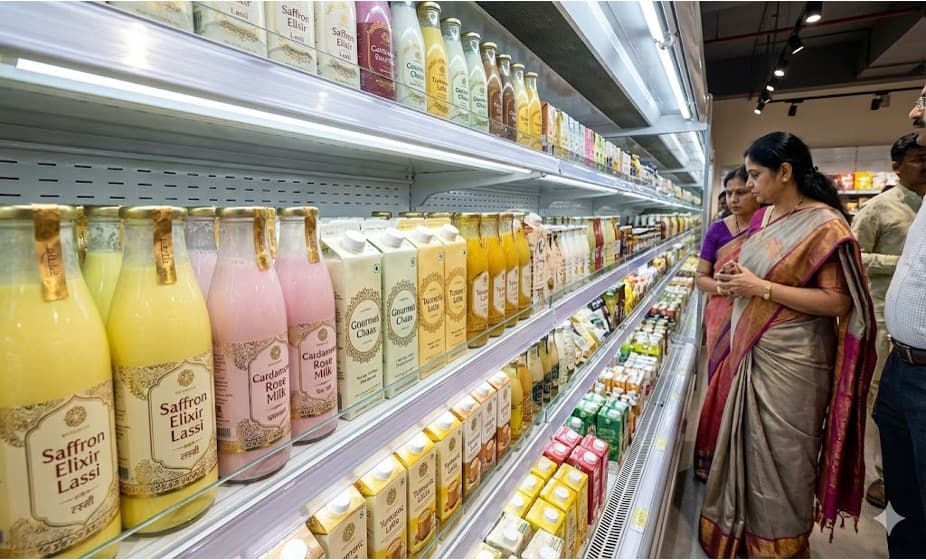
What’s Driving Change In Beverages, FMCG And Dairy in 2025
Dec 12, 2025

What’s Driving Change In Beverages, FMCG And Dairy in 2025

India’s retail landscape in 2025 was marked by a decisive shift in how consumers choose, consume and connect with brands. From beverages to daily nutrition and even the most essential dairy products,...Read More

Latest Blogs

See More
More Milk, Less Money: India’s Dairy Crisis
Dec 01, 2025

More Milk, Less Money: India’s Dairy Crisis

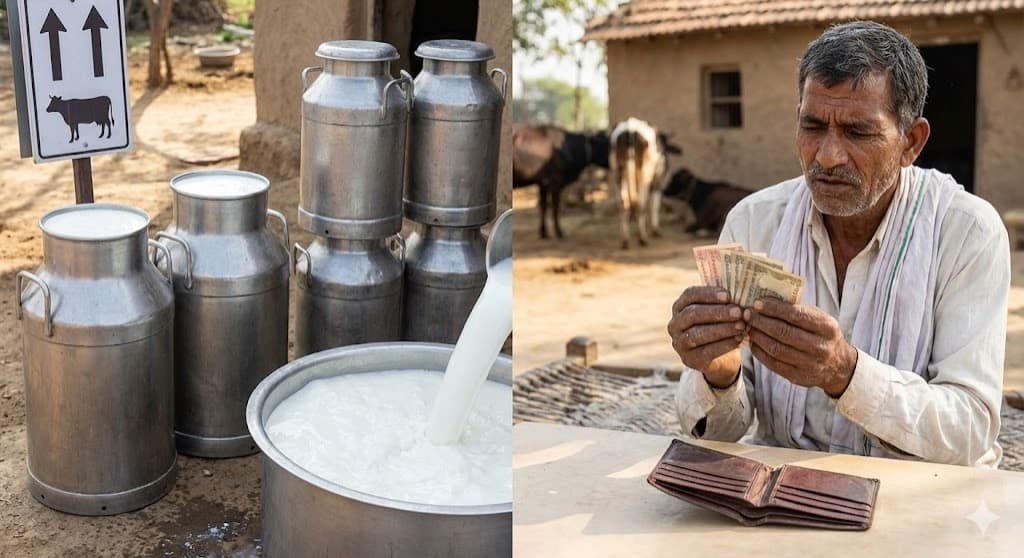
With the release of the BAHS 2025 summary report, I felt compelled to deep dive into its findings and reflect on the real progress and challenges facing India’s dairy sector. Over the last six years,...Read More

India Milk Prices: Cost Shock and Procurement Pressure
Nov 28, 2025

India Milk Prices: Cost Shock and Procurement Pressure

Milk prices in India face upward pressure as rising feed costs and procurement hikes reshape farm economics. Insight on dairy procurement, feed costs, and market outlook. Official government and coope...Read More

Stop Blaming, Start Claiming: Livestock’s Carbon Credit Future
Nov 16, 2025

Stop Blaming, Start Claiming: Livestock’s Carbon Credit Future

This week, I had the opportunity to attend an Agri Carbon Masterclass conducted by CII FACE. The deliberations, case studies, and discussions presented during the session were both insightful and thou...Read More

India Powers the Gulf’s Dairy Revolution -Gulf Food 2025
Oct 31, 2025

India Powers the Gulf’s Dairy Revolution -Gulf Food 2025

As Gulf Food Manufacturing prepares to open its doors from November 4–6 in Dubai, Indian dairy product and equipment manufacturers have a unique opportunity to explore one of the most promising region...Read More

Global Dairy News

Why the global milk business needs a structural shake-up
Dec 08, 2025

Why the global milk business needs a structural shake-up

The New Zealand dairy stalwart Fonterra has sold its consumer dairy-brands (milk, butter, cheese) — including “Anchor” and “Mainland Cheese” — to French agribusiness giant Lactalis in late October 202...Read More

Raw-milk prices in Europe hit 5-yr low; ripple effect looms
Dec 07, 2025

Raw-milk prices in Europe hit 5-yr low; ripple effect looms

European raw-milk prices have plunged to their lowest in five years, as oversupply and weak demand weigh on dairy markets across the region. According to recent data from DCA Market Intelligence B.V.,...Read More

Global food prices ease; FAO dairy index slips — impact looms
Dec 06, 2025

Global food prices ease; FAO dairy index slips — impact looms

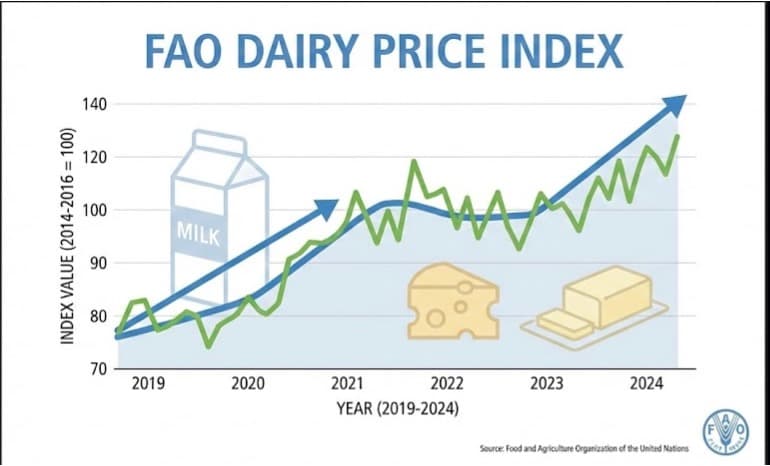
The FAO Dairy Price Index averaged 137.5 points in November, down 4.4 points (3.1 percent) from October and 2.4 points (1.7 percent) from its value a year ago. International dairy prices fell for the...Read More

Dairy News 7x7

Your trusted source for all the latest dairy industry news, market insights, and trending topics.

FOLLOW US
CATEGORIES
  • Global News
  • Indian News
  • Blogs
  • Publications
  • Podcasts
SUBSCRIBE TO OUR NEWSLETTER

Stay informed with the latest updates and trending news in the dairy industry.

No spam, unsubscribe at any time

GET IN TOUCH
C-49, C Block, Sector 65,
Noida, UP 201307
+91 7827405029dairynews7x7@gmail.com

© 2025 Dairy News 7x7. All Rights Reserved.

Terms of ServicePrivacy Policy

India must attain global competitiveness in agriculture

By DairyNews7x7•Published on January 30, 2021

Celebrated erudite economists have historically been free-market protagonists. Today, when India is at a crucial juncture of transforming agriculture, the astounding silence of intellectual class is stunning.

Amid widespread protests on new reforms, one must explicitly understand that unless Indian agriculture becomes globally competitive, India’s dream to become atmanirbhar is hard to realise.

Despite impressive strides made in industrial and technological developments, agriculture and related activities remain a primary source of livelihood for 60% of the population, with over 80% farmers having marginal or small landholdings. Agriculture accounts for 16% share in India’s GDP against a 4% share in world GDP.

Self sufficiency in India

Since Independence, India has come a long way from being a net importer of foodgrains to becoming a net exporter of cereals. Foodgrain productivity more than doubled from 700 kg per hectare in 1966 to over 1,700 kg per hectare by 2000. Productivity still remains a key concern as the Netherlands, a country 80-times smaller, is the world’s second-largest exporter agricultural products with exports of $102 billion compared to merely $35 billion from India in 2019. Moreover, production in India has been highly skewed towards grains.

India is the world’s largest milk, pulses, cotton, spices, mango, banana, livestock and jute and ranks second in wheat, rice, sugarcane, fruits, and vegetable production. It is also one of the largest consumers and the consumption pattern in the country suggests a consistently rising trend posing a challenge for policymakers.

Since India with its 1.34 billion people, accounting for world’s 18% population, possess merely 2.4% of the world’s land area, improving productivity, curtailment of agri-waste across food value chain, achieving systems’ efficiency in marketing become crucial to achieve self-sufficiency.

Low Productivity a challenge

Our production remains highly resource intensive with low productivity across most agricultural, horticultural and livestock products leading to severely hampering cost-competitiveness of Indian produce in the international markets. India’s agricultural exports came down from $42.51 billion in 2013-14 to $33 billion in 2019-20.

Moreover, India has consistently followed a highly protectionist trade policy and has always been wary of trade liberalisation, especially in agriculture. Protecting agriculture from imported foreign agro-produce, often at much lower prices, has deterred India from being part of any major Free Trade Agreement (FTA) with EU, the US, New Zealand, Australia, etc.

Isolation from International community is not possible

However, one should not take such isolations from the international community for granted. Before entering into such multi-lateral trade agreements, which are increasingly becoming more comprehensive in their scope, countries often carry our an all-encompassing cost-benefit analysis. Though India did not sign RCEP primarily due to fear of cheap imports of manufactured goods from China, dairy and other agricultural products from New Zealand and Australia, it should seriously consider signing trade deals with European Union and the US. India must make every effort to attain global competitiveness in its agricultural production, processing and marketing.

Some implementation issues indeed need to be resolved separately, but empirical evaluation reveals that the recent farm reforms address long-standing issues in Indian agriculture by considerably removing marketing anomalies, restrictive monopolistic trade-practices and significantly contribute to make Indian agriculture system globally competitive.

Source : The Financial Express, Jan 30,2021 By Rakesh Mohan Joshi The author is Professor and chairperson (research), IIFT, New Delhi

Swipe to continue reading

Previous Article

Next Article