
Logo
IndianGlobalBlogsPublicationsPodcastsMarketAboutContact
Logo
IndianGlobalBlogsPublicationsPodcasts
7News
TN Minister Urges Farmers to Adopt Tech for Value Addition in DairyListen to the Farm, Not the Farmer—The New Productivity LensWhat’s Driving Change In Beverages, FMCG And Dairy in 2025ED begins money laundering probe in dairy investment fraud caseIndo-Brazil pact aims to boost cattle genetics and dairy yield

Indian Dairy News

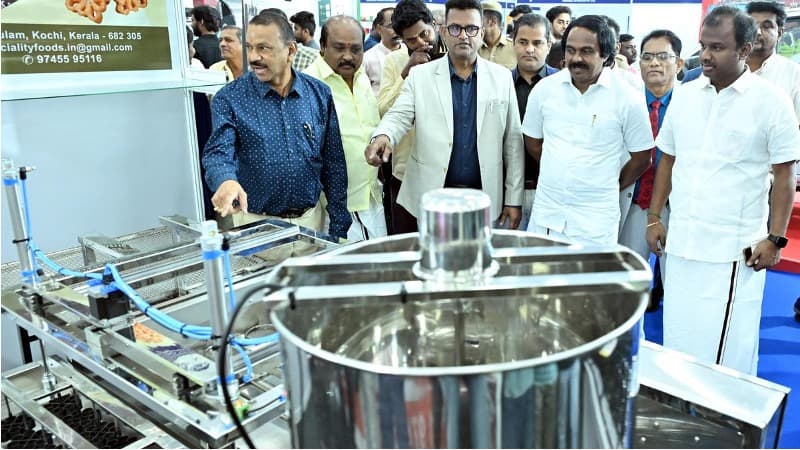
TN Minister Urges Farmers to Adopt Tech for Value Addition in Dairy
Dec 12, 2025

TN Minister Urges Farmers to Adopt Tech for Value Addition in Dairy

In Coimbatore this week, Tamil Nadu’s Minister for Milk and Dairy Development, Mano Thangaraj, called on dairy farmers to embrace modern technologies to boost productivity and value addition across th...Read More

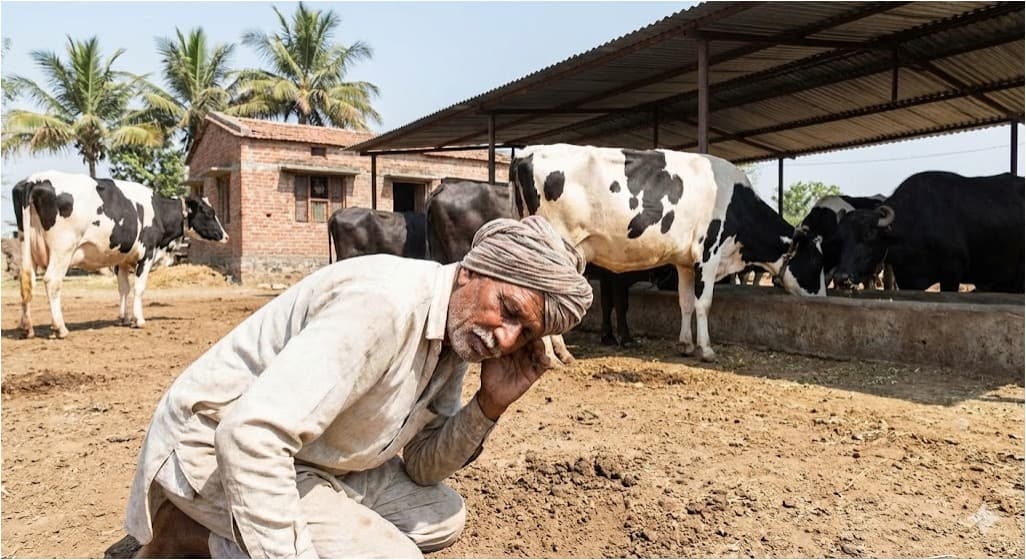
Listen to the Farm, Not the Farmer—The New Productivity Lens
Dec 12, 2025

Listen to the Farm, Not the Farmer—The New Productivity Lens

India’s dairy sector, valued at nearly $30 billion, has reached a point where incremental changes will not deliver the next breakthrough. For decades, improvement programs have focused on what farmers...Read More

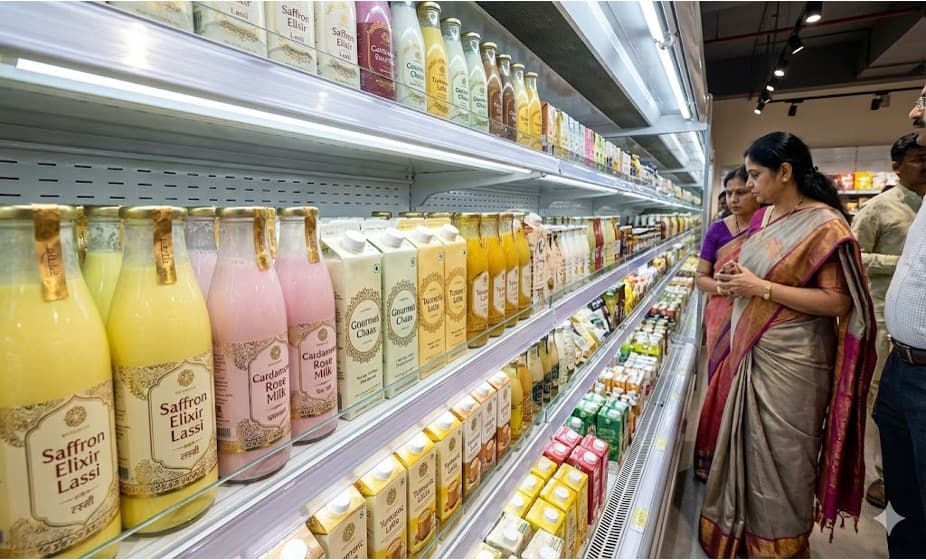
What’s Driving Change In Beverages, FMCG And Dairy in 2025
Dec 12, 2025

What’s Driving Change In Beverages, FMCG And Dairy in 2025

India’s retail landscape in 2025 was marked by a decisive shift in how consumers choose, consume and connect with brands. From beverages to daily nutrition and even the most essential dairy products,...Read More

Latest Blogs

See More
More Milk, Less Money: India’s Dairy Crisis
Dec 01, 2025

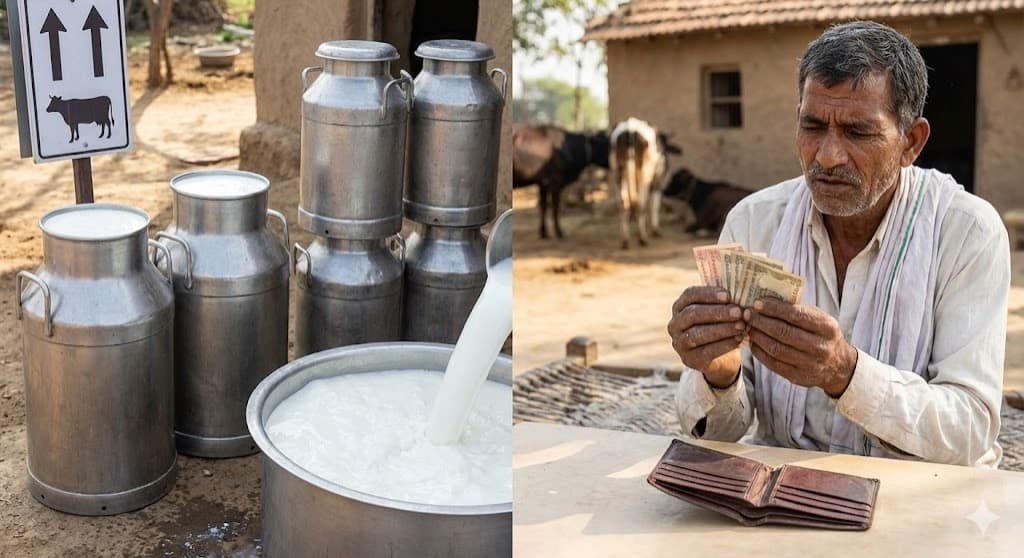
More Milk, Less Money: India’s Dairy Crisis

With the release of the BAHS 2025 summary report, I felt compelled to deep dive into its findings and reflect on the real progress and challenges facing India’s dairy sector. Over the last six years,...Read More

India Milk Prices: Cost Shock and Procurement Pressure
Nov 28, 2025

India Milk Prices: Cost Shock and Procurement Pressure

Milk prices in India face upward pressure as rising feed costs and procurement hikes reshape farm economics. Insight on dairy procurement, feed costs, and market outlook. Official government and coope...Read More

Stop Blaming, Start Claiming: Livestock’s Carbon Credit Future
Nov 16, 2025

Stop Blaming, Start Claiming: Livestock’s Carbon Credit Future

This week, I had the opportunity to attend an Agri Carbon Masterclass conducted by CII FACE. The deliberations, case studies, and discussions presented during the session were both insightful and thou...Read More

India Powers the Gulf’s Dairy Revolution -Gulf Food 2025
Oct 31, 2025

India Powers the Gulf’s Dairy Revolution -Gulf Food 2025

As Gulf Food Manufacturing prepares to open its doors from November 4–6 in Dubai, Indian dairy product and equipment manufacturers have a unique opportunity to explore one of the most promising region...Read More

Global Dairy News

Why the global milk business needs a structural shake-up
Dec 08, 2025

Why the global milk business needs a structural shake-up

The New Zealand dairy stalwart Fonterra has sold its consumer dairy-brands (milk, butter, cheese) — including “Anchor” and “Mainland Cheese” — to French agribusiness giant Lactalis in late October 202...Read More

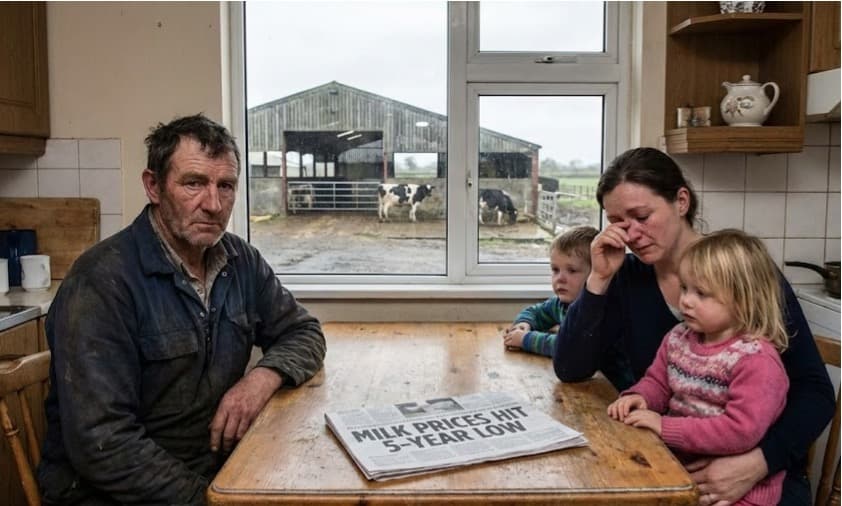
Raw-milk prices in Europe hit 5-yr low; ripple effect looms
Dec 07, 2025

Raw-milk prices in Europe hit 5-yr low; ripple effect looms

European raw-milk prices have plunged to their lowest in five years, as oversupply and weak demand weigh on dairy markets across the region. According to recent data from DCA Market Intelligence B.V.,...Read More

Global food prices ease; FAO dairy index slips — impact looms
Dec 06, 2025

Global food prices ease; FAO dairy index slips — impact looms

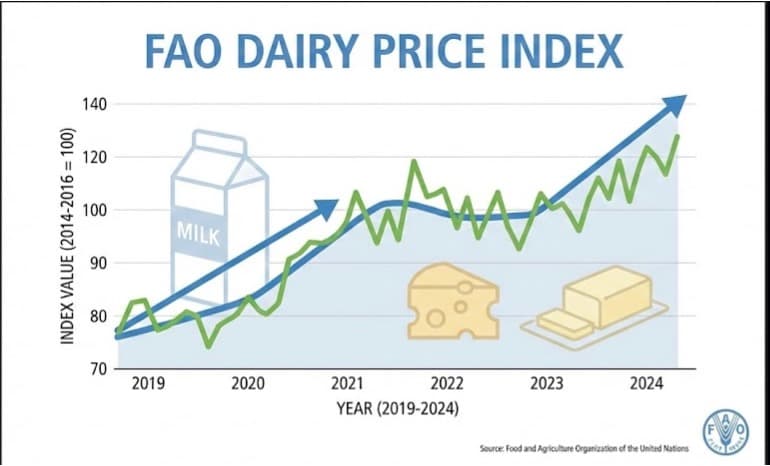
The FAO Dairy Price Index averaged 137.5 points in November, down 4.4 points (3.1 percent) from October and 2.4 points (1.7 percent) from its value a year ago. International dairy prices fell for the...Read More

Dairy News 7x7

Your trusted source for all the latest dairy industry news, market insights, and trending topics.

FOLLOW US
CATEGORIES
  • Global News
  • Indian News
  • Blogs
  • Publications
  • Podcasts
SUBSCRIBE TO OUR NEWSLETTER

Stay informed with the latest updates and trending news in the dairy industry.

No spam, unsubscribe at any time

GET IN TOUCH
C-49, C Block, Sector 65,
Noida, UP 201307
+91 7827405029dairynews7x7@gmail.com

© 2025 Dairy News 7x7. All Rights Reserved.

Terms of ServicePrivacy Policy

How Science Saved A Cow Breed Known For Sweet Milk

By DairyNews7x7•Published on February 28, 2023

Dangi is a cattle breed native to the hilly areas of Maharashtra’s Nashik and Ahmednagar districts. The khoya made from its milk is so sweet that a popular Marathi saying goes: “You can be only as sweet as rajur (the word for khoya in Ahmednagar).” Yet, the breed might have become extinct without the efforts of scientists, farmers and local organisations.

Starting 2014, researchers from Indian Institute of Science Education and Research, Pune, BAIF Development Research Foundation, New Delhi, local farmers and community organisations worked hard to make Dangi cattle rearing viable.

“When we started work, there were only small herds left,” said Sarang Pande of Lokpanchayat, a local organisation working in Ahmednagar. “The surviving cattle were also battling ailments due to changes in environment, cropping pattern and fodder. We started with proper vaccination of the surviving cattle.” Thanks to their efforts, villages in the region now have some young, thoroughbred Dangi bulls.

Meanwhile, multi-disciplinary teams of experts, community organisations and locals across Maharashtra are working to build the country’s first gene bank that will ensure Dangi and other native breeds of plants and animals don’t go extinct. The bank will store not only the hardy seeds of indigenous species and germplasm but also traditional knowledge.

In the Dangi project, for example, the traditional practice of ‘rakhan raan’ – setting aside grass and fodder for cattle throughout the year – played a key role. A ‘Dangi Parents Sangh’ was also started with 30 families in Akole taluka to rear purebred cattle.

“The efforts paid off and we now have purebred bulls. We are now trying to see how milk, cow dung and manure from the Dangi breed can be marketed. We want to promote it like Gir cows to revive this indigenous breed,” Pande said.

 Bringing The Bank To Life 

In the early 2000s renowned ecologist Madhav Gadgil had felt the need to conserve native and indigenous species of crops and other plants, and document oral traditions and knowledge associated with them. A pilot run from 2014 to 2019 proved successful, and last April, the Maharashtra government sanctioned Rs 179 crore to expand the project.

IISER faculty V S Rao, who is project director of the Maharashtra Gene Bank, said many local varieties of different living organisms are preserved by communities and individuals. “Farmers have generations of knowledge passed down orally about various plant and crop species. Our team’s effort is to preserve these pockets that still practise traditional methods, and the indigenous varieties that have survived due to their adaptive nature,” he said.

 Seven Focus Areas 

The gene bank project focuses on seven themes: marine biodiversity, crop genetic diversity, livestock genetic diversity, conservation and sustainable use of indigenous fish, conservation of grassland biodiversity, eco restoration of community forest resource lands, and economic plant species.

“We work with the locals and community-based organisations in each area. There are three national research institutions, two universities and 16 NGOs involved in the work. We have a tremendous gene pool in the country and it should not be lost since the indigenous species have adapted to the local environment and survived for many, many years,” Rao said.

The project also involves children. When schoolchildren were given a project to identify and name plants, animals and grass species around them during their holidays, “they came back with 200 varieties and collected seeds too.” “It helped them understand biodiversity and the effort required to conserve it,” Rao said.

 Backup For The Future 

Along with in situ (on-site) conservation, there is the gene bank in Pune where genotypes are kept as a backup and for reference. There are community-based seed banks at the local level where farmers can collect seeds and redeposit them after a harvest. Such seed banks are running successfully at Jawhar in Palghar taluka, Akole in Ahmednagar, and Bhandara district.

“These are commitment banks. A member can take a kilogram of seeds and return two kilograms. It’s a cooperative society managed by members. We call them genome saviours, and unique genomes are registered by the National Bureau of Plant Genetics,” Rao said.

Now, each group has identified expansion areas. For example, the livestock diversity group is looking at keeping the Katak breed of goats from Sangamner alive.

Swipe to continue reading

Previous Article

Next Article