




How food choices can help the planet when over 37 % are GHG from food
Global, industrial and individual reshift neededShare A new book published by researchers at the University of Sydney and Curtin University explores how global food production and consumption are impacting the environment and contributing to emissions, offering a positive, sustainable way forward.

Researchers from the University of Sydney and Curtin University have this week published their new book, Food in a Planetary Emergency (Springer) which analyses problems in food production and consumption at global, industry and individual levels, exploring new ways that we can eat to help curb emissions and protect critical habitats from being cleared. The authors argue that going ‘flexitarian’ – a diet that is comprised predominantly of plant-based foods but does not cut out any food group entirely – would drastically reduce greenhouse emissions.
“Greenhouse gas emissions are growing, with the global population set to reach 8.5 Billion by 2030,” said the book’s co-author Dr Diana Bogueva, Centre Manager of the University of Sydney’s Centre for advanced Food Engineering . “This means the production and farming of food and agriculture systems is putting enormous strain on the environment through loss of biodiversity, deforestation, loss of savannahs, plastics pollution, exhaustion of the planet’s soils, freshwater overuse, and species’ exploitation.”
“Climate change is being supercharged by humankind. Whether we are prepared to admit it or not, our food choices are a major contributor to the current environmental emergency, but we can make significant changes today that can lessen our impact,” she said.
The book, which builds upon hundreds of peer-reviewed studies and meta-analyses on the link between food and environmental impact, sets an agenda of change needed in areas ranging from food waste and packaging pollution through to meat consumption, circular agriculture and flexitarianism.
The authors have conducted research on meat consumption and its impact on biodiversity and human health. Dr Bogueva said: “There is no doubt that the increase in meat consumption globally in particular is leading to huge biodiversity loss and land clearing. However, its impacts are far-reaching, including on human health, causing both obesity in the developed world and malnutrition in the developing world.”
The researchers have also analysed the cost of increased meat consumption on human health. Dr Bogueva said: “There is no doubt that the increase in meat consumption globally in particular is leading to huge biodiversity loss and land clearing. However, its impacts are far-reaching, including on human health, causing both obesity in the developed world and malnutrition in the developing world.”
Will Generation Z transform the world’s food choices?
The changing food attitudes of Generation Z – individuals born between 1995 and 2010 – have also formed a significant part of the authors’ research . Inspired by global activists like Greta Thunberg, Generation Z has led a wave of action through climate strikes, demanding urgent action from governments and making conscious food choices.“They are very environmentally and socially motivated. Our previous research found that a large number of Gen Z opt for vegetarianism and veganism on the basis of ethical reasons, to preserve the dignity of animals. Other studies have found they are actively reducing their consumption in places like the US and UK.”
Going plant-based a simple but powerful choice for consumers
The authors believe significant action can be taken to curb emissions and decrease food’s impact on the environment. They urge consumers to include more traditional plant-based choices in their diets, such as vegetables, legumes, wholegrains, nuts and fruits.“Not only is this the best response in the current environment and climate emergency but also much better for our own health. It will diminish the current exploitative ways of food production and give a chance for the planet to regenerate,” said Professor Marinova.
“Better diets are those that are healthy and come from food systems which allow the natural environment to continue to produce food and regenerate,” she said.
“A transformational approach is needed to the way we eat – but it’s as not as daunting as it may seem. There are small choices we can make as individuals – as well as industry and governments – that we can make to lessen the negative impacts of modern food production on the environment.”
Food choices that can help the planet
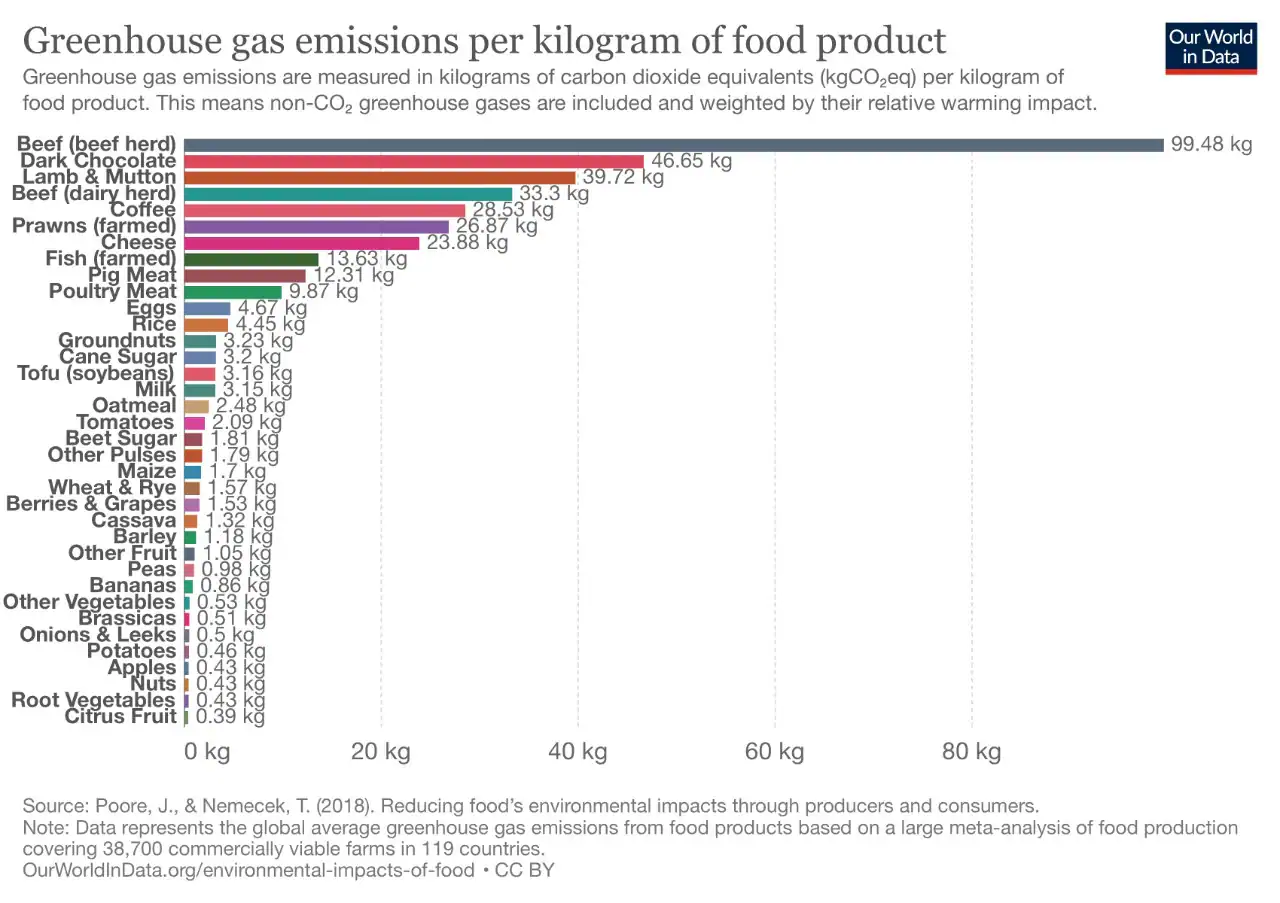
Consuming beans, pulses and alternative proteins – while animal-based proteins are a good and easy source of essential amino acids – so are complete proteins like soya, tempeh, tofu, buckwheat, chia, quinoa, industrial hemp and chickpeas. Insects, too, which have played a large role in Chinese cuisine for 3,000 years, provide a nutritious source of protein.
Reducing food waste – World Resources Institute estimates that almost a quarter of all food produced is wasted, with food waste particularly high in North America and Oceania. According to other sources, if food waste were a country, it would be the third largest greenhouse gas emitter.
Reducing food packaging and single use plastics – according to PlasticsEurope, 368 million tonnes of plastic were produced in 2019, largely represented in food packaging. Despite a move to recycling, the majority of these plastics end up in landfill.
Returning to circular agriculture practices – circular agriculture was widespread before the introduction of fertilisers, involving the return of nutrients derived from organic waste to the soil. Modern practices have led to reduced soil fertility, ultimately impacting the quality of food we eat.
Supporting future generations through considered food choices – in a recent study by Professor Marinova and Dr Bogueva, Gen Z participants were interviewed on their attitudes to meat and protein alternatives. 60 percent expressed concern about the impacts of traditional livestock farming on the natural environment.
ABOUT THE AUTHORS
Dr Diana Bogueva is an award-winning interdisciplinary researcher focused on consumer behaviour change, alternative proteins, future novel food processing technologies, food sustainability, and harmonisation. She is the Manager of the Centre for Adnaced Food Engineering at the University of Sydney, and is a Research Fellow at the Curtin University Sustainability Policy (CUSP) Institute, Australia.
Professor Dora Marinova is an expert in sustainability at the Curtin University Sustainability Policy (CUSP) Institute. Her areas of research interest cover sustainability, innovation, and sustainometrics. Professor Marinova has 370 refereed publications and has supervised more than 70 PhD students.