
Logo
IndianGlobalBlogsPublicationsPodcastsMarketAboutContact
Logo
IndianGlobalBlogsPublicationsPodcasts
7News
TN Minister Urges Farmers to Adopt Tech for Value Addition in DairyListen to the Farm, Not the Farmer—The New Productivity LensWhat’s Driving Change In Beverages, FMCG And Dairy in 2025ED begins money laundering probe in dairy investment fraud caseIndo-Brazil pact aims to boost cattle genetics and dairy yield

Indian Dairy News

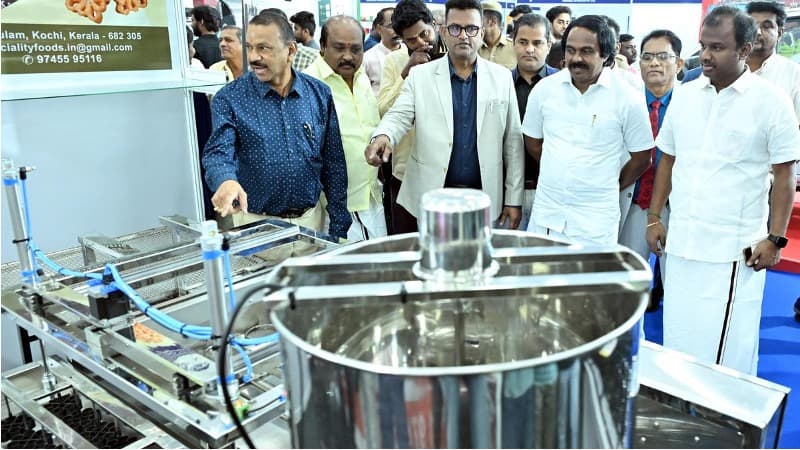
TN Minister Urges Farmers to Adopt Tech for Value Addition in Dairy
Dec 12, 2025

TN Minister Urges Farmers to Adopt Tech for Value Addition in Dairy

In Coimbatore this week, Tamil Nadu’s Minister for Milk and Dairy Development, Mano Thangaraj, called on dairy farmers to embrace modern technologies to boost productivity and value addition across th...Read More

Listen to the Farm, Not the Farmer—The New Productivity Lens
Dec 12, 2025

Listen to the Farm, Not the Farmer—The New Productivity Lens

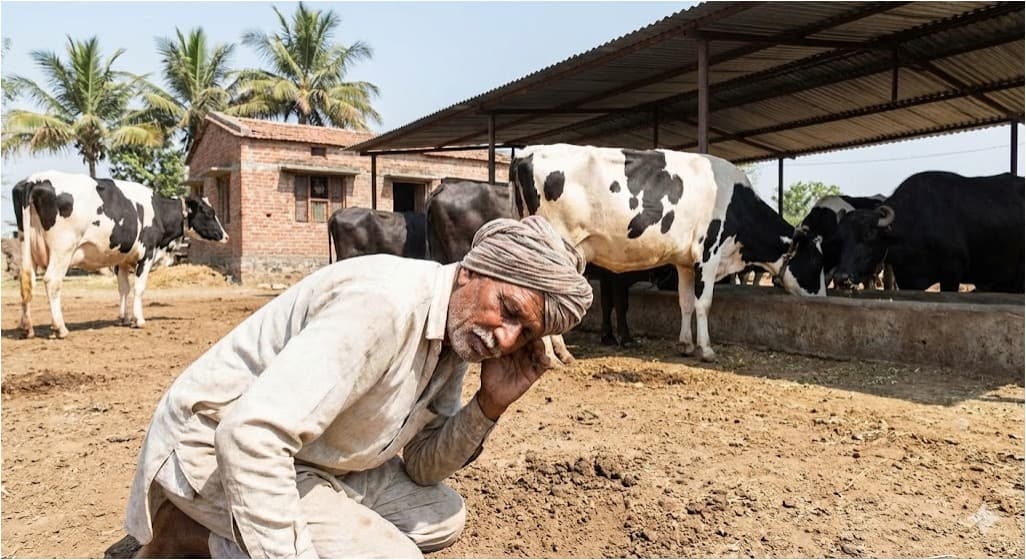
India’s dairy sector, valued at nearly $30 billion, has reached a point where incremental changes will not deliver the next breakthrough. For decades, improvement programs have focused on what farmers...Read More

What’s Driving Change In Beverages, FMCG And Dairy in 2025
Dec 12, 2025

What’s Driving Change In Beverages, FMCG And Dairy in 2025

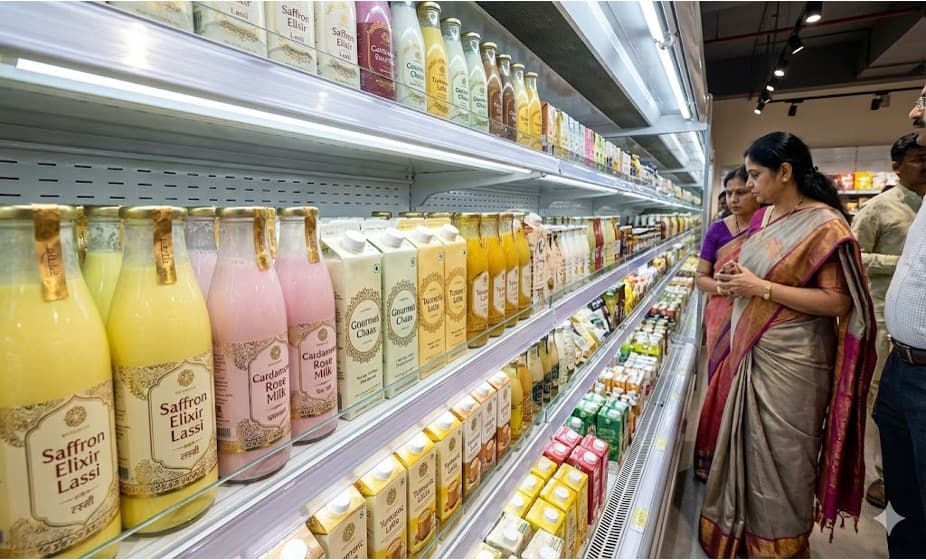
India’s retail landscape in 2025 was marked by a decisive shift in how consumers choose, consume and connect with brands. From beverages to daily nutrition and even the most essential dairy products,...Read More

Latest Blogs

See More
More Milk, Less Money: India’s Dairy Crisis
Dec 01, 2025

More Milk, Less Money: India’s Dairy Crisis

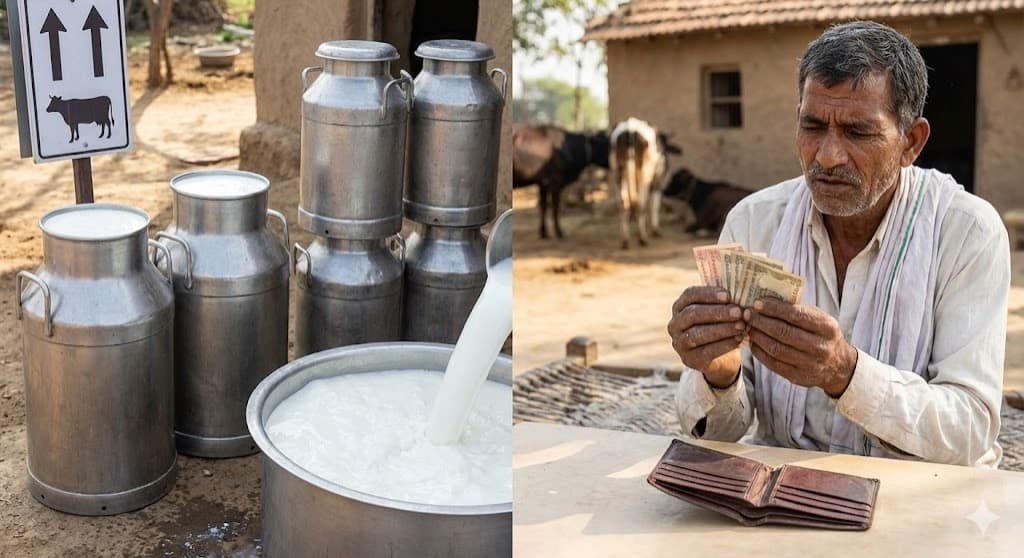
With the release of the BAHS 2025 summary report, I felt compelled to deep dive into its findings and reflect on the real progress and challenges facing India’s dairy sector. Over the last six years,...Read More

India Milk Prices: Cost Shock and Procurement Pressure
Nov 28, 2025

India Milk Prices: Cost Shock and Procurement Pressure

Milk prices in India face upward pressure as rising feed costs and procurement hikes reshape farm economics. Insight on dairy procurement, feed costs, and market outlook. Official government and coope...Read More

Stop Blaming, Start Claiming: Livestock’s Carbon Credit Future
Nov 16, 2025

Stop Blaming, Start Claiming: Livestock’s Carbon Credit Future

This week, I had the opportunity to attend an Agri Carbon Masterclass conducted by CII FACE. The deliberations, case studies, and discussions presented during the session were both insightful and thou...Read More

India Powers the Gulf’s Dairy Revolution -Gulf Food 2025
Oct 31, 2025

India Powers the Gulf’s Dairy Revolution -Gulf Food 2025

As Gulf Food Manufacturing prepares to open its doors from November 4–6 in Dubai, Indian dairy product and equipment manufacturers have a unique opportunity to explore one of the most promising region...Read More

Global Dairy News

Why the global milk business needs a structural shake-up
Dec 08, 2025

Why the global milk business needs a structural shake-up

The New Zealand dairy stalwart Fonterra has sold its consumer dairy-brands (milk, butter, cheese) — including “Anchor” and “Mainland Cheese” — to French agribusiness giant Lactalis in late October 202...Read More

Raw-milk prices in Europe hit 5-yr low; ripple effect looms
Dec 07, 2025

Raw-milk prices in Europe hit 5-yr low; ripple effect looms

European raw-milk prices have plunged to their lowest in five years, as oversupply and weak demand weigh on dairy markets across the region. According to recent data from DCA Market Intelligence B.V.,...Read More

Global food prices ease; FAO dairy index slips — impact looms
Dec 06, 2025

Global food prices ease; FAO dairy index slips — impact looms

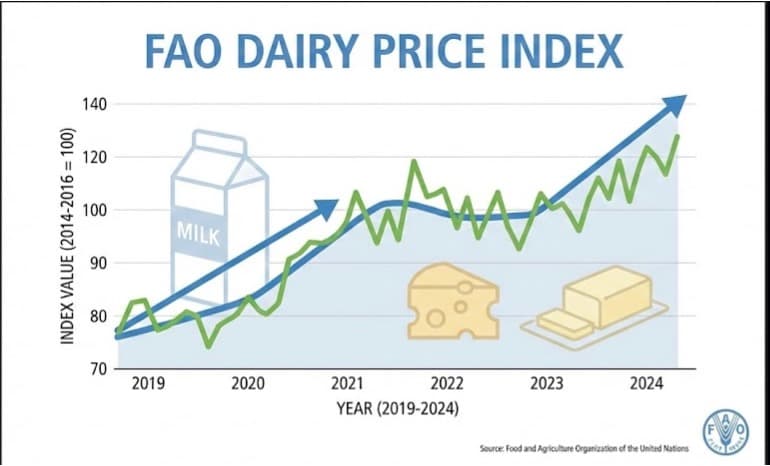
The FAO Dairy Price Index averaged 137.5 points in November, down 4.4 points (3.1 percent) from October and 2.4 points (1.7 percent) from its value a year ago. International dairy prices fell for the...Read More

Dairy News 7x7

Your trusted source for all the latest dairy industry news, market insights, and trending topics.

FOLLOW US
CATEGORIES
  • Global News
  • Indian News
  • Blogs
  • Publications
  • Podcasts
SUBSCRIBE TO OUR NEWSLETTER

Stay informed with the latest updates and trending news in the dairy industry.

No spam, unsubscribe at any time

GET IN TOUCH
C-49, C Block, Sector 65,
Noida, UP 201307
+91 7827405029dairynews7x7@gmail.com

© 2025 Dairy News 7x7. All Rights Reserved.

Terms of ServicePrivacy Policy

How drones can help dairy farms manage methane emissions

By DairyNews7x7•Published on May 07, 2022

Accurate atmospheric measurements directly over their farm can help farmers fight climate change

Dairy farms produce large amounts of two things: milk and poop. Milk finds its way into delicacies like hot cocoa and grilled cheese sandwiches but the poop just piles up.

Dairy farmers bulldoze the mess into artificial ponds called manure lagoons, where anaerobic microbes break it down into methane, a powerful greenhouse gas. Methane traps 80% more heat in the atmosphere than carbon dioxide, contributing to around one fourth of climate change to date. The cow digestive tract also produces methane and releases it when the cow burps.

About 50% of the methane that California emits comes from dairy farms. In order to meet strict climate goals, the state has proposed ways to regulate dairy methane emissions. But these efforts run up against a big problem: There isn’t currently a reliable way for dairy farmers to measure the amount of methane produced on their farm.
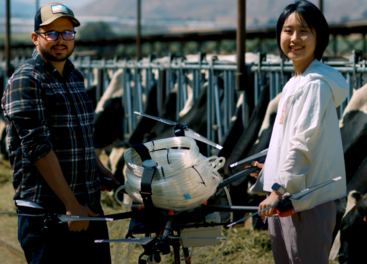
Javier Gonzalez-Rocha and Zihan Zhu hold a drone used for taking air samples over dairy farms. (Taylor Ruthford/UCR)
The amount of methane produced depends on the number of cows, their diet, the weather, and how wet the manure is stored. Estimates of how much methane a farm produces are therefore uncertain. Measurements made by satellite or aircraft return the most accurate estimates, but these tools are expensive and do not always work at the level of individual farms.

UC Riverside postdoctoral fellow Javier Gonzalez-Rocha  wants to change that. He’s working with mechanical engineering professor Akula Venkatram  and environmental sciences professor Francesca Hopkins  to develop aerial robotic systems that can quantify methane emissions directly over a specific dairy facility.

To achieve this goal, Gonzalez-Rocha has developed a new method for extracting wind velocity estimates from disturbances to drone motion caused by wind. This algorithm has been adapted to a drone-based “air core” system developed by environmental engineering professor Don Collins and graduate student Zihan Zhu.

An air core is similar to an ice core, a plug of ice pulled from a glacier that can reveal changes in atmospheric composition over time. By combining wind velocity and air core measurement capabilities, drones can help detect, localize, and estimate methane emissions at fine spatial scales otherwise difficult to resolve using standard wind and air composition measurement techniques. The ability of drones to hover and maneuver in constrained environments, where it is difficult for conventional fixed-wing aircraft to operate, also provides new possibilities for obtaining targeted observations of greenhouse gasses in the lower atmosphere.

The work being led by Gonzalez-Rocha and Zhu will soon yield new findings addressing the reliability of drone-based atmospheric measurements in comparison to conventional wind and air composition sensors.

Gonzalez-Rocha is testing the drones at UCR’s agricultural operations site and at dairy farms in California, where he is using them to measure methane concentrations at different distances downwind from emission sources. Understanding how methane concentrations vary at differ downwind locations is critical for quantifying emission sources.

Although the techniques developed by Gonzalez-Rocha and Zhu are in their infancy stage, there remains a great potential for improving the accuracy of drone-based measurements. Ongoing work is exploring a multi-inlet air core system to sample air composition at multiple heights simultaneously as the drone moves across a methane plume. The researchers believe that they are on a course for farmers to use this technology within the next 5 to 10 years.

Swipe to continue reading

Previous Article

Next Article