
Logo
IndianGlobalBlogsPublicationsPodcastsMarketAboutContact
Logo
IndianGlobalBlogsPublicationsPodcasts
7News
TN Minister Urges Farmers to Adopt Tech for Value Addition in DairyListen to the Farm, Not the Farmer—The New Productivity LensWhat’s Driving Change In Beverages, FMCG And Dairy in 2025ED begins money laundering probe in dairy investment fraud caseIndo-Brazil pact aims to boost cattle genetics and dairy yield

Indian Dairy News

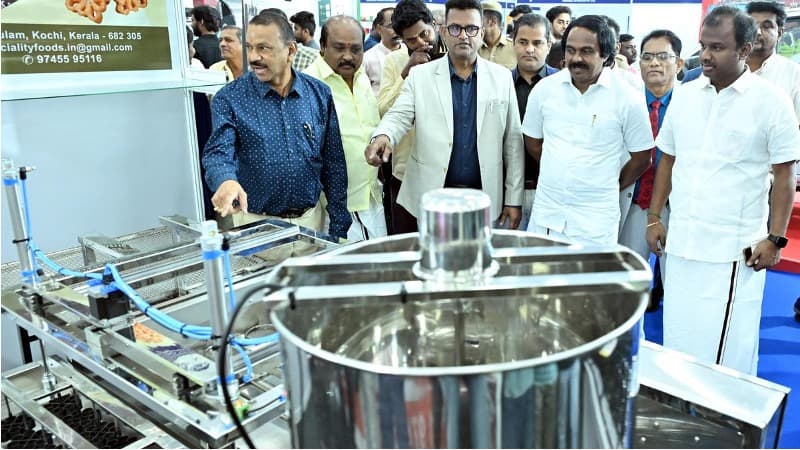
TN Minister Urges Farmers to Adopt Tech for Value Addition in Dairy
Dec 12, 2025

TN Minister Urges Farmers to Adopt Tech for Value Addition in Dairy

In Coimbatore this week, Tamil Nadu’s Minister for Milk and Dairy Development, Mano Thangaraj, called on dairy farmers to embrace modern technologies to boost productivity and value addition across th...Read More

Listen to the Farm, Not the Farmer—The New Productivity Lens
Dec 12, 2025

Listen to the Farm, Not the Farmer—The New Productivity Lens

India’s dairy sector, valued at nearly $30 billion, has reached a point where incremental changes will not deliver the next breakthrough. For decades, improvement programs have focused on what farmers...Read More

What’s Driving Change In Beverages, FMCG And Dairy in 2025
Dec 12, 2025

What’s Driving Change In Beverages, FMCG And Dairy in 2025

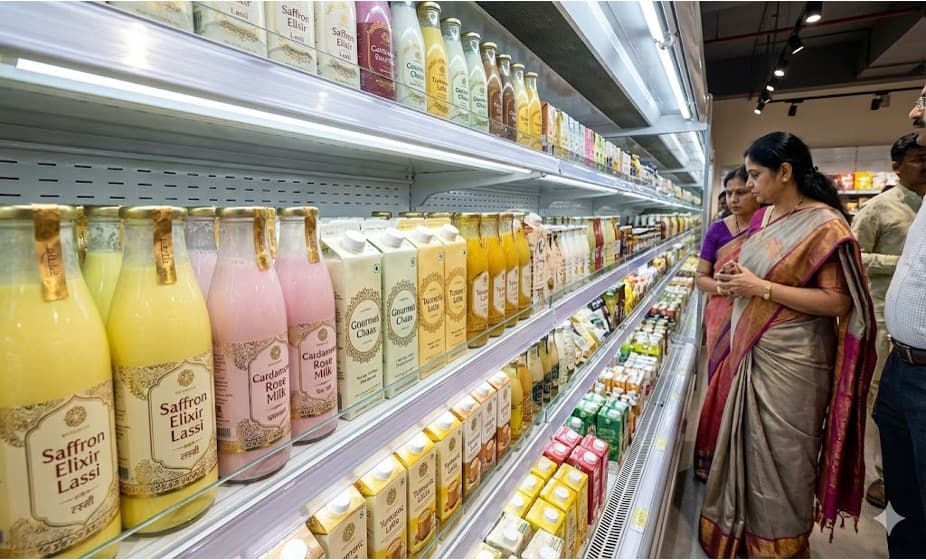
India’s retail landscape in 2025 was marked by a decisive shift in how consumers choose, consume and connect with brands. From beverages to daily nutrition and even the most essential dairy products,...Read More

Latest Blogs

See More
More Milk, Less Money: India’s Dairy Crisis
Dec 01, 2025

More Milk, Less Money: India’s Dairy Crisis

With the release of the BAHS 2025 summary report, I felt compelled to deep dive into its findings and reflect on the real progress and challenges facing India’s dairy sector. Over the last six years,...Read More

India Milk Prices: Cost Shock and Procurement Pressure
Nov 28, 2025

India Milk Prices: Cost Shock and Procurement Pressure

Milk prices in India face upward pressure as rising feed costs and procurement hikes reshape farm economics. Insight on dairy procurement, feed costs, and market outlook. Official government and coope...Read More

Stop Blaming, Start Claiming: Livestock’s Carbon Credit Future
Nov 16, 2025

Stop Blaming, Start Claiming: Livestock’s Carbon Credit Future

This week, I had the opportunity to attend an Agri Carbon Masterclass conducted by CII FACE. The deliberations, case studies, and discussions presented during the session were both insightful and thou...Read More

India Powers the Gulf’s Dairy Revolution -Gulf Food 2025
Oct 31, 2025

India Powers the Gulf’s Dairy Revolution -Gulf Food 2025

As Gulf Food Manufacturing prepares to open its doors from November 4–6 in Dubai, Indian dairy product and equipment manufacturers have a unique opportunity to explore one of the most promising region...Read More

Global Dairy News

Why the global milk business needs a structural shake-up
Dec 08, 2025

Why the global milk business needs a structural shake-up

The New Zealand dairy stalwart Fonterra has sold its consumer dairy-brands (milk, butter, cheese) — including “Anchor” and “Mainland Cheese” — to French agribusiness giant Lactalis in late October 202...Read More

Raw-milk prices in Europe hit 5-yr low; ripple effect looms
Dec 07, 2025

Raw-milk prices in Europe hit 5-yr low; ripple effect looms

European raw-milk prices have plunged to their lowest in five years, as oversupply and weak demand weigh on dairy markets across the region. According to recent data from DCA Market Intelligence B.V.,...Read More

Global food prices ease; FAO dairy index slips — impact looms
Dec 06, 2025

Global food prices ease; FAO dairy index slips — impact looms

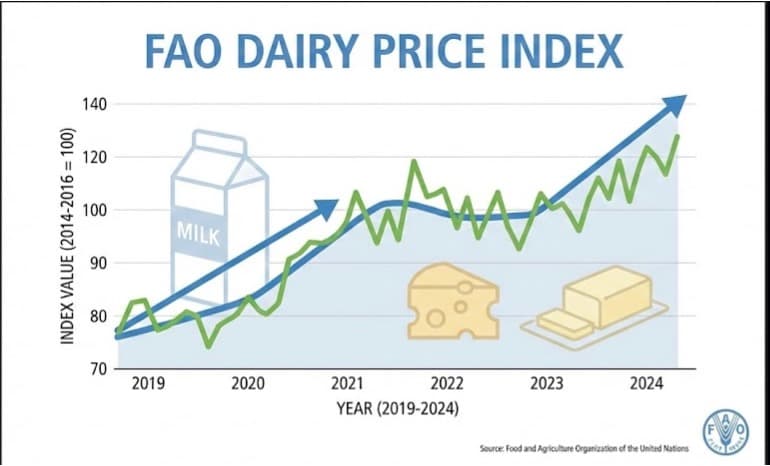
The FAO Dairy Price Index averaged 137.5 points in November, down 4.4 points (3.1 percent) from October and 2.4 points (1.7 percent) from its value a year ago. International dairy prices fell for the...Read More

Dairy News 7x7

Your trusted source for all the latest dairy industry news, market insights, and trending topics.

FOLLOW US
CATEGORIES
  • Global News
  • Indian News
  • Blogs
  • Publications
  • Podcasts
SUBSCRIBE TO OUR NEWSLETTER

Stay informed with the latest updates and trending news in the dairy industry.

No spam, unsubscribe at any time

GET IN TOUCH
C-49, C Block, Sector 65,
Noida, UP 201307
+91 7827405029dairynews7x7@gmail.com

© 2025 Dairy News 7x7. All Rights Reserved.

Terms of ServicePrivacy Policy

Grassland, fodder issues merit global attention

By DairyNews7x7•Published on September 26, 2022

India will occupy the G20 Presidency from December 1, 2022, to November 30, 2023, and host the 18th G20 Summit next year. The G20 Chair undertakes a wide range of activities to help members discuss and coordinate policies on matters of common interest. The shift in focus in recent years to the Global South is illustrative of the growing influence of emerging economies such as India in spurring international development cooperation and strengthening multilateralism. India’s vital role in global economic governance has fostered its active participation in the G20 arena.

G20 brings under its umbrella all five permanent members of the United Nation Security Council, all G7 member countries and BRICS nations. The G20 members accounts for two-thirds of the world’s population, around 85% of the global GDP and 75% of international trade.

On the agriculture front, the G20 Ministers of Agriculture have had talks on food security, nutrition and global agricultural development and sustainability issues since their first meeting in Paris in 2011. Concerted global efforts in areas such as genomics, digital agriculture, climate-smart and bio-friendly technologies, and efficient resource management issues have been the common agreed agenda at various G20 meetings. In the G20 Leaders’ Summit 2021 hosted by Italy, India stressed on the need to increase investment in agricultural research and development amid the challenges of climate change and the expected increase in food demand by 2030. However, it seems that issues concerning feed and fodder, the severe deficit of which may threat India’s numero uno position in milk production, have suffered from exclusion in all G20 Ministers of Agriculture dialogues.
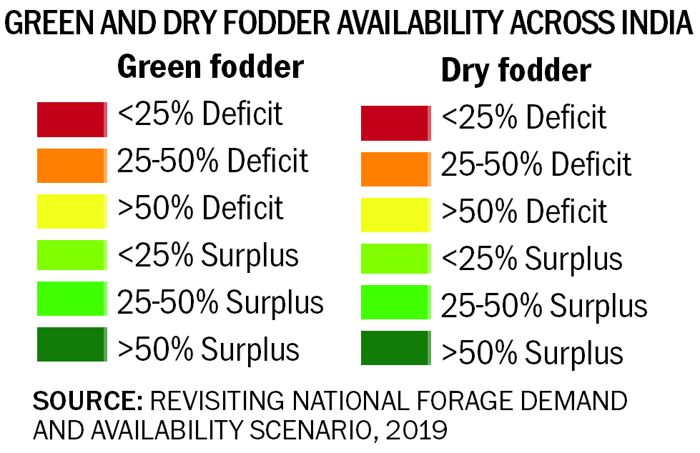
The supply of feed and fodder has always falls short of the aggregate demand in the country. Studies suggest that devoting around 14-17% of the land for fodder cultivation will be ideal for meeting fodder shortages in the country; however, fodder is being cultivated on 8.4 million hectares (nearly 4%) for the past few decades. Sparing more area for fodder is vital in the wake of rapid intense competition for additional land from commercially important crops. As per the recent report titled ‘Revisiting National Forage Demand and Availability Scenario’, for every 100 kg required, India is short of 11.24 kg of green fodder and 23.4 kg of dry fodder. The scenario is more unnerving in states where the fodder deficit is above 25%. With the burgeoning livestock population and the government’s focus on the genetic upgrade of cattle through cross-breeding programmes, the demand-supply gap of green fodder will widen considerably in the absence of appropriate policy planning and its grassroots-level implementation. As the G20 Presidency is a great opportunity for India to place its priorities and narratives on the global agenda, the country should strengthen partnership in fodder research & development as well as in fodder trade.

Premier fodder research institutes of the country can be involved in collaborative discussions with international organisations on sharing ideas as well as technologies and their implementation. Moreover, attracting global investments in strengthening fodder-based Indian start-ups should be on the priority list of agriculture and allied issues. Stakeholders in feed and fodder development hope that healthy discussions will be dedicated to this ignored sector in the upcoming global mega event.

Another important area of global talk can be conservation and rejuvenation of grasslands and rangelands, which together occupy around 70% of the world’s agricultural area; 68% of them are located in developing countries. People rely heavily on grasslands for food and forage production. Grassland degradation has become a serious global issue, especially in semi-arid regions, where it is causing land degradation and impeding crop and livestock production.

Reportedly, grasslands along with degraded grazing lands in India make up around 8.5% of the country’s total land area, but less than 5% of this natural ecosystem is under protection. India has lost 31% of its grassland area in a decade. Given the fact that around 80% of the poor livestock keepers in India and other developing countries bank on these common property resources, global concurrence in developing suitable eco-friendly technologies for grassland rehabilitation in the G20 meet would not only safeguard the resource-deprived livestock farmers across the world but also pave the way for conserving the environment and meeting sustainable development goals.

India has urged G-20 nations to support the celebration of the International Year of Millets (2023) to promote nutrition and sustainable agriculture. On the same lines, India must take the lead in celebrating 2026 as the International Year of Rangelands and Pastoralists, as declared by the UN General Assembly. Pastoralists

— the custodians of rangelands — contribute immensely to rural economies. Reports estimate that pastoralism is practised by 100-200 million people (the actual figure could be closer to 500 million globally). In India, there are reportedly around 35 million pastoralists, though the figure is not officially confirmed, who manage the livestock population of more than 50 million. While a few countries have now formally integrated pastoralism into their rural development policies, there is no official pastoral development policy in India till date.

With the affirmation that New Delhi will set the G20 agenda for the first time, there is hope that these stewards of rangelands in India will also be benefited from global recognition for their immense contribution to sustainable food security and ecosystem services.

Source : The Tribune Sep 26 2022 by Bishwa Bhaskar Choudhary and Amaresh Chandra Choudhary is a scientist at ICAR-Indian Grassland & Fodder Research Institute, Jhansi; Chandra is Director of the institute. Views are personal

Swipe to continue reading

Previous Article

Next Article