
Logo
IndianGlobalBlogsPublicationsPodcastsMarketAboutContact
Logo
IndianGlobalBlogsPublicationsPodcasts
7News
TN Minister Urges Farmers to Adopt Tech for Value Addition in DairyListen to the Farm, Not the Farmer—The New Productivity LensWhat’s Driving Change In Beverages, FMCG And Dairy in 2025ED begins money laundering probe in dairy investment fraud caseIndo-Brazil pact aims to boost cattle genetics and dairy yield

Indian Dairy News

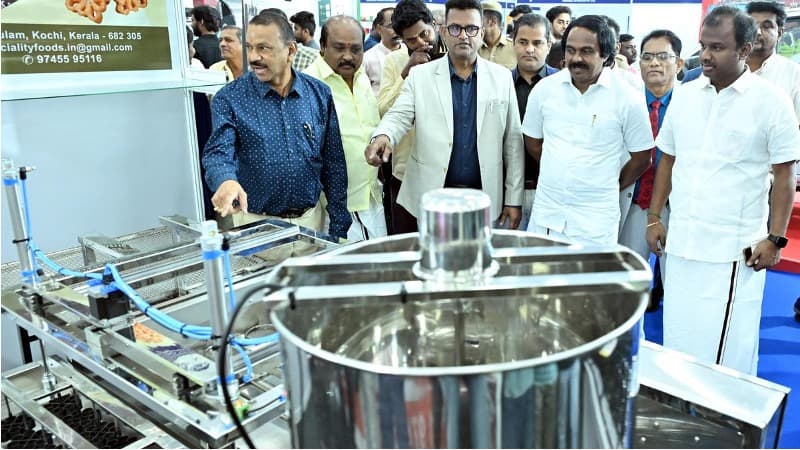
TN Minister Urges Farmers to Adopt Tech for Value Addition in Dairy
Dec 12, 2025

TN Minister Urges Farmers to Adopt Tech for Value Addition in Dairy

In Coimbatore this week, Tamil Nadu’s Minister for Milk and Dairy Development, Mano Thangaraj, called on dairy farmers to embrace modern technologies to boost productivity and value addition across th...Read More

Listen to the Farm, Not the Farmer—The New Productivity Lens
Dec 12, 2025

Listen to the Farm, Not the Farmer—The New Productivity Lens

India’s dairy sector, valued at nearly $30 billion, has reached a point where incremental changes will not deliver the next breakthrough. For decades, improvement programs have focused on what farmers...Read More

What’s Driving Change In Beverages, FMCG And Dairy in 2025
Dec 12, 2025

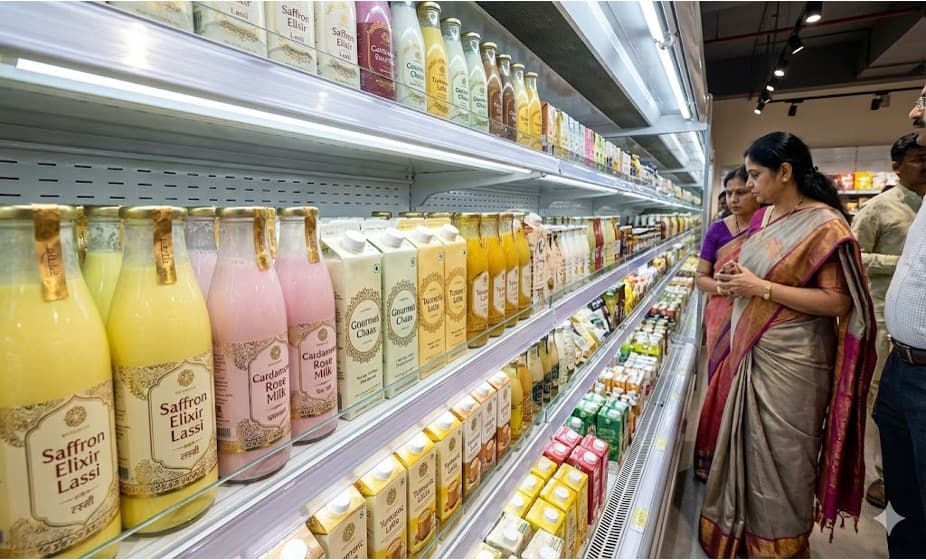
What’s Driving Change In Beverages, FMCG And Dairy in 2025

India’s retail landscape in 2025 was marked by a decisive shift in how consumers choose, consume and connect with brands. From beverages to daily nutrition and even the most essential dairy products,...Read More

Latest Blogs

See More
More Milk, Less Money: India’s Dairy Crisis
Dec 01, 2025

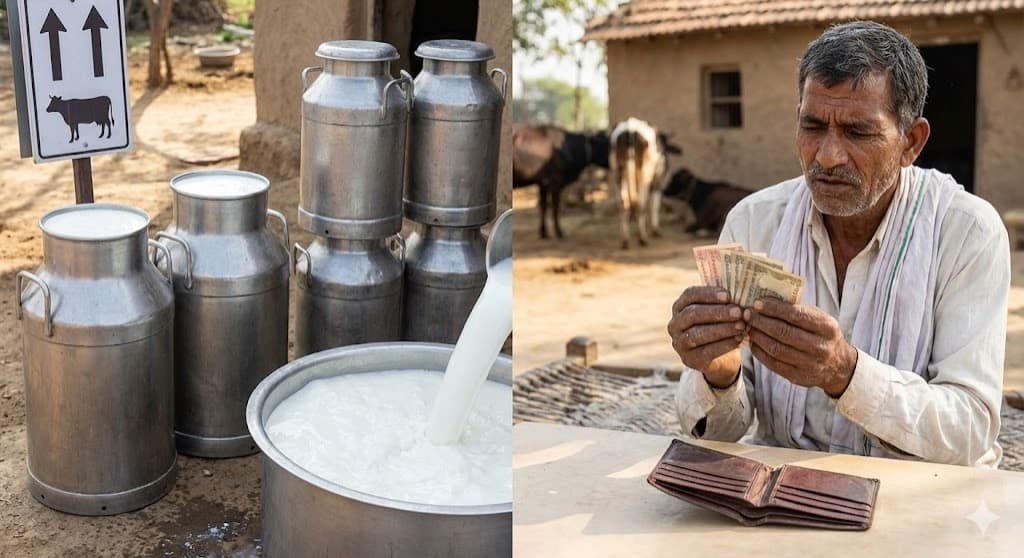
More Milk, Less Money: India’s Dairy Crisis

With the release of the BAHS 2025 summary report, I felt compelled to deep dive into its findings and reflect on the real progress and challenges facing India’s dairy sector. Over the last six years,...Read More

India Milk Prices: Cost Shock and Procurement Pressure
Nov 28, 2025

India Milk Prices: Cost Shock and Procurement Pressure

Milk prices in India face upward pressure as rising feed costs and procurement hikes reshape farm economics. Insight on dairy procurement, feed costs, and market outlook. Official government and coope...Read More

Stop Blaming, Start Claiming: Livestock’s Carbon Credit Future
Nov 16, 2025

Stop Blaming, Start Claiming: Livestock’s Carbon Credit Future

This week, I had the opportunity to attend an Agri Carbon Masterclass conducted by CII FACE. The deliberations, case studies, and discussions presented during the session were both insightful and thou...Read More

India Powers the Gulf’s Dairy Revolution -Gulf Food 2025
Oct 31, 2025

India Powers the Gulf’s Dairy Revolution -Gulf Food 2025

As Gulf Food Manufacturing prepares to open its doors from November 4–6 in Dubai, Indian dairy product and equipment manufacturers have a unique opportunity to explore one of the most promising region...Read More

Global Dairy News

Why the global milk business needs a structural shake-up
Dec 08, 2025

Why the global milk business needs a structural shake-up

The New Zealand dairy stalwart Fonterra has sold its consumer dairy-brands (milk, butter, cheese) — including “Anchor” and “Mainland Cheese” — to French agribusiness giant Lactalis in late October 202...Read More

Raw-milk prices in Europe hit 5-yr low; ripple effect looms
Dec 07, 2025

Raw-milk prices in Europe hit 5-yr low; ripple effect looms

European raw-milk prices have plunged to their lowest in five years, as oversupply and weak demand weigh on dairy markets across the region. According to recent data from DCA Market Intelligence B.V.,...Read More

Global food prices ease; FAO dairy index slips — impact looms
Dec 06, 2025

Global food prices ease; FAO dairy index slips — impact looms

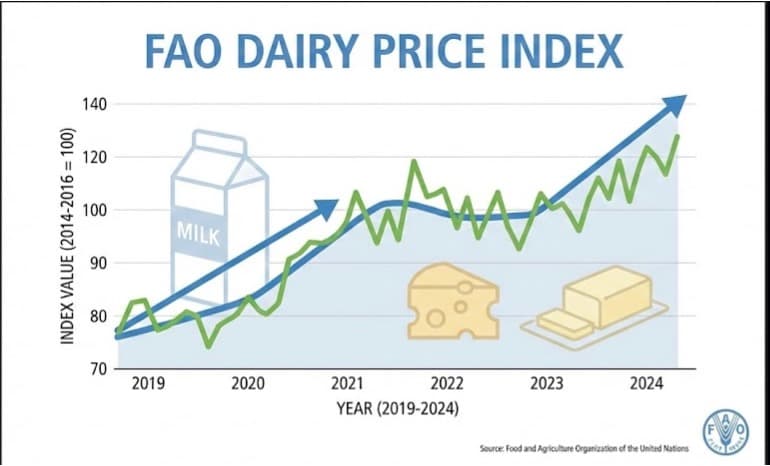
The FAO Dairy Price Index averaged 137.5 points in November, down 4.4 points (3.1 percent) from October and 2.4 points (1.7 percent) from its value a year ago. International dairy prices fell for the...Read More

Dairy News 7x7

Your trusted source for all the latest dairy industry news, market insights, and trending topics.

FOLLOW US
CATEGORIES
  • Global News
  • Indian News
  • Blogs
  • Publications
  • Podcasts
SUBSCRIBE TO OUR NEWSLETTER

Stay informed with the latest updates and trending news in the dairy industry.

No spam, unsubscribe at any time

GET IN TOUCH
C-49, C Block, Sector 65,
Noida, UP 201307
+91 7827405029dairynews7x7@gmail.com

© 2025 Dairy News 7x7. All Rights Reserved.

Terms of ServicePrivacy Policy

Emissions fight critical for dairy

By DairyNews7x7•Published on January 05, 2023

The global dairy industry is working to reduce the overall increase in greenhouse-gas emissions. But to reach the Global Dairy Platform’s goal of net-zero emissions by 2050 the industry needs to reduce annual emissions or find ways to compensate for unavoidable emissions.

There will be no one solution to reaching that goal. To reduce emissions or compensate for them, each dairy farmer will need to look at his or her own farm from many angles – from feeding practices to choice of cropping system to manure management. Climate-smart dairy involves adapting to climate change while contributing to farm income and food security.
IFCN Research
It’s helpful for farmers to learn what others are doing, said Michel Wattiaux, a professor of dairy nutrition and management at the University of Wisconsin-Madison. He said farmers may be interested in reading “Climate-smart agriculture case studies 2021 – projects from around the world,” which was published by the Food and Agriculture Organization of the United Nations.

One of the case studies features a public-private partnership in Switzerland. Farmers there are being incentivized by the Swiss government to reduce greenhouse-gas emissions through a set of measures that best suits their operations.

There are four greenhouse-gas-reduction measures covered by the public-private project.

• Increase the number of lactations per cow, thus reducing the percentage of non-productive animals in the herd – such as heifers or dry cows.

• Increase lifetime performance of each animal.

• Install biogas fermenters to convert manure into energy.

• Increase dairy-beef production by using dual-use breeds and sexed semen so animals may be used for both milk and meat production.

The project is a partnership between the Swiss Federal Office for Agriculture, milk-processor Nestle and dairy-producer-organization Aaremilch AG. The Bern University of Applied Sciences has been providing scientific support.

In 2019 there were 22 million kilograms of milk – about 48.5 million pounds – produced using climate-smart livestock practices on 147 Swiss farms. Possibilities to scale the project seem promising, according to the Food and Agriculture report. Countrywide implementation of the project could result in a significant reduction of overall greenhouse-gas emissions from the Swiss agricultural sector within a couple of years.

The project’s successes have been the result of farmer implementation of the project’s four climate-smart agricultural practices. Discussion between farmers, industry representatives and scientists were consistent factors throughout the project. But calculating greenhouse-gas balances based on a limited set of input data presented a challenge.

So participants are discussing ways to improve a herd-level greenhouse-gas calculator. They’re especially focused on increasing the number of lactations per cow and improving a cow’s lifetime performance. New Swiss agricultural policy is expected to include financial incentives for farmers to increase a cow’s number of lactations; that would encourage producers to keep older cows.

Between 2005 and 2015 the global milking-cow population increased by 11 percent and average milk production increased by 15 percent. The combination of the increased cow population and productivity resulted in a 30 percent increase in global milk supply. It also resulted in an 18 percent increase in greenhouse-gas emissions. That’s according to a report by the Food and Agriculture Organization and the Global Dairy Platform.

Without an improvement in efficiency, the dairy industry’s total greenhouse-gas emissions would have increased by 38 percent. So the industry’s continued focus on improving feed efficiency – including genetic selection for feed efficiency or less-methane-emitting cows – remains important, Wattiaux said.

Feeding better-quality feed will remain important. At the same time producers should avoid overfeeding protein to cows because it can increase nitrous-oxide emissions – another greenhouse gas – from manure, he said. Farmers may want to feed 16 percent to 16.5 percent protein in early-lactation rations, and then reduce the percentage to 15.5 percent as lactation progresses.

Feed additives to reduce enteric-methane emissions are coming to the market but some of them don’t necessarily make the cow any more efficient, he said. But researchers in Switzerland are studying the use of linseed as an additive; it contributes fat to the diet and reduces enteric methane.

Farmers may ask why they should pay for additives. That may become a question that consumers or governments ultimately need to answer.

Wattiaux is one of the speakers scheduled to discuss climate-smart dairy at the 2023 Wisconsin Agricultural Outlook Forum, which will be held Jan. 24 in Union South on the UW-Madison campus.

Swipe to continue reading

Previous Article

Next Article