






Drinking’ milk to stay key category for Australian dairy sector
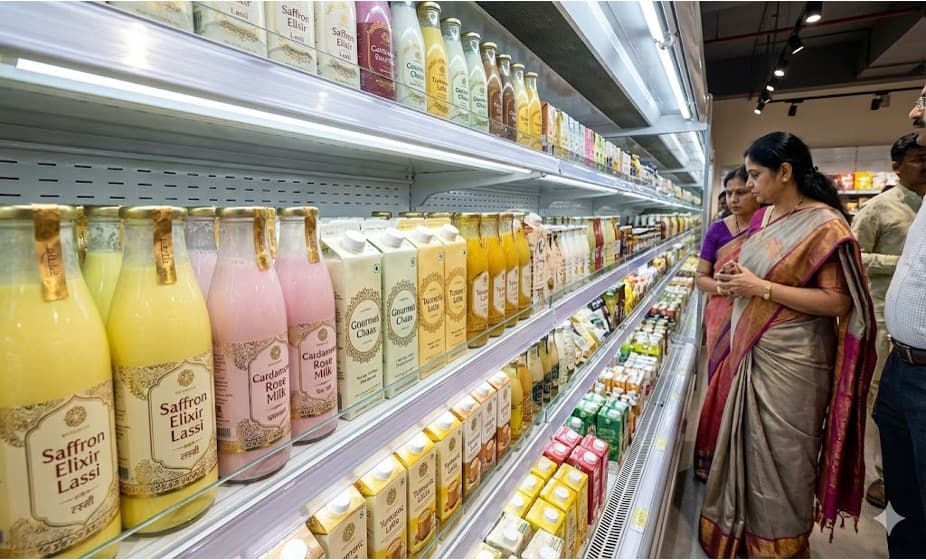
The liquid ‘drinking’ milk market remains of key importance to Australia’s dairy sector – with improved domestic retail pricing and opportunities for further export growth – Rabobank says in a newly-released industry report.
In Australia’s Drinking Milk Markets: from Loss Leader to Improving Performer, the specialist agribusiness bank says the liquid milk category – which in recent years had struggled with a number of challenges including discounting by retailers – is a major “pillar” for Australia’s dairy sector, accounting for 30 per cent of milk production and generating more than A$4 billion in revenue annually.
And this is important not only for revenue generation, but also strategically for supply chain efficiency, helping to support the Australian “dairy value chain and lead to stable farmgate milk prices over multiple seasons for milk suppliers servicing the drinking milk market, the report says.
“Drinking milk, being a staple product in the consumer basket, will remain a large and important category for Australian milk utilisation,” the Rabobank report says.
Australia’s domestic drinking milk market is, however, “very mature” with falling domestic consumption.
But this is being offset by growing exports of liquid milk, according to report author, Rabobank senior dairy analyst Michael Harvey.
“As we begin 2023, the market is experiencing a structural increase in consumer prices across the dairy aisle, led by drinking milk in particular,” said Harvey.
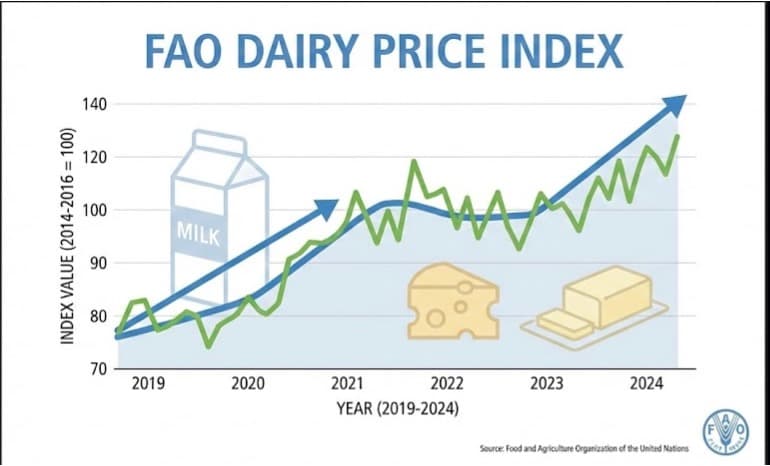
“This has been driven by dairy processors passing through record-high farmgate milk prices and higher supply chain costs, along with tight supply due to declining Australian milk production.
“An extended period of industry-related disruption and low margins is slowly coming to an end.
“For dairy farmers, higher consumer prices for milk and dairy products across supermarket aisles is welcome news. It will solidify the end of frustrations over the discounting of drinking milk. Additionally, it will ensure higher and more stable returns for the market and mitigate the potential volatility in returns in other channels – both onshore and offshore – for those with access to the drinking milk market.”
Mr Harvey said domestic consumption of drinking milk was a significant market for Australia’s dairy industry, “hence the health and performance of the category still has an important role to play in the industry’s profit pool”.
According to Dairy Australia, Australians consumed more than 2.5 billion litres of drinking milk, approximately 30 per cent of the estimated 8.554 billion litres of raw milk produced in Australia for that year, with the remainder going into manufacturing of dairy products and ingredients for the domestic and export markets.
Big ‘drinkers’ Australians are big consumers of drinking milk, the Rabobank report said, with Australia’s per capita consumption ranking among the highest in the world.
“The average Australian consumes a large volume of drinking milk, ranking only behind Ireland, Finland and New Zealand according to the International Dairy Federation,” said Harvey.
“In 2021/22, Australian per capita consumption of milk stood at 93 litres per person for the year, which equals just over 250 millilitres per day.”
Full cream milk is “category king”, equating to 56 per cent of all drinking milk sold in the country.
However, the report said, the drinking milk market in Australia is “extremely mature” and domestic consumption is trending lower as dietary habits shift, a trend that is expected to continue into the medium term.

Dairy Australia figures indicate domestic milk consumption peaked in 2012/13 at 106.7 litres per person and has since fallen by 13 per cent. And in 2021/22, total drinking milk consumption in Australia contracted by 1.1 per cent or 36 million litres.
“This is not a story unique to Australia, however,” said Harvey.
“In many westernised economies, consumption of drinking milk shows a similar trajectory.”
Cost-of-living pressures and food price inflation are also providing some near-term headwinds globally, even though the consumption of dairy, including drinking milk, is “relatively inelastic”.
There are signs of consumers trading down, resulting in declines in drinking milk consumption in grocery retail and out-of-home sales channels, the report says.
The “long-term dynamics of the drinking milk category” in Australia will be difficult to reverse, Rabobank says.
However, it’s not all bad news for domestic dairy consumption, with consumers simply consuming dairy in different forms.
“While fluid milk consumption is declining, other categories – such as cheese – continue to grow,” said Harvey.
Growing exports Export volumes of Australian liquid/drinking milk have also been growing, the report says, with the total volume exported increasing by more than 200 million litres annually over the past decade.
“The Australian liquid milk export sector has continued to perform strongly in recent years, despite dwindling milk supply,” said Harvey.
In 2021/22, Australian exported more than 380 million litres of packaged milk to offshore markets. Between 2012 and 2022, Australia’s exports of liquid milk grew by an average of 17 per cent each year.
The ‘Greater China’ markets – of mainland China, Hong Kong, Macau and Taiwan – have underpinned this export growth, the report says, with China itself the “clear stand out”.
Total volumes of liquid milk to Greater China have expanded by an average of 25 per cent each year over the past decades, Harvey said.
“And while not growing at the same pace as China, export volumes to Southeast Asia have been increasing on average by double digits over the same period,” he added.
“There has been broad-based growth across Southeast Asia, but Singapore, the Philippines and Malaysia have been stand-out performers for Australian dairy exporters in the region.”
Looking forward, he said, there is still plenty of “runway” left for export volumes in these markets, supported by positive “demand and trade settings” in their economies.
These included an increasing appetite for sustainable nutrition, limitations in local dairy supply capacity, cost competitiveness of imported milk and consumer preferences for imported brands.
Key to long-term export success in these markets will be the ability to grow export volumes despite limited growth in Australian milk production, while also maintaining a competitive price point, the report said