
Logo
IndianGlobalBlogsPublicationsPodcastsMarketAboutContact
Logo
IndianGlobalBlogsPublicationsPodcasts
7News
TN Minister Urges Farmers to Adopt Tech for Value Addition in DairyListen to the Farm, Not the Farmer—The New Productivity LensWhat’s Driving Change In Beverages, FMCG And Dairy in 2025ED begins money laundering probe in dairy investment fraud caseIndo-Brazil pact aims to boost cattle genetics and dairy yield

Indian Dairy News

TN Minister Urges Farmers to Adopt Tech for Value Addition in Dairy
Dec 12, 2025

TN Minister Urges Farmers to Adopt Tech for Value Addition in Dairy

In Coimbatore this week, Tamil Nadu’s Minister for Milk and Dairy Development, Mano Thangaraj, called on dairy farmers to embrace modern technologies to boost productivity and value addition across th...Read More

Listen to the Farm, Not the Farmer—The New Productivity Lens
Dec 12, 2025

Listen to the Farm, Not the Farmer—The New Productivity Lens

India’s dairy sector, valued at nearly $30 billion, has reached a point where incremental changes will not deliver the next breakthrough. For decades, improvement programs have focused on what farmers...Read More

What’s Driving Change In Beverages, FMCG And Dairy in 2025
Dec 12, 2025

What’s Driving Change In Beverages, FMCG And Dairy in 2025

India’s retail landscape in 2025 was marked by a decisive shift in how consumers choose, consume and connect with brands. From beverages to daily nutrition and even the most essential dairy products,...Read More

Latest Blogs

See More
More Milk, Less Money: India’s Dairy Crisis
Dec 01, 2025

More Milk, Less Money: India’s Dairy Crisis

With the release of the BAHS 2025 summary report, I felt compelled to deep dive into its findings and reflect on the real progress and challenges facing India’s dairy sector. Over the last six years,...Read More

India Milk Prices: Cost Shock and Procurement Pressure
Nov 28, 2025

India Milk Prices: Cost Shock and Procurement Pressure

Milk prices in India face upward pressure as rising feed costs and procurement hikes reshape farm economics. Insight on dairy procurement, feed costs, and market outlook. Official government and coope...Read More

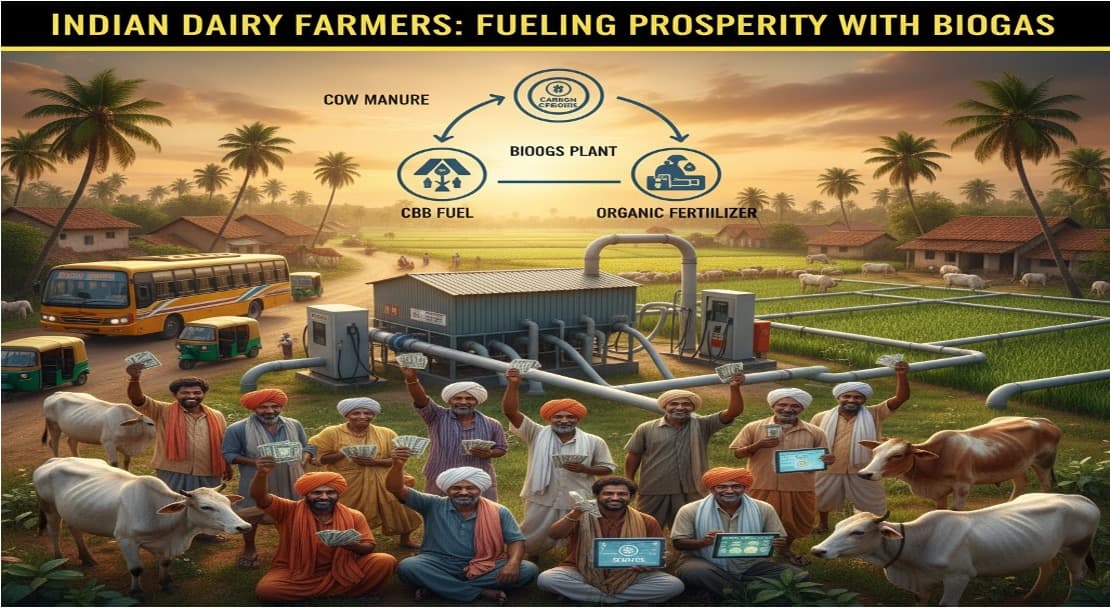
Stop Blaming, Start Claiming: Livestock’s Carbon Credit Future
Nov 16, 2025

Stop Blaming, Start Claiming: Livestock’s Carbon Credit Future

This week, I had the opportunity to attend an Agri Carbon Masterclass conducted by CII FACE. The deliberations, case studies, and discussions presented during the session were both insightful and thou...Read More

India Powers the Gulf’s Dairy Revolution -Gulf Food 2025
Oct 31, 2025

India Powers the Gulf’s Dairy Revolution -Gulf Food 2025

As Gulf Food Manufacturing prepares to open its doors from November 4–6 in Dubai, Indian dairy product and equipment manufacturers have a unique opportunity to explore one of the most promising region...Read More

Global Dairy News

Why the global milk business needs a structural shake-up
Dec 08, 2025

Why the global milk business needs a structural shake-up

The New Zealand dairy stalwart Fonterra has sold its consumer dairy-brands (milk, butter, cheese) — including “Anchor” and “Mainland Cheese” — to French agribusiness giant Lactalis in late October 202...Read More

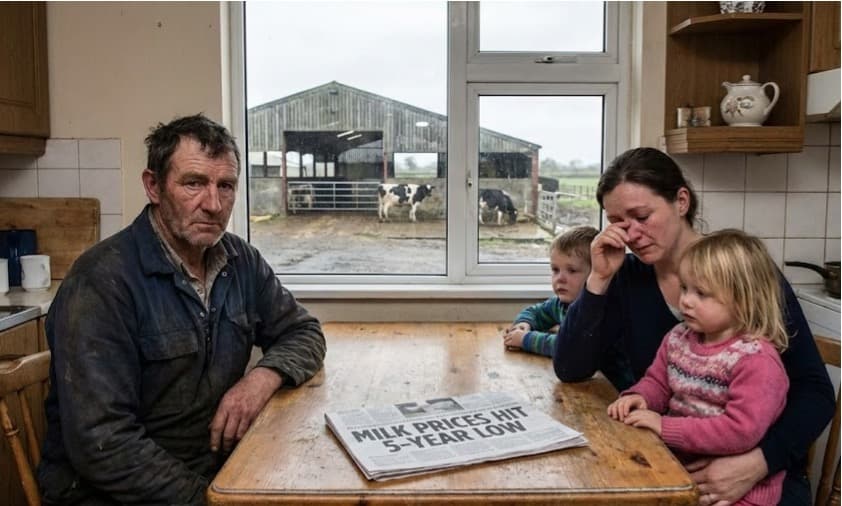
Raw-milk prices in Europe hit 5-yr low; ripple effect looms
Dec 07, 2025

Raw-milk prices in Europe hit 5-yr low; ripple effect looms

European raw-milk prices have plunged to their lowest in five years, as oversupply and weak demand weigh on dairy markets across the region. According to recent data from DCA Market Intelligence B.V.,...Read More

Global food prices ease; FAO dairy index slips — impact looms
Dec 06, 2025

Global food prices ease; FAO dairy index slips — impact looms

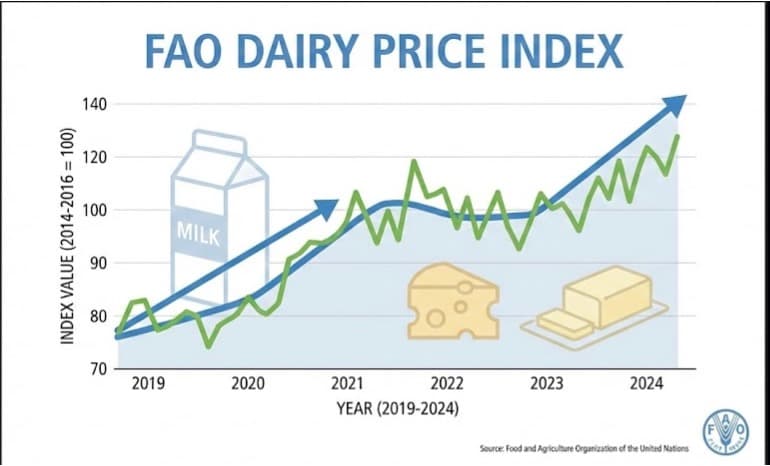
The FAO Dairy Price Index averaged 137.5 points in November, down 4.4 points (3.1 percent) from October and 2.4 points (1.7 percent) from its value a year ago. International dairy prices fell for the...Read More

Dairy News 7x7

Your trusted source for all the latest dairy industry news, market insights, and trending topics.

FOLLOW US
CATEGORIES
  • Global News
  • Indian News
  • Blogs
  • Publications
  • Podcasts
SUBSCRIBE TO OUR NEWSLETTER

Stay informed with the latest updates and trending news in the dairy industry.

No spam, unsubscribe at any time

GET IN TOUCH
C-49, C Block, Sector 65,
Noida, UP 201307
+91 7827405029dairynews7x7@gmail.com

© 2025 Dairy News 7x7. All Rights Reserved.

Terms of ServicePrivacy Policy

Dairy Cows and the Greenhouse Gas Myth

By DairyNews7x7•Published on June 22, 2023

The industry must accept the facts.

Dairy cows do emit methane through belching, flatulence and manure decomposition. But are they the big offenders that many would like the general public to believe?

Working with a notion that stated elimination of the entire U.S. dairy herd would lessen climate change, USDA partnered with researchers at Virginia Tech in 2020 to test the hypothesis.

The research team created three scenarios to look at different assumptions on how and why to remove dairy cattle from the U.S. food production system. The scenarios included ways to repurpose land previously used for dairy to other uses.

One intervening issue in eliminating all dairy is the compensation (or lack of) of the essential nutrition contained in milk and other dairy products. Just as our dairy farmers have to balance nutrition for their cows weighed against feed costs, the nutrition that comes naturally from dairy products must be weighed against any negative environmental impacts that might exist.

It is truly a simplification to think that removing all dairy cows from production would somehow reduce greenhouse gases enough to make any significant improvement to the negatives associated with climate change. In fact, in order to be fair to the dairy industry, there has to be some comparison with other industries that are also associated with the emissions.

Let’s look at the transportation sector.

According to the research, milk production contributes 1.3% of all greenhouse gases while transportation as an industry contributes about 28%. All of agriculture contributes 10%. The generation of electricity contributes about 27%.

These figures are important for all of us in the dairy industry so we can communicate effectively with those who blame dairy (and agriculture) for climate change issues.

To get back to a discussion of greenhouse gas emission vs. nutrients provided, Americans get more than half of their needed calcium and vitamin D from milk, cheese and yogurt. In addition, milk products contribute substantially to human needs for protein, vitamin A, several of the B vitamins, and several minerals.

According to Katie Brown of the National Dairy Council in February 2021, “The efficiency through which dairy provides us with these nutrients would not be possible without cows.”

More broadly, it is not easy to obtain the essential nutrients found in dairy products from any other individual food source, plus there may be increased costs associated with the production of that source.

What were the overall study results?

Researchers found that if the dairy herd was removed from the U.S., greenhouse gas emissions would only be reduced by 0.7% while seriously reducing nutrient availability as noted above. Each scenario presented different alternatives, but the results were the same — dairy is not a primary contributor to greenhouse gas emissions.

The researchers also examined what they call the “downstream” effects of removing all dairy herds, specifically fertilizer production and land use. Considering these scenarios, the increased production of synthetic fertilizers would actually increase the emission of greenhouse gases. And we would no longer have land used to pasture dairy cows or to grow nutritious feed for them.

The dairy industry also has not received credit for the improvements it has made toward better environmental stewardship.

Farmers’ willingness to invest in better management of their land, air and water resources has lessened dairy’s negative environmental impact. It now takes 30% less water and 21% less land for a combined 19% smaller carbon footprint to produce a gallon of milk, according to Dairy Management Inc.

These better management practices are coupled with the cow’s ability to consume plants and byproducts not fit for human consumption, turning them into nutrient-rich milk.

The answer to the question I posed at the beginning of this column is a resounding “No!” Dairy is not the major offender of greenhouse gas emissions that the general public seems to believe.

Please join me, the board and staff in celebrating efforts made by American dairy to do its part to protect our environment.

Swipe to continue reading

Previous Article

Next Article