

Dairy also offers opportunities to D2C delivery models like Fresh to Home
The last few years have seen major developments within the dairy and meat sector, particularly concerning the supply chain side of things. If you are someone who likes to get daily essentials of meat and dairy to be available at your home in time, chances are you have heard of these start-ups FreshToHome, Licious, Zappfresh, Grubmarket, Farmdrop, Peapod, and Enedao.
These are dairy and meat delivery start-ups that have come up in the last ten years which have pioneered new changes in the supply chain like sourcing materials directly from fishermen and farmers. Bengaluru-based FreshToHome has been working to up the ante by bringing in newer technologies to make the entire supply more efficient.
“Our technology-enabled platform ensures that middlemen are cut out and the product reaches the end consumer within 24 -36 hours,” said Shan Kadavil, Co-Founder and CEO, FreshToHome. “We have incorporated technology to the length and breadth of our business, right from sourcing to supply chain to our delivery mechanism.”
The meat and dairy industry is largely unregulated with a serious lack of transparency. A typical fish supply chain, for instance, in India has over three middlemen which take at least 3-4 days to reach the end-user.
FreshToHome’s platform uses AI-based technology (called Commodities Exchange) that allows fishermen or farmer to electronically auction their produce – this is the primary way in which their supply chain is crafted.
The company also claims to guarantee an around-the-clock cold chain that keeps the products within a range of 0-4 degrees through IoT-based inbuilt sensors. Additionally, over 120 checks during the process, including for standard chemicals, antibiotics, and preservatives make sure that the customers get the best stuff.
“This is a tough task to accomplish for our competitors who buy from vendors in the city,” Kadavil added.
Currently, the company is at a revenue base of around Rs 1,000 crore.
Delivery Model
FreshToHome ships the produce from central hubs to distribution hubs, from there it is transported in vacuum-sealed pouches, cold boxes and temperature-controlled trucks. The temperature-controlled trucks then bring the products to the collection centres, from there it is packaged and sent to different factory hubs, where the meat is cut, cleaned and packaged according to the order.
“To make the flow smoother, we have built a strong cold storage and supply structure and have tied up with over 1,500 fishermen across 150 coasts and have over 40 collection centres at harbours,” Kadavil said.
The company claims to have over 2,000 last-mile riders registered on the platform for deliveries and working with multiple providers that have over 60-plus trucks, 1,500 people, and 100 hubs across India and Dubai. The trucks are kept at every 100 kilometres to drop fish to the nearest collection point.
FreshToHome in the recent Series C funding has raised $121 million in 2020. The firm is also EBITDA profitable in mature cities which has led to large investor interest in FreshToHome, the company stated.
Another major player in the sector, Licious recently raised $52 million at a valuation of $1 billion and became the first unicorn in the D2C space. Other major funds raised in the sector for this year were Stellapps raising $18 million in funding led by Nutreco, Meat Delivery Startup TenderCuts raising $15 million from Paragon Partners, among others.
Market View
According to a report, the Indian meat market is pegged at $31 billion and growing at a CAGR of 20 percent and is expected to reach $65 billion by 2022. Still largely unorganized and unregulated, the market is mostly handled by individual outlets at various points. On other hand, the dairy market in India reached a value of Rs 11,357 billion in 2020. Looking forward, the market is expected to grow at a CAGR of 15.4 percent during 2021-2026 (as per an IMARC report).
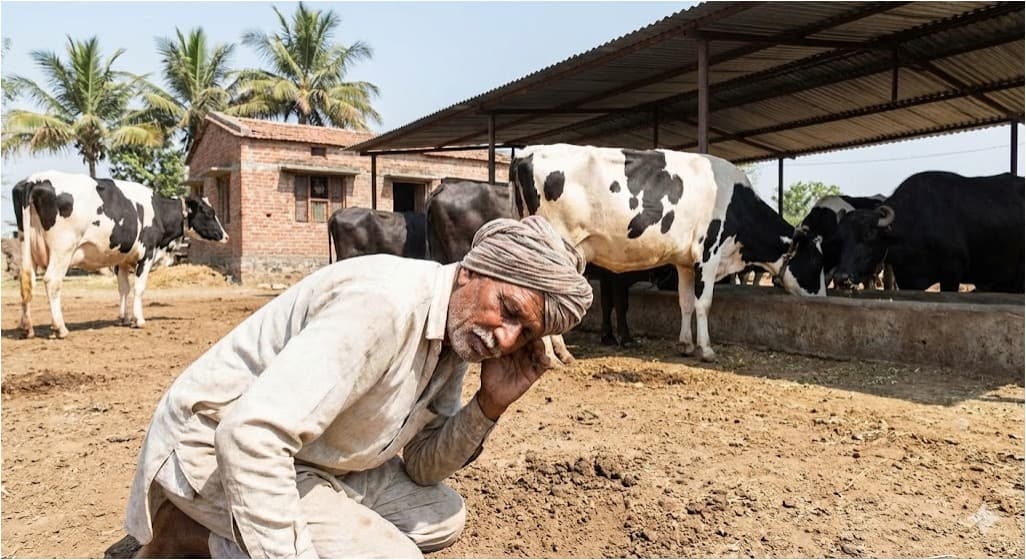
The main challenges these start-ups face are the absence of an unbroken cold chain, quality standards, and protocols. There is no regular skilled workforce to handle and process meat. Shortage of fodder and unhygienic conditions are some of the major challenges in the dairy industry.
Founded in 2011, FreshToHome’s has its roots in Silicon Valley where Co-founders had been part of leadership teams of companies such as Zynga and SupportSoft. As a foodie, Kadavil loved eating fish and meat and used to buy from a company called Seatohome started by the current Co-founder Mathew Joseph, a veteran from the seafood field. Mathew knew his fish but didn’t quite know how to scale the e-commerce business. When he had to, unfortunately, close his business, Kadavil angel-funded him and that’s how both jumped in to start freshtohome.
Kadavil shared, “The journey has been bumpy but also full of milestones that provided the motivation to keep going. It is finally turning out to be fruitful. We hope to scale to newer heights and expand the business in India and abroad.”
Company’s Future Plans
Given the rapid rate at which the meat and dairy industry is growing, whoever is currently able to build a larger customer base will ensure a nicer return on investments in the years ahead.
“We plan to expand to all GCC (Gulf Cooperation Council) countries, specifically in Saudi Arabia, Oman and Qatar. Other than that, we plan to convert all our hubs to retail outlets and invest in our vertical integration of fish and poultry. We are already farming over 6,000 tonnes of produce on our platform,” Kadavil stated.
Also, on the vertical integration, FreshToHome is planning to go deeper into technology-enabled farming such as the Nano farms that facilitate intensive aquaculture and poultry farming. By the end of this year, the company plans to open up over 100 offline stores across India, in addition to 30 stores that are already up and running.