
Logo
IndianGlobalBlogsPublicationsPodcastsMarketAboutContact
Logo
IndianGlobalBlogsPublicationsPodcasts
7News
TN Minister Urges Farmers to Adopt Tech for Value Addition in DairyListen to the Farm, Not the Farmer—The New Productivity LensWhat’s Driving Change In Beverages, FMCG And Dairy in 2025ED begins money laundering probe in dairy investment fraud caseIndo-Brazil pact aims to boost cattle genetics and dairy yield

Indian Dairy News

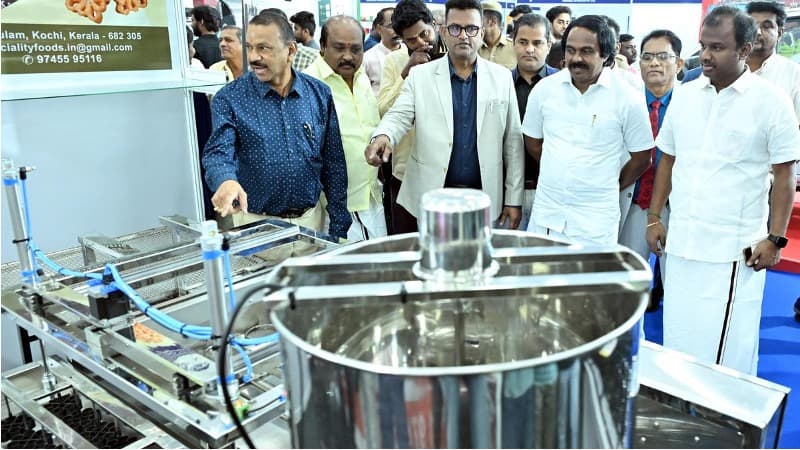
TN Minister Urges Farmers to Adopt Tech for Value Addition in Dairy
Dec 12, 2025

TN Minister Urges Farmers to Adopt Tech for Value Addition in Dairy

In Coimbatore this week, Tamil Nadu’s Minister for Milk and Dairy Development, Mano Thangaraj, called on dairy farmers to embrace modern technologies to boost productivity and value addition across th...Read More

Listen to the Farm, Not the Farmer—The New Productivity Lens
Dec 12, 2025

Listen to the Farm, Not the Farmer—The New Productivity Lens

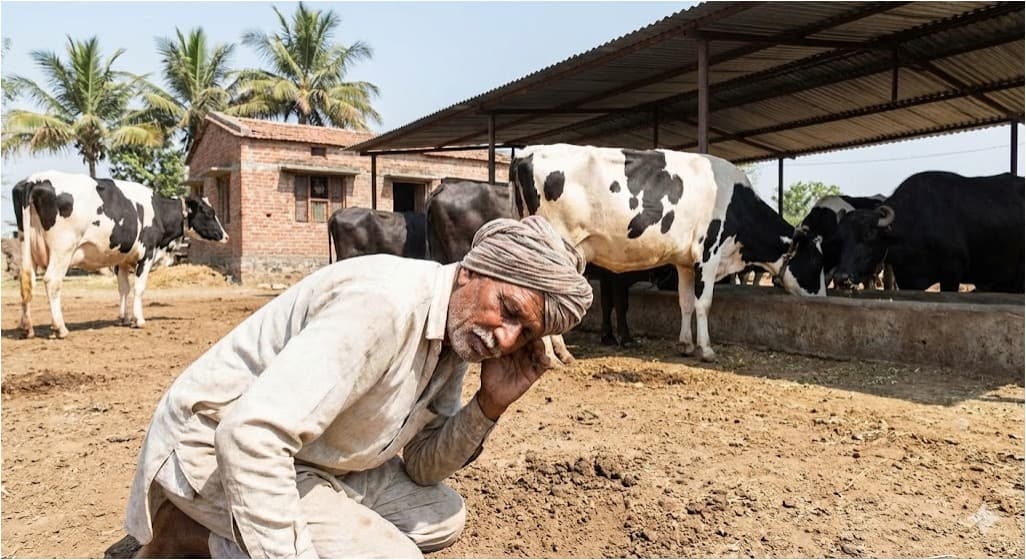
India’s dairy sector, valued at nearly $30 billion, has reached a point where incremental changes will not deliver the next breakthrough. For decades, improvement programs have focused on what farmers...Read More

What’s Driving Change In Beverages, FMCG And Dairy in 2025
Dec 12, 2025

What’s Driving Change In Beverages, FMCG And Dairy in 2025

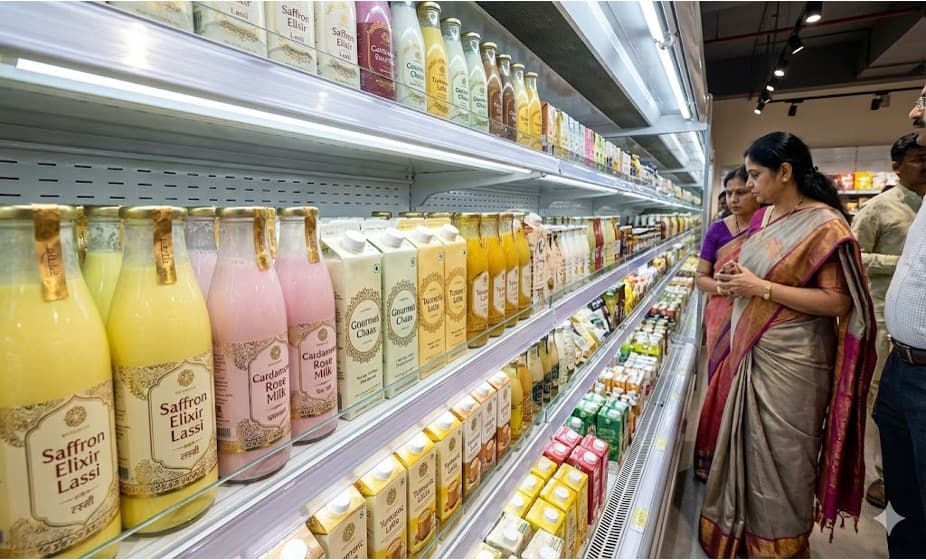
India’s retail landscape in 2025 was marked by a decisive shift in how consumers choose, consume and connect with brands. From beverages to daily nutrition and even the most essential dairy products,...Read More

Latest Blogs

See More
More Milk, Less Money: India’s Dairy Crisis
Dec 01, 2025

More Milk, Less Money: India’s Dairy Crisis

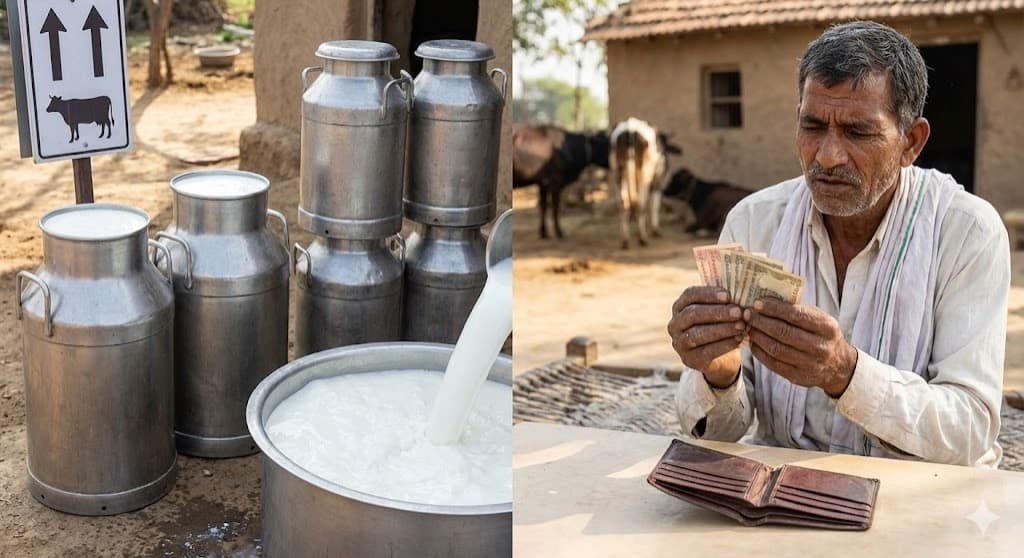
With the release of the BAHS 2025 summary report, I felt compelled to deep dive into its findings and reflect on the real progress and challenges facing India’s dairy sector. Over the last six years,...Read More

India Milk Prices: Cost Shock and Procurement Pressure
Nov 28, 2025

India Milk Prices: Cost Shock and Procurement Pressure

Milk prices in India face upward pressure as rising feed costs and procurement hikes reshape farm economics. Insight on dairy procurement, feed costs, and market outlook. Official government and coope...Read More

Stop Blaming, Start Claiming: Livestock’s Carbon Credit Future
Nov 16, 2025

Stop Blaming, Start Claiming: Livestock’s Carbon Credit Future

This week, I had the opportunity to attend an Agri Carbon Masterclass conducted by CII FACE. The deliberations, case studies, and discussions presented during the session were both insightful and thou...Read More

India Powers the Gulf’s Dairy Revolution -Gulf Food 2025
Oct 31, 2025

India Powers the Gulf’s Dairy Revolution -Gulf Food 2025

As Gulf Food Manufacturing prepares to open its doors from November 4–6 in Dubai, Indian dairy product and equipment manufacturers have a unique opportunity to explore one of the most promising region...Read More

Global Dairy News

Why the global milk business needs a structural shake-up
Dec 08, 2025

Why the global milk business needs a structural shake-up

The New Zealand dairy stalwart Fonterra has sold its consumer dairy-brands (milk, butter, cheese) — including “Anchor” and “Mainland Cheese” — to French agribusiness giant Lactalis in late October 202...Read More

Raw-milk prices in Europe hit 5-yr low; ripple effect looms
Dec 07, 2025

Raw-milk prices in Europe hit 5-yr low; ripple effect looms

European raw-milk prices have plunged to their lowest in five years, as oversupply and weak demand weigh on dairy markets across the region. According to recent data from DCA Market Intelligence B.V.,...Read More

Global food prices ease; FAO dairy index slips — impact looms
Dec 06, 2025

Global food prices ease; FAO dairy index slips — impact looms

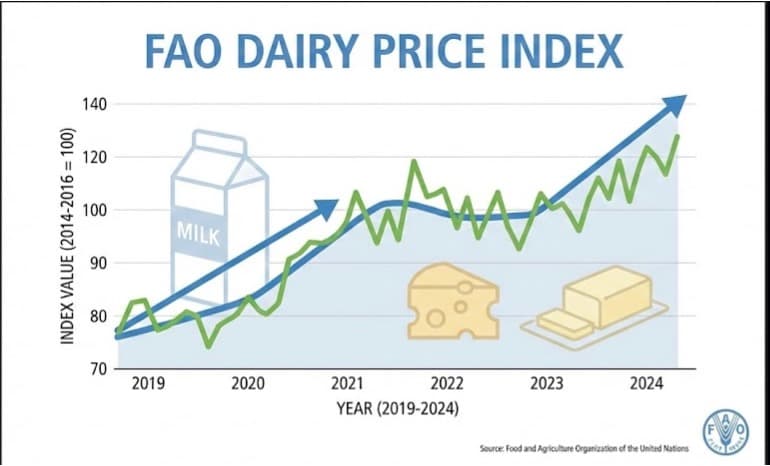
The FAO Dairy Price Index averaged 137.5 points in November, down 4.4 points (3.1 percent) from October and 2.4 points (1.7 percent) from its value a year ago. International dairy prices fell for the...Read More

Dairy News 7x7

Your trusted source for all the latest dairy industry news, market insights, and trending topics.

FOLLOW US
CATEGORIES
  • Global News
  • Indian News
  • Blogs
  • Publications
  • Podcasts
SUBSCRIBE TO OUR NEWSLETTER

Stay informed with the latest updates and trending news in the dairy industry.

No spam, unsubscribe at any time

GET IN TOUCH
C-49, C Block, Sector 65,
Noida, UP 201307
+91 7827405029dairynews7x7@gmail.com

© 2025 Dairy News 7x7. All Rights Reserved.

Terms of ServicePrivacy Policy

Crisil Says India’s Dairy Success Holds Key To Food Price Stability

By DairyNews7x7•Published on August 18, 2023

Retail inflation rose to 7.44%, the highest since April 2022, led by inflation in food and beverages which stood at 10.47%, the highest since January 2020. As prices of various food items rise due to a combination of global and local factors, including extreme weather conditions, the government has continued supply-side interventions.

These include releasing buffer stocks, imposing export curbs on some commodities and importing more of others.

But the need for long-term supply-side measures persists.According to Pushan Sharma, director at Crisil, volatility in prices of perishables is high due to their sensitivity to temperature, rainfall, and issues around shelf life.While the government has announced minimum support prices for field crops, there is limited government procurement and no benchmarks for prices when it comes to vegetables and fruits.

Excerpts from the interview:

Some of our policies are focused on addressing near-term challenges. Bringing in supplies into the market can tackle short-term measures. However, structural measures need to be taken to address recurring challenges.

There is need for food processing. While milk is one of the most processed foods with multiple by-products, that’s not the case for tomatoes. Just about six months back, farmers were forced to sell tomatoes only for Rs 2-3. They were not harvesting crops since it was more expensive to harvest than selling the produce. Cut to now, tomatoes were fetching even over Rs 200 per kg.

If you have excess produce, process and store it at the right temperature, you can have longer shelf life. Same goes for other vegetables such as onions. Even in case of fruits, such as bananas, we feel that it has low shelf life, but that too can be enhanced when stored at the right temperature and controlling air composition because oxidation process is what ripens it.

Structural measures can help in the medium-term, not immediately. The lowest hanging fruits for this problem is to get better sorting, grading and processing infrastructure. Sorting and grading similar quality together also incentivises farmers to produce better quality. That’s being done very manually today. It needs to be more scientific.

From the government perspective, what can be done?

From the government perspective, best practices can be drawn from the dairy value chain and wherever sustainable, can be applied to the crop value chain.

For instance, almost half the milk that’s produced goes to farmer producer organisations. While so much milk is running through FPOs, coverage of FPOs on crops is limited because of the value proposition. A farmer will engage with an FPO if he derives value from it. In case of milk, the FPO will provide artificial insemination, care for cattle, fodder, procurement at a fixed price, that’s not solved in case of crops.

One needs to see how the value proposition of FPOs can be enhanced on the crops side. There is need for more availability and access to agri extension services as well, by the public and private sector. Farmers understand climate change and need to prepare for changing patterns to reduce volatility.

Barring pulses, sowing for all other crops is in excess of what it was in the corresponding period last year. What’s the price trajectory going forward?

There is a reason for that. Pulses are sown in the month of May and June. Because of extremely low rainfall in Maharashtra and Karnataka then, the sowing window was lost then.

The impact is already showing on prices, with prices of tur already trending at over 30% more than an year ago. For pulses, we may see government imports and supply-side interventions. However, overall agri production is set to be higher than last year.

Wheat is not in season, stocks are slightly low because the government has not procured as much as it intended to. Besides, these are commodities linked to the global prices, with both rice and wheat seeing higher global cues.

In case of vegetables, while the rise in tomato prices is seasonal and might wane, onions might cause some pressure. Milk has seen a sharp increase in prices but prices are expected to stabilise going forward.

Swipe to continue reading

Previous Article

Next Article