

Cooperative sector is best model for Bharat’s growth: R.S. Sodhi
Few Indian brands enjoy the recognition and reputation that Amul does. The dairy giant is now expanding the milk products portfolio and getting into new products like vegetables and frozen fruits. In an exclusive interview, R.S. Sodhi, managing director of Amul, talks about its plans and the bigger role Amul has to play in the cooperative sector. Excerpts:Competition will bring in more transparency, better prices for the farmers and better products. It will also help us to continue to work in supply chain innovation and expansion.
Q/ What are Amul’s expansion plans?
A/ Amul’s expansion plans are based on how much milk we will be getting. Generally, every year there is an expansion by Rs800 crore to Rs1,000 crore. We are getting 9 per cent more milk, which means 25 lakh litres. That means an investment of Rs1,000 crore. We are investing in Gujarat and outside in various product categories.
We are expanding in fresh products (milk, curd and butter milk). A Rs500-crore dairy is coming up in Rajkot; land is being allocated by the state. Within two years, big dairy plants will also come up in Bagpat, near Delhi, Varanasi, Rohtak and Kolkata. The total investment would be between Rs300 crore and Rs500 crore.
We are also eying Rs1,000 crore in exports. Amul exports to some 55 countries, though mainly to neighbouring countries.
Q/ What are the new technologies Amul is introducing?
A/ In milk production, we recently introduced two new technologies and these are doing really well. One is sorted sex semen, which leads to 95 per cent of calves born being female. The technology is subsidised (70% to 80%) for farmers. Second is embryo transplant, which helps to multiply the numbers (of high-yielding cows). Usually, a cow will deliver only one calf in a year. Using embryo transplant, 100 to 150 calves can (come from the same cow) every year, as the embryo can be transplanted into a non-productive cow as well. The calf will have the genes of a good bull.
Milking machines are now being used more. Each machine costs Rs50,000. As not all farmers can afford it, we have mobile machines.
For milk collection, we are working on solar-powered bulk milk coolers. Also, our tankers can measure fat and other parameters and feed it into the system even as the milk is pumped into the tanker. This ensures that nobody tampers with the quantity and quality of milk.
We recently built Asia’s biggest milk powder plant. We are also working on a technology which can store perishable sweets like barfi and kalakand for up to 45 days.
Q/ What are the new products in the pipeline?
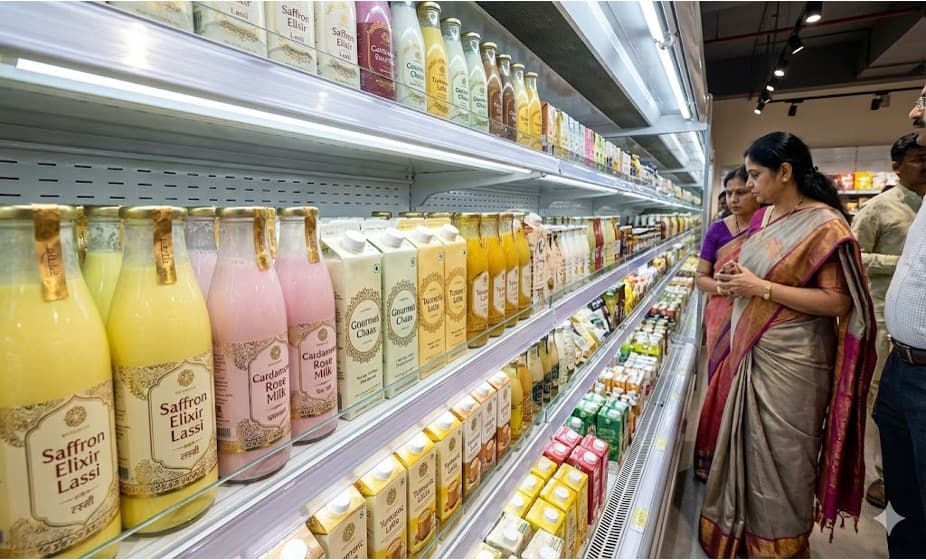
A/ New variants in butter and cheese, and we are investing a lot in Indian traditional fresh sweets. We want to make these products and fresh paneer in plants closer to consumption areas, and not centrally in Gujarat.
We are working on high protein dairy products. We will be adding more markets for products like atta (flour) and honey. Bakery, frozen fruits and vegetables are other areas we are expanding to.
Q/ There is buzz about organic and healthy food.
A/ It is a growing category; at the moment, it is very niche, small and scattered. In dairy, we can definitely work. But in fruits and vegetables, we will have to get into the main category first and then organic. India’s organic market is Rs4,000 crore to Rs5,000 crore a year.
In the fruits and vegetables category, we will add organic. The planning is on and it should happen in a year. We have forward distribution in the market, unlike others. We also have a pan-India frozen chain. No other company has this advantage.
Q/ What are the key challenges before Amul?
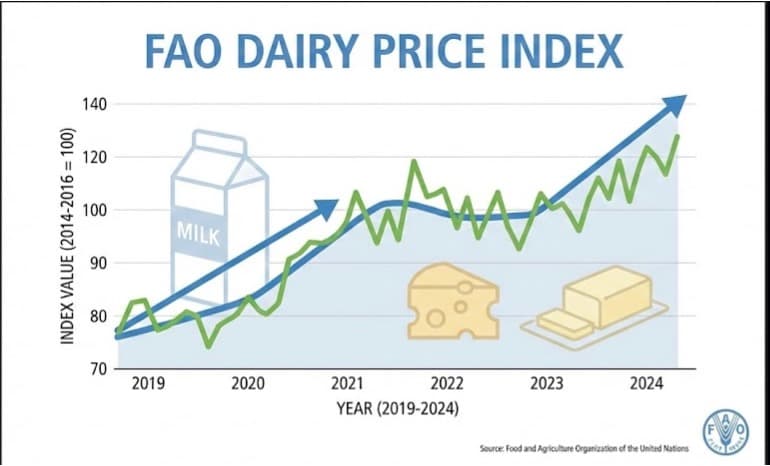
A/ As such, Amul and the dairy industry have the same challenge—how to increase productivity of animals to decrease the price of milk. The price of milk is increasing, but we have to ensure that milk and milk products are reasonably priced so that consumption increases. It is about meeting these two diagonally opposite demands by making the supply chain more efficient.
Another challenge is dissuading the government from entering into free trade agreements for the import of dairy products, as this will harm the interest of dairy farmers. Till now, the government has responded favourably.
Another challenge is the propaganda by vested interests against milk, which is a universally accepted super food and healthy product. PETA and other groups are unleashing false propaganda. In some countries, there are vested interests who do not want India to become a big force in the dairy industry.
The whole world is surprised by how well India is doing. This is providing very good income for farmers in rural areas. There are 10 crore farmers (families) in animal husbandry in India and Amul has 3.6 crore farmers (families) under its fold.
Another challenge is keeping Amul a contemporary, modern food brand for youngsters and villages. It is the only food brand that is accepted by all age groups, income brackets, geography, castes and religions. It is about keeping this image of the brand intact. The brand has to be modern, contemporary and innovative. It is not easy. Any decision you take, be it packaging, technology, pricing or policies, you have to see that in no way is it harming that image.
Q/ How do you see the competition from private dairies?
A/ Liberalisation happened in 1991. Many dairies have come up, many have survived and many have closed down. There is scope for everybody. In India, the dairy sector is worth Rs9 lakh crore and the organised sector is worth Rs3 lakh crore. In another decade, the organised sector can be worth Rs10 lakh crore.
Competition will bring in more transparency, better prices for the farmers and better products. It will also help us to continue to work in supply chain innovation and expansion.
Q/ Is Amul helping others set up cooperatives?
A/ Cooperatives command 60 per cent market share in India. And all have come out of the knowledge and experience of Amul. This has been happening since Dr Verghese Kurien formed the National Dairy Development Board in 1965 to replicate the Amul model through it.
In 2010, we decided to increase our milk procurement from outside Gujarat. So, we get milk from other states, including the northeast. We are helping cooperative sectors. For example, we are promoting the Jammu and Kashmir Milk Producers Union. It is now a Rs300 crore industry. We are also helping Andhra Pradesh to set up a cooperative.
Q/ Union Cooperation Minister Amit Shah said he had a lot of expectations from Amul.
A/ This is because, if India has to grow Bharat has to grow. Bharat means small workers and small farmers. For this, the cooperative sector is the best model in which they are not exploited by middlemen.
Cooperative is the way of doing small business by small people, through small people. India is a country of small farmers, entrepreneurs, retailers and consumers. And only cooperatives can take care of these segments.
Cooperatives are the only way to distribute wealth and remove income disparity. I think the government has realised this, and Amul is the time-tested, profitable, well-recognised model that the government would like to replicate.