Logo
IndianGlobalBlogsPublicationsPodcastsMarketAboutContact
Logo
IndianGlobalBlogsPublicationsPodcasts
7News
TN Minister Urges Farmers to Adopt Tech for Value Addition in DairyListen to the Farm, Not the Farmer—The New Productivity LensWhat’s Driving Change In Beverages, FMCG And Dairy in 2025ED begins money laundering probe in dairy investment fraud caseIndo-Brazil pact aims to boost cattle genetics and dairy yield

Indian Dairy News

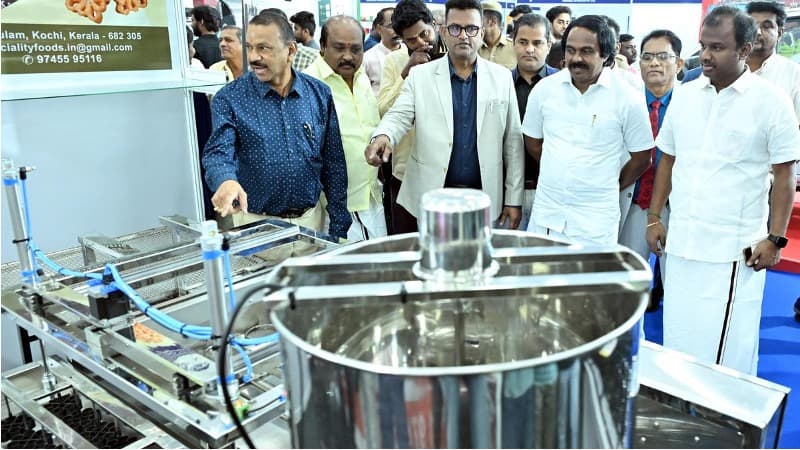
TN Minister Urges Farmers to Adopt Tech for Value Addition in Dairy
Dec 12, 2025

TN Minister Urges Farmers to Adopt Tech for Value Addition in Dairy

In Coimbatore this week, Tamil Nadu’s Minister for Milk and Dairy Development, Mano Thangaraj, called on dairy farmers to embrace modern technologies to boost productivity and value addition across th...Read More

Listen to the Farm, Not the Farmer—The New Productivity Lens
Dec 12, 2025

Listen to the Farm, Not the Farmer—The New Productivity Lens

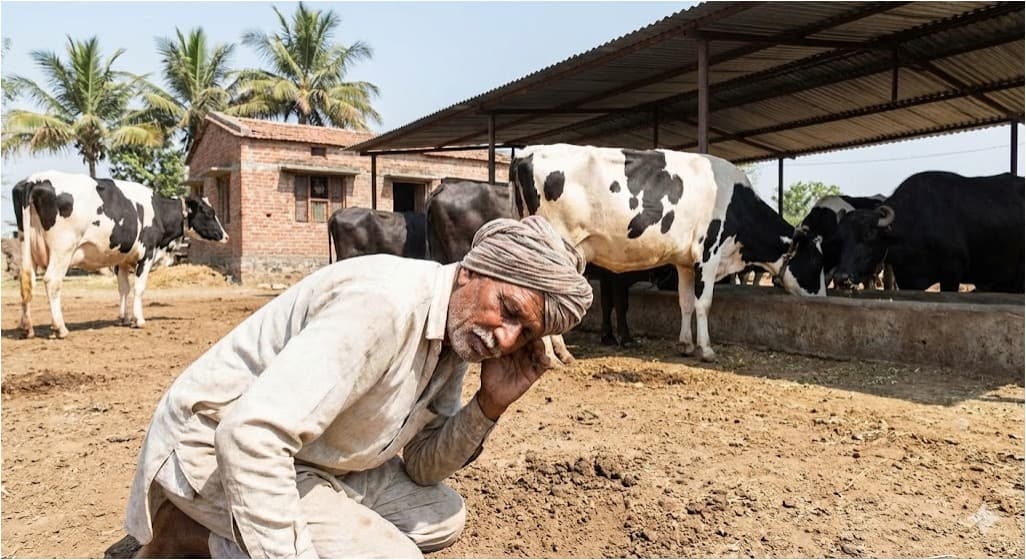
India’s dairy sector, valued at nearly $30 billion, has reached a point where incremental changes will not deliver the next breakthrough. For decades, improvement programs have focused on what farmers...Read More

What’s Driving Change In Beverages, FMCG And Dairy in 2025
Dec 12, 2025

What’s Driving Change In Beverages, FMCG And Dairy in 2025

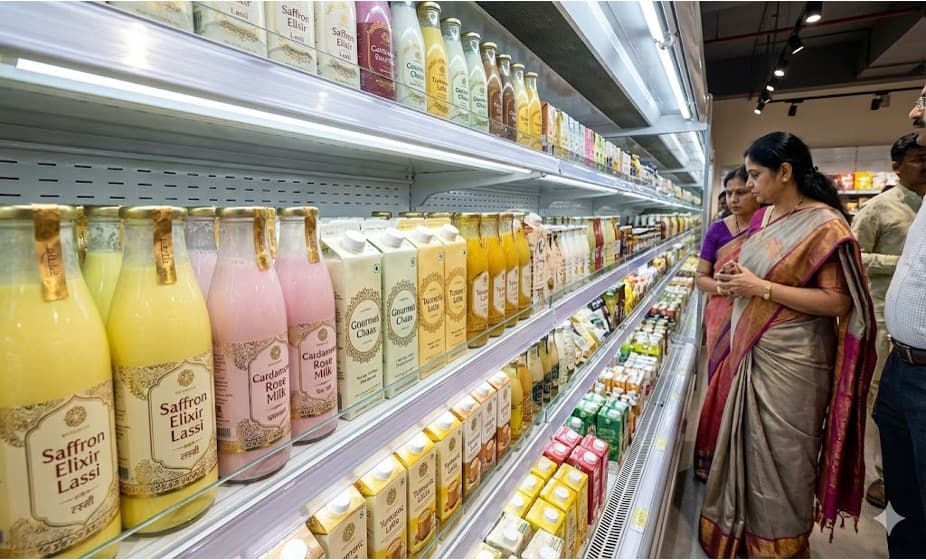
India’s retail landscape in 2025 was marked by a decisive shift in how consumers choose, consume and connect with brands. From beverages to daily nutrition and even the most essential dairy products,...Read More

Latest Blogs

See More
More Milk, Less Money: India’s Dairy Crisis
Dec 01, 2025

More Milk, Less Money: India’s Dairy Crisis

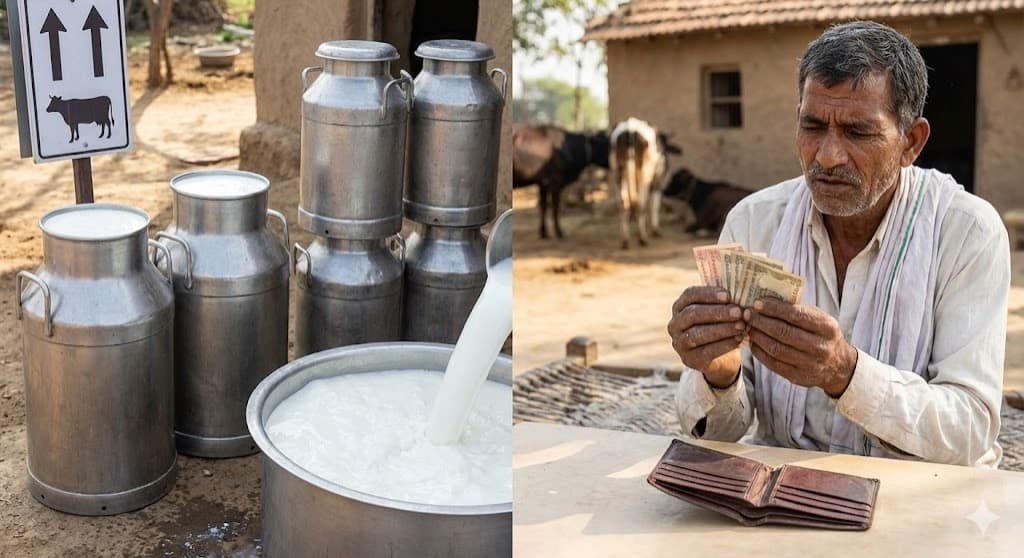
With the release of the BAHS 2025 summary report, I felt compelled to deep dive into its findings and reflect on the real progress and challenges facing India’s dairy sector. Over the last six years,...Read More

India Milk Prices: Cost Shock and Procurement Pressure
Nov 28, 2025

India Milk Prices: Cost Shock and Procurement Pressure

Milk prices in India face upward pressure as rising feed costs and procurement hikes reshape farm economics. Insight on dairy procurement, feed costs, and market outlook. Official government and coope...Read More

Stop Blaming, Start Claiming: Livestock’s Carbon Credit Future
Nov 16, 2025

Stop Blaming, Start Claiming: Livestock’s Carbon Credit Future

This week, I had the opportunity to attend an Agri Carbon Masterclass conducted by CII FACE. The deliberations, case studies, and discussions presented during the session were both insightful and thou...Read More

India Powers the Gulf’s Dairy Revolution -Gulf Food 2025
Oct 31, 2025

India Powers the Gulf’s Dairy Revolution -Gulf Food 2025

As Gulf Food Manufacturing prepares to open its doors from November 4–6 in Dubai, Indian dairy product and equipment manufacturers have a unique opportunity to explore one of the most promising region...Read More

Global Dairy News

Why the global milk business needs a structural shake-up
Dec 08, 2025

Why the global milk business needs a structural shake-up

The New Zealand dairy stalwart Fonterra has sold its consumer dairy-brands (milk, butter, cheese) — including “Anchor” and “Mainland Cheese” — to French agribusiness giant Lactalis in late October 202...Read More

Raw-milk prices in Europe hit 5-yr low; ripple effect looms
Dec 07, 2025

Raw-milk prices in Europe hit 5-yr low; ripple effect looms

European raw-milk prices have plunged to their lowest in five years, as oversupply and weak demand weigh on dairy markets across the region. According to recent data from DCA Market Intelligence B.V.,...Read More

Global food prices ease; FAO dairy index slips — impact looms
Dec 06, 2025

Global food prices ease; FAO dairy index slips — impact looms

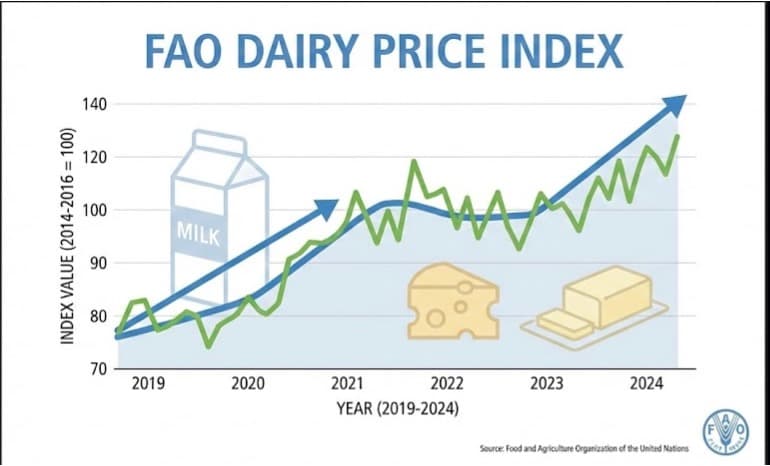
The FAO Dairy Price Index averaged 137.5 points in November, down 4.4 points (3.1 percent) from October and 2.4 points (1.7 percent) from its value a year ago. International dairy prices fell for the...Read More

Dairy News 7x7

Your trusted source for all the latest dairy industry news, market insights, and trending topics.

FOLLOW US
CATEGORIES
  • Global News
  • Indian News
  • Blogs
  • Publications
  • Podcasts
SUBSCRIBE TO OUR NEWSLETTER

Stay informed with the latest updates and trending news in the dairy industry.

No spam, unsubscribe at any time

GET IN TOUCH
C-49, C Block, Sector 65,
Noida, UP 201307
+91 7827405029dairynews7x7@gmail.com

© 2025 Dairy News 7x7. All Rights Reserved.

Terms of ServicePrivacy Policy

Climate change. Why India refused to sign the ‘Methane Pledge

By DairyNews7x7•Published on December 27, 2022

Much to the chagrin of the developed world, India has been a tough, unrelenting negotiator at the climate negotiations.

In the 2021 Conference of Parties at Glasgow (COP26), India dug its heels in and got the wording of the text on coal changed from “phase out” to “phase down”.

This nuanced semantic shift may not seem a big change, but those at the negotiations read a lot of meaning in it and the Western media roundly criticised India for “watering down” the agreement on coal.

Similarly, India kept away from the UK-led agreement on deforestation and refused to sign the ‘Global Methane Pledge’, a proposal of the US and the EU to target a 30 per cent reduction in global methane emissions by 2030 over 2020 emission levels.

Strong stance
So is India a drag on global climate action? Not so, says the government of India. There are reasons behind each stance.

A few days back, the government gave a detailed explanation to the Parliament why it refused to sign the methane pledge. It said that fundamentally methane emissions are ‘survival’ emissions and not ‘luxury’ emissions, as in the case of the West.

The two predominant sources of methane emissions in India are ‘enteric fermentation’ (methane from the intestines of animals) and paddy cultivation (from standing water). These emissions result from agricultural activities of small, marginal, and medium farmers across India, whose livelihood stands threatened by the aforesaid pledge.

In contrast, agriculture in developed countries is dominated by industrial agriculture. In addition to impacting farmers’ income, this can impact agricultural production, especially that of paddy. India is one of the largest producers and exporters of rice.

Therefore, this pledge also has the potential to affect India’s trade and economic prospects. The government also pointed out that agriculture was not included in the emission intensity target as per India’s pre-2020 voluntary commitments.

As per the 6th Assessment Report of the Intergovernmental Panel on Climate Change, the predominant gas responsible for climate change is CO2 which has a lifetime of 100-1,000 years.

“This pledge shifts the CO2 reduction burden to methane reduction, which has a lifetime of just 12 years,” the Ministry of Environment, Forests and Climate Change, said in reply to a Parliament question.

Cattle factor
Furthermore, India has the largest cattle population in the world, which is a source of livelihood for a large section of the population. The contribution of Indian livestock to a global pool of enteric methane is very low, as Indian livestock utilises large volumes of agricultural by-products and unconventional feed material.

Finally, the government has cited a technicality for its refusal to sign the pledge. It noted that while India is a party to the United Nations Framework Convention on Climate Change (UNFCCC) and the Paris Agreement, the Methane Pledge is outside the ambit of the UNFCCC and its Paris Agreement.

ICAR project
The government has also stressed that it is not as though India doesn’t care about methane emissions. It pointed to the National Innovations in Climate Resilient Agriculture (NICRA) project of the Indian Council for Agricultural Research (ICAR) which has developed several technologies with the potential to mitigate methane emissions.

For instance, the ‘System for Rice Intensification’ has the potential to enhance rice yield from 36-49 per cent with about 22-35 per cent less water than conventional transplanted rice. Another technology, ‘Direct Seeded Rice’ reduces methane emissions as it does not involve raising nurseries, puddling, and transplanting.

Unlike transplanted paddy cultivation, standing water is not maintained in this system. And in the Crop Diversification Programme, Methane emissions are avoided due to the diversion of paddy to alternate crops like pulses, oilseeds, maize, cotton, and agro-forestry.

Source : The Hindu Businessline Dec 25th 2022

Swipe to continue reading

Previous Article

Next Article