Dairy Waste to Fuel: New Process Unlocks Salty Whey Potential
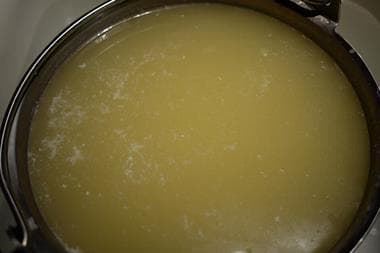
The project involves Heriot-Watt University and Take Root Bio, which have explored converting salty whey from cheese production into bioethanol. The initiative addresses the challenge of managing a high-volume, salt-rich dairy by-product.
Edinburgh, Scotland: Scientists at Heriot-Watt University have collaborated with Take Root Bio to explore the conversion of salty whey, a by-product of cheese manufacturing, into bioethanol. The project focuses on creating value from a dairy waste stream that is difficult and costly to manage because of its combination of milk sugars and high salt content.
Around 95,000 tonnes of salty whey are generated annually in the UK from the production of Cheddar and similar cheeses. Individual dairy producers can generate tens of thousands of litres of this by-product every week, creating challenges for waste management and resource efficiency.
The collaboration brought together Take Root Bio's closed-loop approach and the International Centre for Brewing and Distilling (ICBD) at Heriot-Watt University. Researchers explored how the sugars present in salty whey could be transformed through a bio-based process into bioethanol, a widely used fuel.
The process also produces a secondary stream that could potentially be recovered and reused. This opens up the possibility of extracting additional value from dairy processing residues rather than treating them solely as waste.
The project was supported by the Industrial Biotechnology Innovation Centre (IBioIC), which connected the two organisations through its industry network. The partnership reflects a growing interest in applying biotechnology and circular-economy principles to food and drink manufacturing.
Take Root Bio is also exploring whether mobile production units could be deployed closer to the locations where dairy by-products are generated. Such an approach could help reduce transport requirements and support the potential scaling of the technology.
Dr Shiwen Zhuang, Specialist in Fermentation Development at Heriot-Watt University, said the project explored how bio-based solutions could unlock value from salty whey while reducing the pressures associated with disposal. The university's research in waste valorisation focuses on finding new uses for food and drink by-products through biological processes.
The initiative highlights the potential of dairy waste valorisation, where residues from cheese manufacturing can become feedstocks for bio-based products. Further development will be important to determine the commercial feasibility and wider applicability of the process.
SEO Keywords:
Source: Dairynews7x7 16 Sep, 2026 Read full story here
#DairyIndustry #DairyWaste #CircularEconomy #Bioethanol #DairySustainability #FoodWasteValorisation