
Logo
IndianGlobalBlogsPublicationsPodcastsMarketAboutContact
Logo
IndianGlobalBlogsPublicationsPodcasts
7News
TN Minister Urges Farmers to Adopt Tech for Value Addition in DairyListen to the Farm, Not the Farmer—The New Productivity LensWhat’s Driving Change In Beverages, FMCG And Dairy in 2025ED begins money laundering probe in dairy investment fraud caseIndo-Brazil pact aims to boost cattle genetics and dairy yield

Indian Dairy News

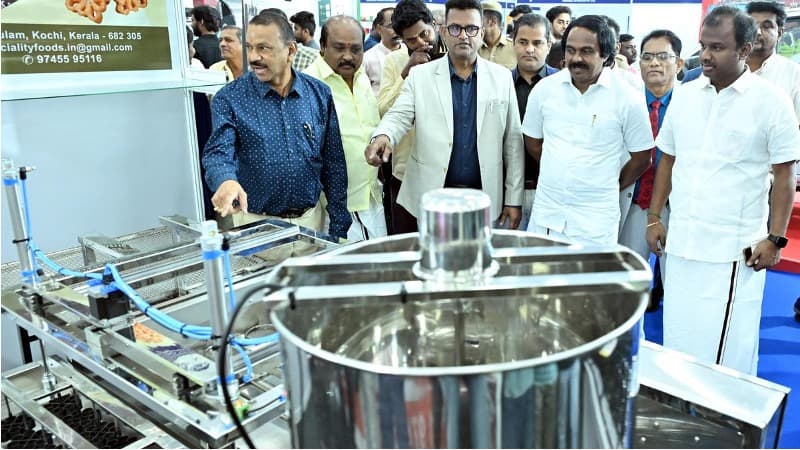
TN Minister Urges Farmers to Adopt Tech for Value Addition in Dairy
Dec 12, 2025

TN Minister Urges Farmers to Adopt Tech for Value Addition in Dairy

In Coimbatore this week, Tamil Nadu’s Minister for Milk and Dairy Development, Mano Thangaraj, called on dairy farmers to embrace modern technologies to boost productivity and value addition across th...Read More

Listen to the Farm, Not the Farmer—The New Productivity Lens
Dec 12, 2025

Listen to the Farm, Not the Farmer—The New Productivity Lens

India’s dairy sector, valued at nearly $30 billion, has reached a point where incremental changes will not deliver the next breakthrough. For decades, improvement programs have focused on what farmers...Read More

What’s Driving Change In Beverages, FMCG And Dairy in 2025
Dec 12, 2025

What’s Driving Change In Beverages, FMCG And Dairy in 2025

India’s retail landscape in 2025 was marked by a decisive shift in how consumers choose, consume and connect with brands. From beverages to daily nutrition and even the most essential dairy products,...Read More

Latest Blogs

See More
More Milk, Less Money: India’s Dairy Crisis
Dec 01, 2025

More Milk, Less Money: India’s Dairy Crisis

With the release of the BAHS 2025 summary report, I felt compelled to deep dive into its findings and reflect on the real progress and challenges facing India’s dairy sector. Over the last six years,...Read More

India Milk Prices: Cost Shock and Procurement Pressure
Nov 28, 2025

India Milk Prices: Cost Shock and Procurement Pressure

Milk prices in India face upward pressure as rising feed costs and procurement hikes reshape farm economics. Insight on dairy procurement, feed costs, and market outlook. Official government and coope...Read More

Stop Blaming, Start Claiming: Livestock’s Carbon Credit Future
Nov 16, 2025

Stop Blaming, Start Claiming: Livestock’s Carbon Credit Future

This week, I had the opportunity to attend an Agri Carbon Masterclass conducted by CII FACE. The deliberations, case studies, and discussions presented during the session were both insightful and thou...Read More

India Powers the Gulf’s Dairy Revolution -Gulf Food 2025
Oct 31, 2025

India Powers the Gulf’s Dairy Revolution -Gulf Food 2025

As Gulf Food Manufacturing prepares to open its doors from November 4–6 in Dubai, Indian dairy product and equipment manufacturers have a unique opportunity to explore one of the most promising region...Read More

Global Dairy News

Why the global milk business needs a structural shake-up
Dec 08, 2025

Why the global milk business needs a structural shake-up

The New Zealand dairy stalwart Fonterra has sold its consumer dairy-brands (milk, butter, cheese) — including “Anchor” and “Mainland Cheese” — to French agribusiness giant Lactalis in late October 202...Read More

Raw-milk prices in Europe hit 5-yr low; ripple effect looms
Dec 07, 2025

Raw-milk prices in Europe hit 5-yr low; ripple effect looms

European raw-milk prices have plunged to their lowest in five years, as oversupply and weak demand weigh on dairy markets across the region. According to recent data from DCA Market Intelligence B.V.,...Read More

Global food prices ease; FAO dairy index slips — impact looms
Dec 06, 2025

Global food prices ease; FAO dairy index slips — impact looms

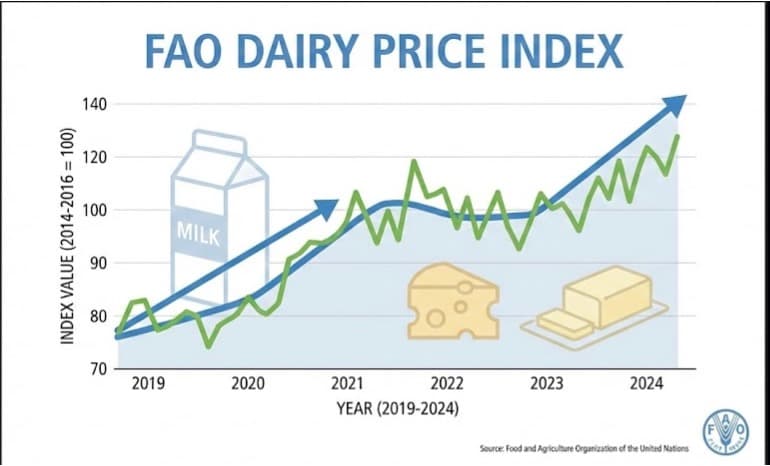
The FAO Dairy Price Index averaged 137.5 points in November, down 4.4 points (3.1 percent) from October and 2.4 points (1.7 percent) from its value a year ago. International dairy prices fell for the...Read More

Dairy News 7x7

Your trusted source for all the latest dairy industry news, market insights, and trending topics.

FOLLOW US
CATEGORIES
  • Global News
  • Indian News
  • Blogs
  • Publications
  • Podcasts
SUBSCRIBE TO OUR NEWSLETTER

Stay informed with the latest updates and trending news in the dairy industry.

No spam, unsubscribe at any time

GET IN TOUCH
C-49, C Block, Sector 65,
Noida, UP 201307
+91 7827405029dairynews7x7@gmail.com

© 2025 Dairy News 7x7. All Rights Reserved.

Terms of ServicePrivacy Policy

Carbon efficiency the better way to cut dairy farm emissions

By DairyNews7x7•Published on March 21, 2023

Late last week, Greenpeace New Zealand held a protest outside Fonterra’s head office in Auckland.

According to Greenpeace, the area was being transformed into a flood zone and it was calling for more government action on climate change.

The “flood zone” was a few old sofas and other junk representing flood debris and a handful of people carrying placards proclaiming “big dairy, big torrent”, “climate crisis” and their good old hashtag “too many cows”.

I can only assume it was too difficult to haul several tonnes of forestry slash on Auckland’s less-than-reliable public transport system.

Say what you will about Greenpeace, and trust me I have, its message is very clear and very simple: the answer to New Zealand’s greenhouse gas emissions is to have fewer cows. In fact, just about all of Greenpeace’s agricultural protests have that aim in mind.

Nitrogen fertiliser, palm kernel and irrigation are all in the firing line, not because they are in themselves bad, but because they all support higher stocking rates and more cows. Greenpeace is nothing if not consistent.

Contrast this with Fonterra’s announcement in November that not only was it now focused on addressing Scope 3 emissions, but over 70% of its customers were too.

This announcement didn’t get much of a reaction among dairy farmers, possibly because most – myself included – were not familiar with the jargon.

Scope 3 refers to the emissions profile of the raw material you are buying, and for Fonterra this means the emissions associated with every litre of milk it collects. It means on-farm emissions, and for Fonterra on-farm emissions make up 90% of the co-operative’s greenhouse gas profile.

For Fonterra’s customers, Scope 3 means on-farm emissions plus whatever carbon footprint is added in the manufacturing and global shipping processes.

Both Greenpeace and Fonterra want to address greenhouse gas emissions, but they want to do it in very different ways. Greenpeace’s solution of fewer cows is to aim for an absolute reduction – to lower the total amount of gasses emitted simply by producing less.

An absolute reduction, however, doesn’t help Fonterra and it doesn’t help its customers. Fewer cows producing less milk but with the same carbon footprint per litre would mean the industry is just standing still, which is why milk processors all over the world are focused on intensity targets instead.

Milk processors need farmers to be more carbon efficient, to produce each litre of milk with a lower carbon footprint, or they have no way of meeting their Scope 3 goals.

Who cares, though, when New Zealand already has the most carbon-efficient producers of milk in the world? Well, we are the most efficient, but only by a very slim margin, with some states in the US and other milk-producing countries like Ireland poised to overtake us.

Fonterra’s customers like international conglomerates Mars, purveyors of M&Ms, care very much indeed. Mars is under immense pressure to reduce its Scope 3 emissions too, and with 20% of that coming from the dairy products it buys, it is very serious about sourcing the lowest footprint dairy it possibly can.

If Fonterra and New Zealand can’t meet Mars’ demands, there are many others queueing up to do so.

Mars is so serious that it has identified the most carbon-efficient milk-producing region in New Zealand and would like to source its raw materials from that region exclusively.

If that is happening right now on a regional level, it doesn’t take much imagination to forecast what would happen globally if New Zealand lost the number-one ranking for efficiency.

There are obvious tensions between intensity targets, producing milk more efficiently and absolute targets, but simply cutting production for the sake of lowering total emissions is a fool’s game that would harm our agricultural producers and the broader economy.

It also feels like the lazy way out. Farmers have a history of adaption and innovation and this is just another – albeit significant – challenge to be met.

There’s a reason Greenpeace’s solution can fit on a placard and Fonterra’s requires roadshows, webinars and careful explanation: the answers to complex problems can rarely be found in a hashtag.

Swipe to continue reading

Previous Article

Next Article