
Logo
IndianGlobalBlogsPublicationsPodcastsMarketAboutContact
Logo
IndianGlobalBlogsPublicationsPodcasts
7News
TN Minister Urges Farmers to Adopt Tech for Value Addition in DairyListen to the Farm, Not the Farmer—The New Productivity LensWhat’s Driving Change In Beverages, FMCG And Dairy in 2025ED begins money laundering probe in dairy investment fraud caseIndo-Brazil pact aims to boost cattle genetics and dairy yield

Indian Dairy News

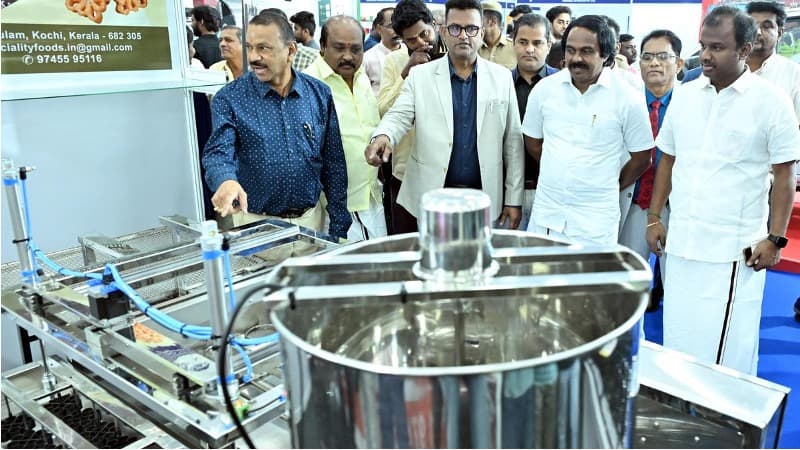
TN Minister Urges Farmers to Adopt Tech for Value Addition in Dairy
Dec 12, 2025

TN Minister Urges Farmers to Adopt Tech for Value Addition in Dairy

In Coimbatore this week, Tamil Nadu’s Minister for Milk and Dairy Development, Mano Thangaraj, called on dairy farmers to embrace modern technologies to boost productivity and value addition across th...Read More

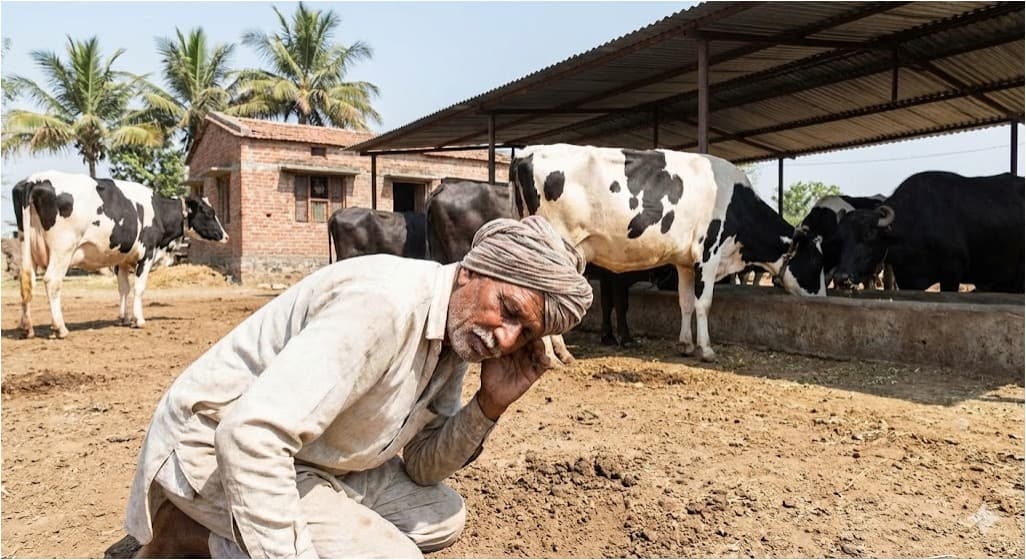
Listen to the Farm, Not the Farmer—The New Productivity Lens
Dec 12, 2025

Listen to the Farm, Not the Farmer—The New Productivity Lens

India’s dairy sector, valued at nearly $30 billion, has reached a point where incremental changes will not deliver the next breakthrough. For decades, improvement programs have focused on what farmers...Read More

What’s Driving Change In Beverages, FMCG And Dairy in 2025
Dec 12, 2025

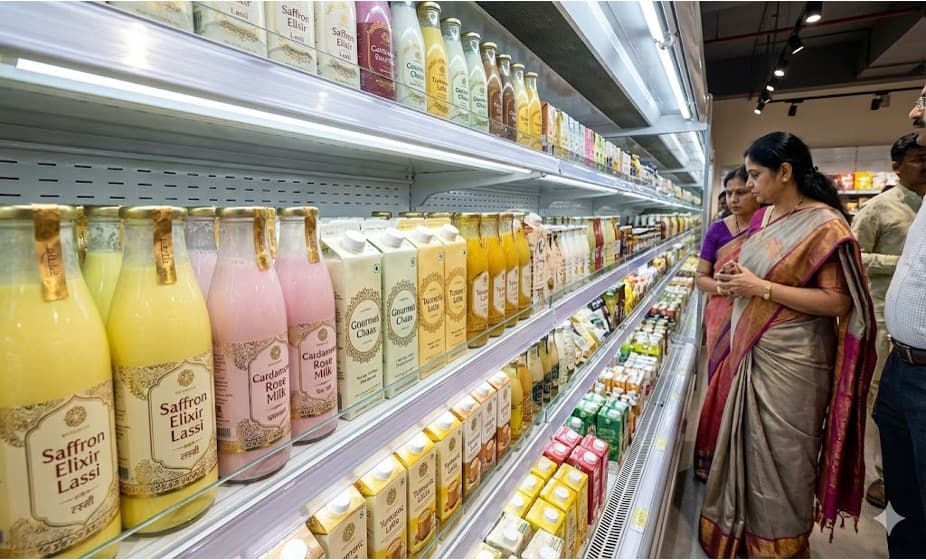
What’s Driving Change In Beverages, FMCG And Dairy in 2025

India’s retail landscape in 2025 was marked by a decisive shift in how consumers choose, consume and connect with brands. From beverages to daily nutrition and even the most essential dairy products,...Read More

Latest Blogs

See More
More Milk, Less Money: India’s Dairy Crisis
Dec 01, 2025

More Milk, Less Money: India’s Dairy Crisis

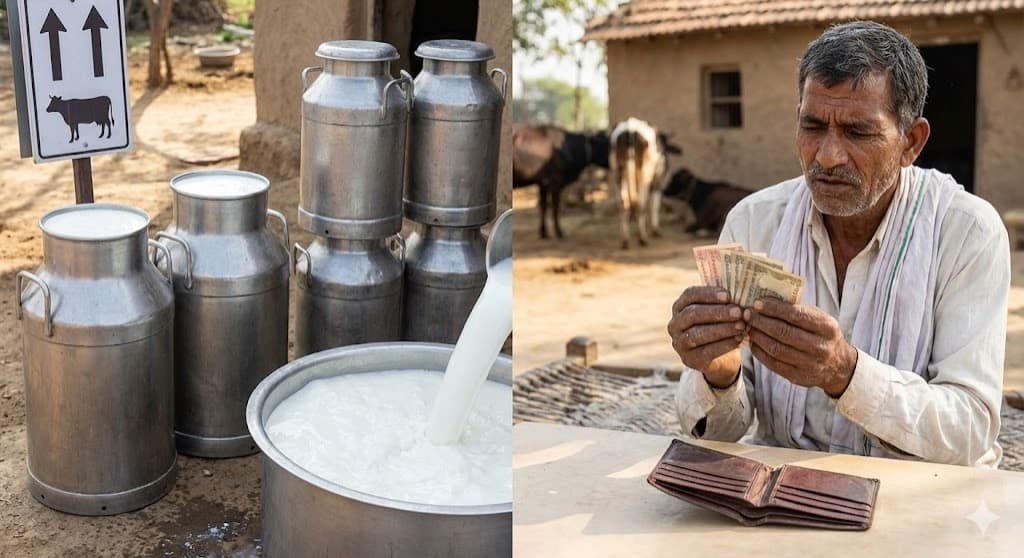
With the release of the BAHS 2025 summary report, I felt compelled to deep dive into its findings and reflect on the real progress and challenges facing India’s dairy sector. Over the last six years,...Read More

India Milk Prices: Cost Shock and Procurement Pressure
Nov 28, 2025

India Milk Prices: Cost Shock and Procurement Pressure

Milk prices in India face upward pressure as rising feed costs and procurement hikes reshape farm economics. Insight on dairy procurement, feed costs, and market outlook. Official government and coope...Read More

Stop Blaming, Start Claiming: Livestock’s Carbon Credit Future
Nov 16, 2025

Stop Blaming, Start Claiming: Livestock’s Carbon Credit Future

This week, I had the opportunity to attend an Agri Carbon Masterclass conducted by CII FACE. The deliberations, case studies, and discussions presented during the session were both insightful and thou...Read More

India Powers the Gulf’s Dairy Revolution -Gulf Food 2025
Oct 31, 2025

India Powers the Gulf’s Dairy Revolution -Gulf Food 2025

As Gulf Food Manufacturing prepares to open its doors from November 4–6 in Dubai, Indian dairy product and equipment manufacturers have a unique opportunity to explore one of the most promising region...Read More

Global Dairy News

Why the global milk business needs a structural shake-up
Dec 08, 2025

Why the global milk business needs a structural shake-up

The New Zealand dairy stalwart Fonterra has sold its consumer dairy-brands (milk, butter, cheese) — including “Anchor” and “Mainland Cheese” — to French agribusiness giant Lactalis in late October 202...Read More

Raw-milk prices in Europe hit 5-yr low; ripple effect looms
Dec 07, 2025

Raw-milk prices in Europe hit 5-yr low; ripple effect looms

European raw-milk prices have plunged to their lowest in five years, as oversupply and weak demand weigh on dairy markets across the region. According to recent data from DCA Market Intelligence B.V.,...Read More

Global food prices ease; FAO dairy index slips — impact looms
Dec 06, 2025

Global food prices ease; FAO dairy index slips — impact looms

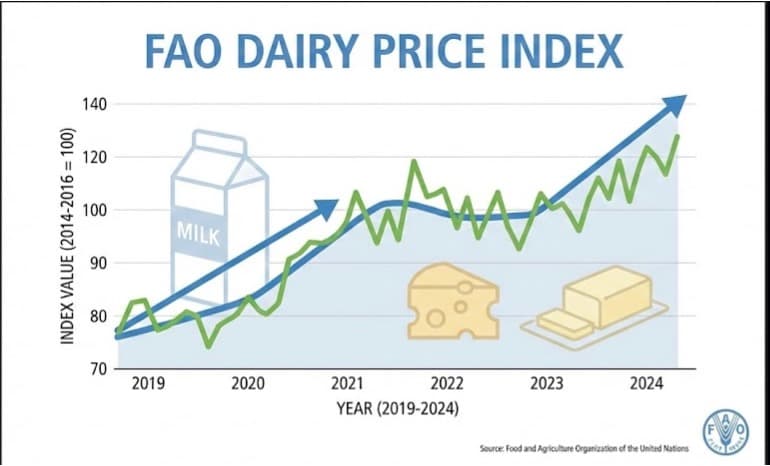
The FAO Dairy Price Index averaged 137.5 points in November, down 4.4 points (3.1 percent) from October and 2.4 points (1.7 percent) from its value a year ago. International dairy prices fell for the...Read More

Dairy News 7x7

Your trusted source for all the latest dairy industry news, market insights, and trending topics.

FOLLOW US
CATEGORIES
  • Global News
  • Indian News
  • Blogs
  • Publications
  • Podcasts
SUBSCRIBE TO OUR NEWSLETTER

Stay informed with the latest updates and trending news in the dairy industry.

No spam, unsubscribe at any time

GET IN TOUCH
C-49, C Block, Sector 65,
Noida, UP 201307
+91 7827405029dairynews7x7@gmail.com

© 2025 Dairy News 7x7. All Rights Reserved.

Terms of ServicePrivacy Policy

Budget 2022: Key recommendations to the government for Agri & Dairy

By DairyNews7x7•Published on January 22, 2022

The finance minister will be announcing her Budget measures soon. Once again, you can expect her to assure the country that all-is-well. This is a song we have heard for the past several years. Yet each year, GDP growth has been dismal. (See chart). True, GDP grew in 2021, but when compared with the negative growth of 2020, we are actually back at 2019 levels.

India-That sinking feeling
So, why should agriculture matter, since it contributes to just around 20 percent of India’s GDP?

There are three reasons to explain this.

First, with over 50 percent of India’s population in rural areas and linked to farm incomes, any increase in rural growth will translate into economic growth for the country. More important, it will boost per capita income growth – a more reliable indicator of national well being for the common man.

Second, a higher income in the rural areas will translate into better purchasing power for a variety of items – from necessities to even luxuries. That creates the demand pull that industry needs. Without increased purchasing power from the 50 percent and more residing in rural areas, you will not have the quantum consumer demand that India requires.

Third, as study after study has shown, a rupee spent in rural areas translates into faster growth than a rupee spent in urban areas. The ICOR (incremental capital output ratio) for the rural is significantly higher than that for the urban sector. So, there is more bang for the buck by investing in agriculture.

Agri distress

The farmer is in great distress. The rate of farmer suicides is greater than the rate for most other sectors. All the numbers confirm this (see chart).

Small farmers remain terribly exploited
The farmer often earns more by working in other enterprises, and even as a daily wage earner. He uses these to supplement his cultivation income. This is more true of small farmers than large farmers. There is a lot that the Budget can do to ameliorate this. But we shall come to that a bit later.
States and farm prosperity
Another factor that must be borne in mind is that except for Punjab, where central funds are used to favour farmers, most states that did not depend on central funds, and where farmers kept politicians at bay, did better than states where farmers wanted politicians to bail them out. The politicians have not yet realised that subsidies actually encourage the weak, and penalise the strong. It makes the strong become weaker. The government is one of the key causes for farm impoverishment. The FCI (Food Corporation of India) story should be adequate to explain what has happened .Ditto with oilseeds.

Finally, contrary to what politicians will tell you, importing agri produce to cool rising domestic prices, helps neither the farmer, nor even the consumers. Only traders, who are often very close to politicians, benefit. When domestic prices rise, there should be an NDDB-like mechanism to cool prices, but without hurting farmers. When prices are high, and imports are resorted to, foreign suppliers also increase their prices. Traders do not ease domestic prices either. The farmer loses because of lower priced imports and being cut off as the key supplier to the markets. The consumer loses because prices do not cool down. On the contrary, the farmer will grow less of the commodity in the next season, causing prices to remain high, and import dependency increasing. That is not good for India.

Solutions

There are several things the government can do.

First, do not offer subsidies to farmers directly.  Create a structure to identify well-governed farmer producer organisations (FPOs) which keep agri-produce prices climbing a bit year after year . That is what GCMMF (Gujarat Cooperative Milk Market Federation which sells dairy products under the Amul brand) and NDDB have done. Let these organisations handles subsidies (which can be created through a market development fund by importing subsidised agri-products and releasing them in the markets and using the surplus for farmer development. Or let them take surplus produce, convert them into value-added products and keep the surpluses for market development. Let these organisations decide a market price that consumers can afford, and increase these gently year after year to assure farmers that market prices will not fall . There are many other strategies, but these should suffice for starters.

Second, ban import of agri products by traders, and political bodies. Leave that to FPOs instead.

Three, rationalise taxes for the dairy sector . The current set of tax laws discriminates against the dairy sector. There is no ceiling for agriculture when it comes to tax-free income, yet there is a ceiling of 100 cattleheads in the dairy sector. Isn’t the dairy sector part of agriculture?

Price movement in domestic, international crude palm oil
Four, allow farmers to give their lands on rent to others. This way, they are not bound to the crippling prices they get for agri produce. Yet they regain hold over their land which they are sentimental about. Allowing farmers to enter into contract farming but disallowing them the right to rent out their land is a counter-productive move and will hurt farmers.

Five, create a fund which allows farmers with old cows to get Rs 20,000 for each old cattle that the government does not allow him to sell. You cannot create a law which hurts a farmer, or denies him the right to dispose off the cattle. Let the State take care of the old cattle and do whatever it wants. Always remember, that a farmer buys a cow. He must then have a right to sell it to anyone who wants to purchase it. If such a sale is not permitted, the State must pay the farmer the cost of such cattle.

Six, allow farmers in border states to sell cattle to anyone who wants to purchase it. More specifically, allow them to freely sell buffaloes, goats, poultry, and anything (except cows). Once permitted, it becomes exports. It is no longer smuggling. You do not need to use the border patrols to control smuggling. If a farmer can sell poultry, and fish, why not cattle?

Seven, never interfere with commodity exchanges. It takes a lot of time and effort to make a commodity become actively tradeable on commodity exchanges. Yet, when trading becomes active the government bans such trade on the specious argument that it causes prices to go up. What else does a market do but sell at higher prices? How else will a farmer learn to discover next year’s prices and decide which crop to grow?

Lastly, re-activate the WDRA (Warehousing Development and Regulatory Authority) to work out norms for regularizing warehouses. Take all the warehouses that belong to FCI (Food Corporation of India) and other agencies of the government, and bring them under the WDRA. Let FCI procure grain through commodity exchanges, and not directly. That will create a uniform pricing for rain across the country, stop preferential purchases. The creation if warehouses near farmers will allow them to sell them through commodity exchanges using the warehouses as a temporary measure. It could empower the farmer.

Yet knowing how desperately the entire system likes to exploit the farmer in the name of supporting him, it is doubtful that such measures will get introduced. But flagging them is always useful, lest a politician says, I did not know. Why did you not inform me?

Source : The free press Journal Jan 21st 2022, written by R N Bhaskar (The writer is consulting editor with Free Press Journal. He tweets @rnbhaskar1)

Swipe to continue reading

Previous Article

Next Article