



Ahead of monsoon season, what is the food supply situation
Even as kharif plantings are set to take off with the southwest monsoon, and the India Meteorological Department (IMD) has reiterated its earlier forecast of (June-September), the supply and demand balances in key food commodities is comfortable, yet tight.
While there are no shortages for now, a great deal hinges on the monsoon, especially its spatial (rain across major agricultural regions) and temporal (during the crucial sowing and vegetative growth stages) distribution. That has implications both for the Reserve Bank of India’s (RBI) monetary policy (whether to raise, cut or not change interest rates depending on the outlook for inflation) and the government (in a year leading to national elections in March-April 2024).
A fine balance in wheat
Barely two months ago, there were two commodities giving policymakers the jitters: wheat and milk.Unseasonal rain accompanied by gusty winds during the second half of March and early-April had caused the standing wheat to “lodge” (bend over or even fall flat) in many places. However, the yield losses – the crop was in the final grain-filling and ripening stages – seemingly weren’t as much as initially apprehended.
This is borne out by government agencies procuring about 26.2 million tonnes (mt) of wheat during the current marketing season, as against last year’s 18.8 mt, the lowest since 2007. Although public wheat stocks of 29 mt as on May 1 are at a 15-year-low for this date (see chart), that’s misleading at least on two counts.
First, procurement was only 22.3 mt till April-end. Since then, another 4 mt have been bought, adding to the 29 mt stock figure. Second, the relatively low wheat stocks are more than compensated by the 41.7 mt of rice in government godowns.
The combined stocks of 70.7 mt should easily meet the requirements of the public distribution system and other welfare schemes. Total grain offtake ranged between 93 mt and 106 mt during the last three financial years. It should revert to the past 65-66 mt average in 2023-24, as the Centre is now issuing only 5 kg of grain per person per month (from 10 kg in the post-Covid period). Moreover, the next 2023 kharif rice crop will start arriving from October.
Milk relief
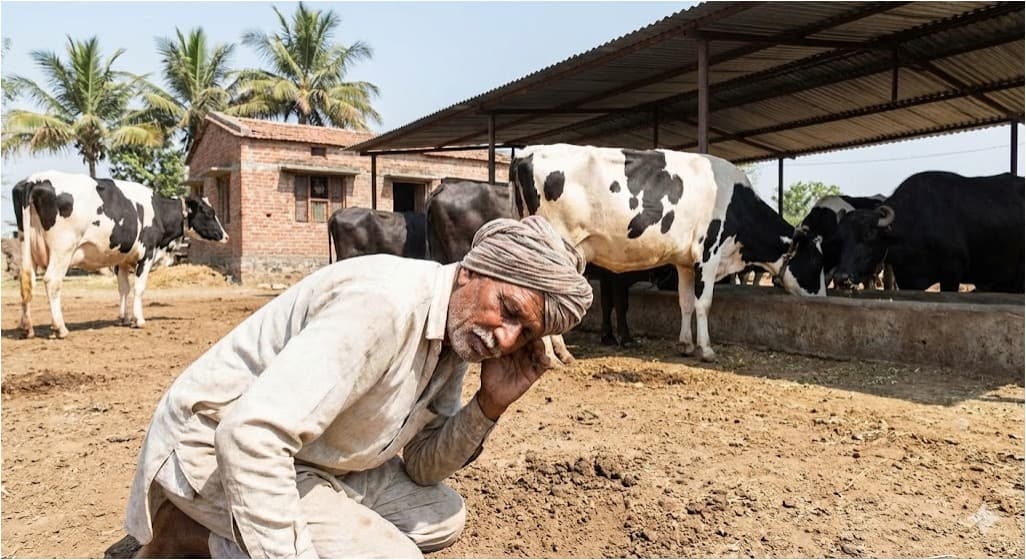
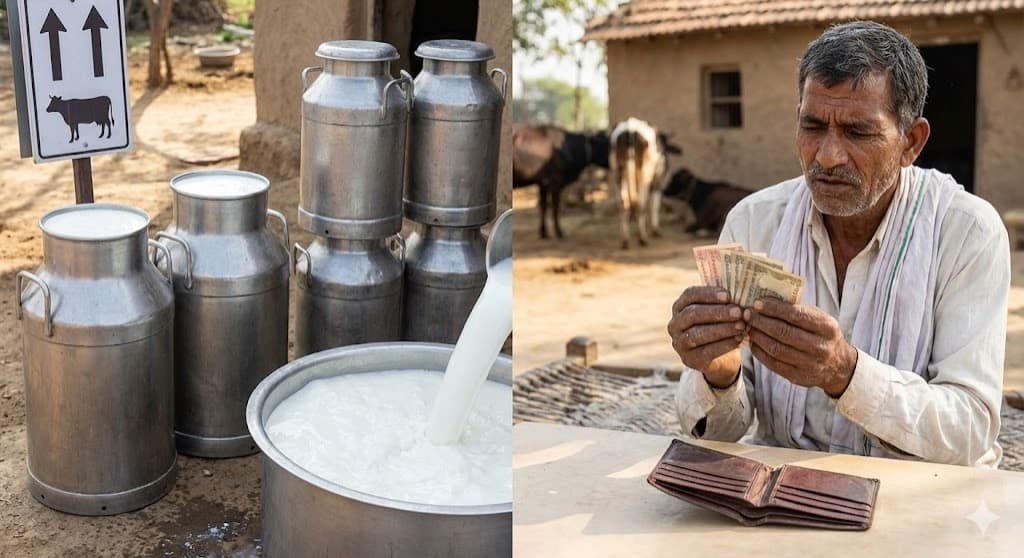
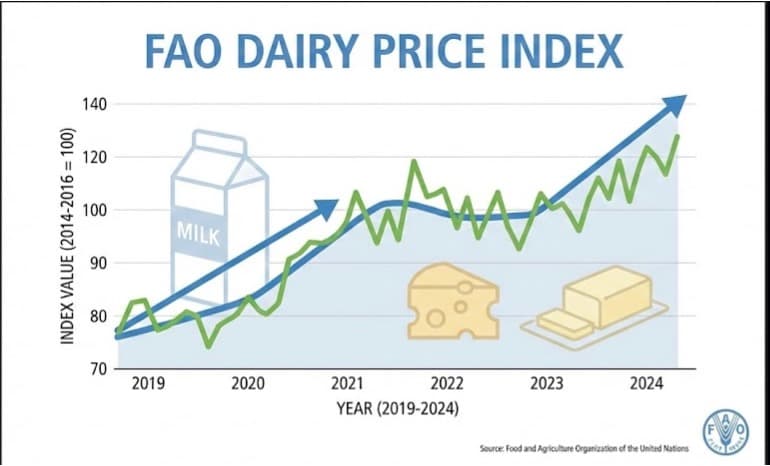
Coming to milk, February-March 2023 saw unprecedented shortages. The winter-spring months are usually the “flush” season for milk when production by animals goes up. This time, it was the opposite. Prices of yellow (cow) butter and skimmed milk powder (SMP) sold by Maharashtra dairies soared to Rs 430-435 and Rs 315-320 per kg respectively. Procurement prices of cow milk containing 3.5% fat and 8.5% solids-not-fat, too, shot up to Rs 38 per litre.
With dairies hardly carrying any butter and SMP stocks – which they normally build by converting surplus milk procured during the “flush” – there were fears of shortages intensifying in the “lean” summer months, when animals produce less owing to heat stress and reduced fodder and water availability.
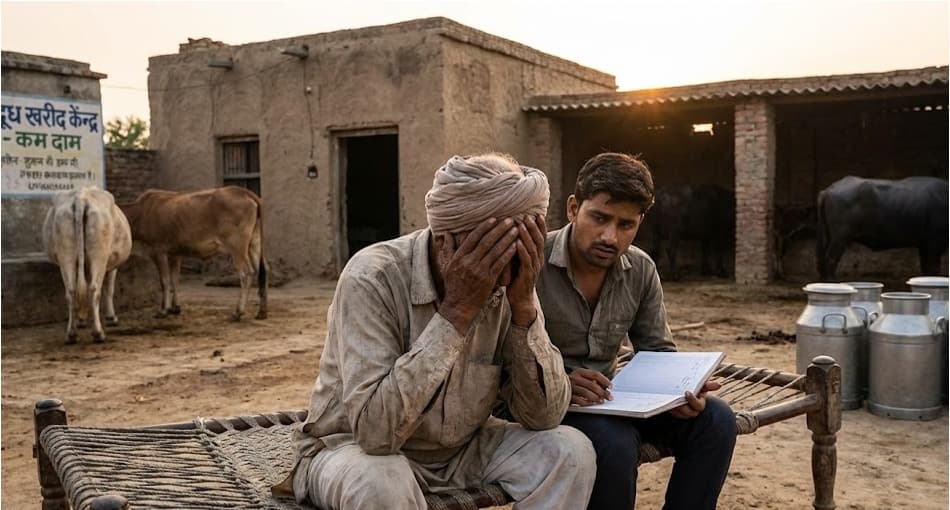
Thankfully, that hasn’t happened. Prices of yellow butter and SMP have collapsed to Rs 375/kg and Rs 280-290 levels. Dairies are also paying only Rs 34-35/litre for cow milk now. Ganesan Palaniappan, a -based dairy commodities trader, attributes the turnaround to a comparatively mild summer and good pre-monsoon showers that have been favourable for fodder growth.
According to IMD data, all-India rainfall during March 1-May 29 has been 12.4% higher than the long-period average (LPA) for this period, with 25 out of the 36 meteorological subdivisions receiving above-normal precipitation. Improved fodder supplies and high milk prices have triggered the expected supply response from farmers – at the right time.
Tightrope walk in sugar
The table shows the 2022-23 sugar year (October-September) likely to close with stocks of 5.7 mt, down from the all-time-high carryover of 14.3 mt from 2018-19. Given India’s annual sugar consumption of 27.5-28 mt, the 5.7-mt closing stocks can meet the requirement for 2.5 months starting from October 2023, which will also cover the peak Dussehra-Diwali festival season demand.
That appears comfortable: While mills begin crushing from around mid-October, the new sugar has to be produced, bagged and stocked in adequate quantities before reaching the market in 1-1.5 months. Hence, the need to have enough stock of old sugar to feed the demand till then.
The main concern in sugar, though, is not current stocks as much as the monsoon. Sugarcane, like paddy, is a water-intensive crop. The cane to be crushed in the new sugar year is already in the fields, but its water requirement would be high particularly during the so-called grand growth phase. That’s when the actual millable cane formation and development takes place, which is coterminous with the monsoon rain.
“Sugar production in 2023-24 should be the same as this year’s, at 32.5 mt (net, after diversion for ethanol manufacture). But it assumes a normal monsoon,” said Prakash Naiknavare, managing director, National Federation of Cooperative Sugar Factories. The monsoon is considered normal if aggregate rainfall over the country during June-September is within 96-104% of the LPA. The IMD
The supply situation in sugar is finely balanced. The Centre has banned exports. In the worst-case scenario, it could also consider limiting ethanol production for blending with petrol, enabling more cane juice to be used for making sugar.
Edible oil and pulses
The supply position in both seems quite comfortable ahead of the monsoon and kharif sowing season.In edible oils, the global price crash has made imports viable to cover significant domestic crop shortfalls. The present landed prices for imported crude palm, soyabean and sunflower oil, at $900, $1,000 and $920 per tonne respectively, are way
In pulses, the biggest source of comfort is the government’s stocks of chana (chickpea). The National Agricultural Cooperative Marketing Federation of India procured nearly 2.6 mt of the rabi pulse during the 2022 marketing season (March-June). This year, it has bought 2.2 mt so far, on top of the 1.5 mt carryover from the previous crop.
Ample chana stocks – plus imports of masoor (red lentil), which can partially replace arhar/tur (pigeon-pea) that’s in short supply – should help put a lid on pulses prices even if the monsoon fails. Masoor from Australia is landing at $660-670 or roughly Rs 55,000 per tonne, below the crop’s
To sum up, the markets are well supplied with produce for the moment. The government and RBI (its next policy review is on June 6-8) can afford to wait and see how the monsoon pans out.