


About ₹2.51 lakh cr farm loan waived off by States since 2012: study
To make farmers aatmanirbhar, the governments should instead nurture a healthy credit culture and empower them via a robust ecosystem rather than relieving all the borrowers, irrespective of their distress levels.
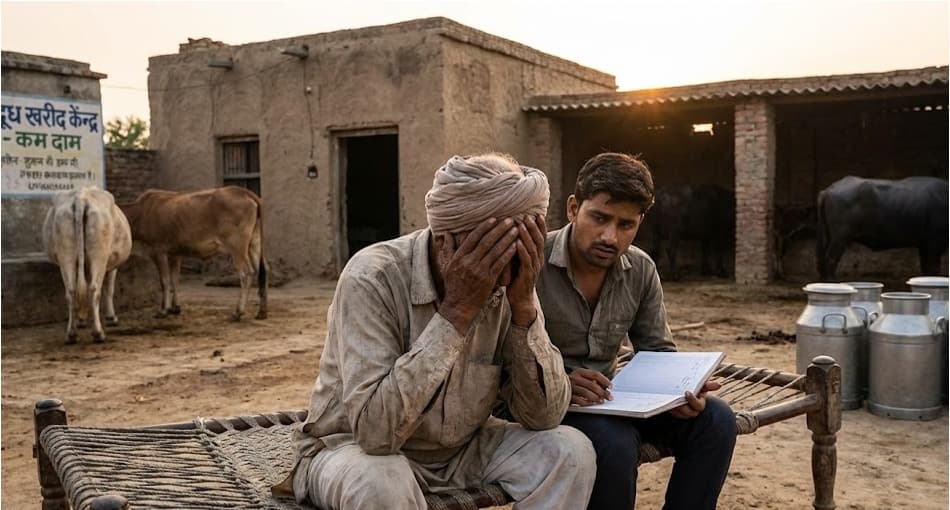
Only 4 out of the 21 political parties lost the election (either at the Centre or State) following the electoral promise and implementation of a farm loan waiver (FLW) scheme started by Haryana’s Devi Lal government. A research study has recommended governments nurture a healthy credit culture to empower the farmers to grow sustainably and profitably.
The report titled “Farm Loan Waivers in India, Assessing Impact and Looking Ahead”, authored by Shweta Saini, Siraj Hussain and Pulkit Khatri and published by NABARD and Bharat Krishak Samaj, has recommended: “Overall, it emerges that a farm loan waiver may be reserved as a tool as it was originally designed to be: a one-off event meant for situations of extreme plight like severe and wide spread drought or flood. It provided temporary relief to the distressed farmer until underlying conditions improved.
Empowering farmers
“Therefore, rather than relieving all the borrowers, irrespective of their distress levels, from their responsibility to repay the loans, the governments should instead nurture a healthy credit culture and invest in farmers and their farming so as to empower the farmer via a robust ecosystem that helps him/her grow in a sustainable and a profitable manner. This will go a long way in making our farmer aatmanirbhar.”The report also said that FLW increased farmers’ chances of wilful defaults (68-80 per cent of respondents in a survey agreed). It also pushed honest farmers to default on agricultural loans (72-85 per cent agreed).
Farm credit
Agricultural credit grew to over ₹16.5 lakh crore in 2021-22 from ₹0.62 lakh crore in 2001-02. To make credit affordable for farmers, the Centre provides 2 per cent interest subvention, reducing the effective interest rate to 7 per cent. Additionally, farmers who repay their dues on time get an additional 3 per cent interest subsidy. Therefore, a small or marginal farmer who takes a loan of up to ₹3 lakh under a kisan credit card (KCC) effectively pays an interest of 4 per cent if he repays on time. Besides, no collateral is required for a loan up to ₹1.60 lakh under KCC.Farm loan waiver
The first FLW at the national level was announced in 1990 when then prime minister VP Singh waived off ₹10,000 each, and the second country-wide scheme came in 2009 by the United Progressive Alliance (UPA I) government. However, several States such as Uttar Pradesh, Maharashtra, Karnataka, Rajasthan, Madhya Pradesh, Chhattisgarh, Telangana, Andhra Pradesh and Chhattisgarh have waived off once or twice farmers’ debts.After 2009, when UPA announced ₹52,000 crore FLW, 13 states implemented their schemes waiving off about ₹2.51 lakh crore (Budgeted).
The study, released April 22, found that more than 40 per cent of the “very highly” distressed surveyed farmers in Maharashtra, Punjab and Uttar Pradesh, which implemented FLW in 2017-18, did not receive any waiver benefits. It also noted that the interest rates on non-institutional loans were found between 9.5 per cent and 21 per cent, as against 5.9-7.7 per cent from institutional sources.
An average marginal farmer in Punjab was borrowing a much larger amount — about ₹3.4 lakh per year – against ₹84,000 and ₹62,000 in UP and Maharashtra, respectively.
However, the authors have said that income instability due to increased cost of cultivation, damage to crop/livestock or fall in market prices received by farmers emerged as primary reasons for farmer distress in the three states. Even in the case of farmer suicides, it was not indebtedness by itself that drove them to take their own lives. Instead, it was due to factors like crop loss, debt and sole dependence on agriculture for income.
The Nabard-sponsored study said that in the year of maximum disbursal (YMD) of debt waiver benefits, the state’s fiscal deficit dropped, and capital outlays and development expenditure were lower in Maharashtra and Uttar Pradesh. But in the same year, the fiscal deficit as well as development expenditure, increased in Punjab.
“Allocations of departments that suffered in the YMD were power, water resources, public works, and health in Punjab. In Maharashtra, it was revenue, forest, industries, labour, agriculture, environment and housing while in UP, the fisheries, dairy, energy and social welfare departments suffered budgetary cuts,” the study said.
Source : The Hindu Businessline April 25 2022