

20 dairy firms emit more greenhouse gas than Germany, Britain or France
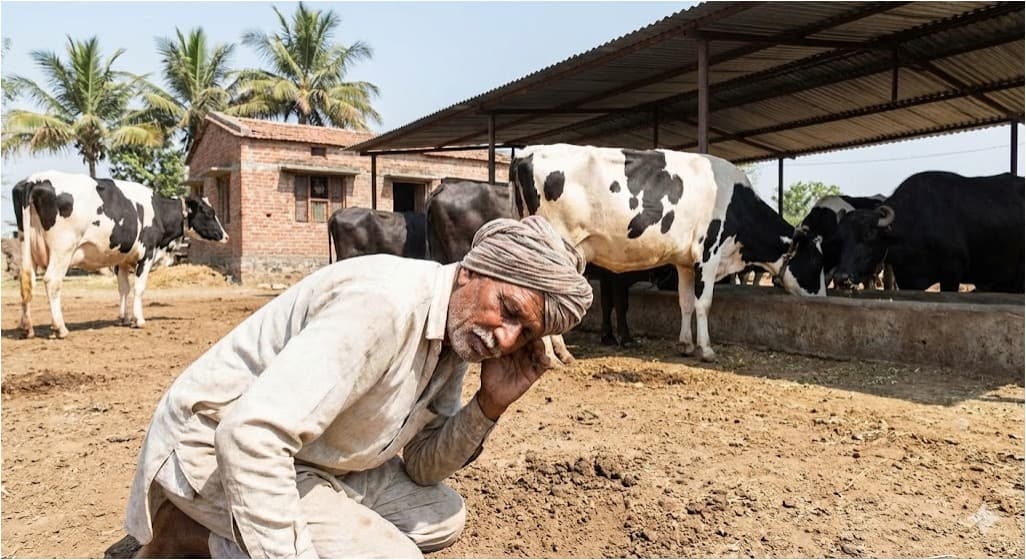
Twenty livestock companies are responsible for more greenhouse gas emissions than either Germany, Britain or France – and are receiving billions of dollars in financial backing to do so, according to a new report by environmental campaigners.
Raising livestock contributes significantly to carbon emissions, with animal agriculture accounting for 14.5% of the world’s greenhouse gas emissions. Scientific reports have found that rich countries need huge reductions in meat and dairy consumption to tackle the climate emergency.
Between 2015 and 2020, global meat and dairy companies received more than US$ 478 bn in backing from 2,500 investment firms, banks, and pension funds, most of them based in North America or Europe, according to the Meat Atlas , which was compiled by Friends of the Earth and the European political foundation, Heinrich Böll Stiftung.
With that level of financial support, the report estimates that meat production could increase by a further 40m tonnes by 2029, to hit 366m tonnes of meat a year.
Although the vast majority of growth was likely to take place in the global south, the biggest producers will continue to be China, Brazil, the USA and the members of the European Union. By 2029 these countries may still produce 60% of worldwide meat output.
Across the world, the report says, three-quarters of all agricultural land is used to raise animals or the crops to feed them. “In Brazil alone, 175m hectares is dedicated to raising cattle,” an area of land that is about equal to the “entire agricultural area of the European Union”.
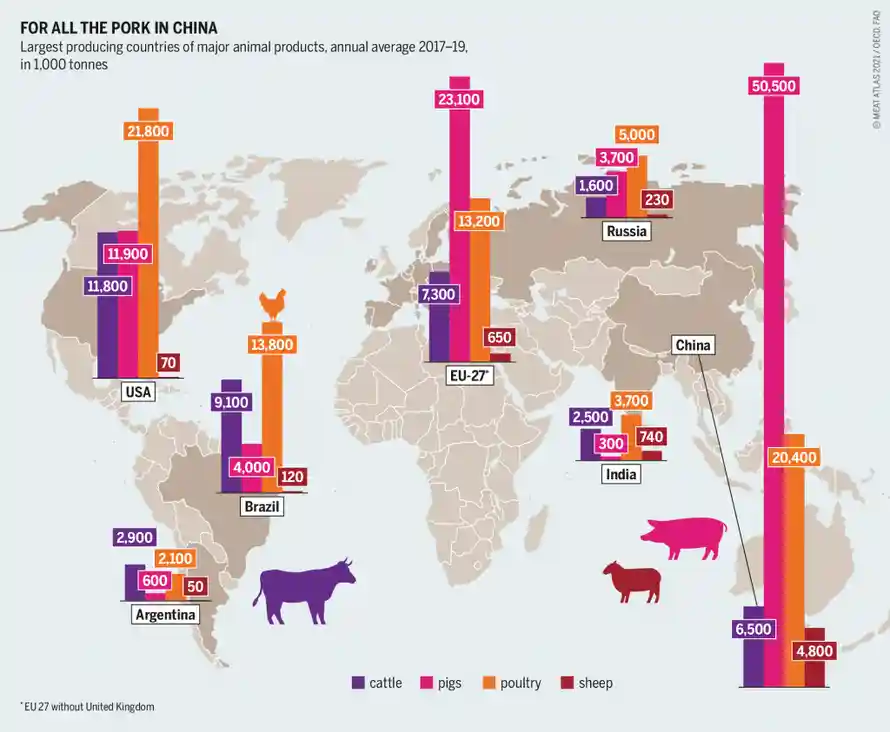
“To keep up with this [level of animal protein production] industrial animal farming is on the rise and keeps pushing sustainable models out of the market,” the report says.
The recent interest shown by animal protein companies in meat alternatives and substitutes was not yet a solution, campaigners said.
“This is all for profit and is not really addressing the fundamental issues we see in the current animal protein-centred food system that is having a devastating impact on climate, biodiversity and is actually harming people around the globe,” said Stanka Becheva, a food and agriculture campaigner working with Friends of the earth.
The bottom line, said Becheva, is that “we need to begin reducing the number of food animals on the planet and incentivise different consumption models.”
More meat industry regulation is needed too, she said, “to make sure companies are paying for the harms they have created throughout the supply chain and to minimise further damage”.
On the investment side, Becheva said private banks and investors, as well as development banks such as the World Bank and the European Bank for Reconstruction and Development needed to stop financing large-scale, intensive animal protein production projects.
Responding to the report, Paolo Patruno, deputy secretary general of the European Association for the Meat Processing Industry (CLITRAVI), said: “We don’t believe that any food sector is more or less sustainable than another. But there are more or less sustainable ways to produce plant or animal foods and we are committed to making animal protein production more sustainable.
“We also know that average GHG [greenhouse gas] emissions in the EU from livestock is half that of the global average. The global average is about 14% and the EU average is 7%,” he added.
In England and Wales, the National Farmers’ Union has set a target of reaching net zero greenhouse gas emissions in agriculture by 2040.
… as you’re joining us today from India, we have a small favour to ask. Tens of millions have placed their trust in the Guardian’s high-impact journalism since we started publishing 200 years ago, turning to us in moments of crisis, uncertainty, solidarity and hope. More than 1.5 million readers, from 180 countries, have recently taken the step to support us financially – keeping us open to all, and fiercely independent.
With no shareholders or billionaire owner, we can set our own agenda and provide trustworthy journalism that’s free from commercial and political influence, offering a counterweight to the spread of misinformation. When it’s never mattered more, we can investigate and challenge without fear or favour.
Unlike many others, Guardian journalism is available for everyone to read, regardless of what they can afford to pay. We do this because we believe in information equality. Greater numbers of people can keep track of global events, understand their impact on people and communities, and become inspired to take meaningful action.
We aim to offer readers a comprehensive, international perspective on critical events shaping our world – from the Black Lives Matter movement, to the new American administration, Brexit, and the world’s slow emergence from a global pandemic. We are committed to upholding our reputation for urgent, powerful reporting on the climate emergency, and made the decision to reject advertising from fossil fuel companies, divest from the oil and gas industries, and set a course to achieve net zero emissions by 2030.