Latest Blogs
See More
Indian Dairy News
DairyNews7x7
Global Dairy News
DairyNews7x7
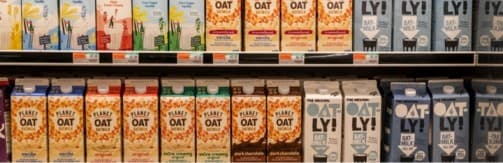
In recent years the refrigerated aisles across the UK’s supermarkets have seen quite the shake-up. With sustainability at the forefront of many shoppers minds, we’ve seen the evolution of the vegan conscious consumer, which has come with it a flurry of plant-based milk alternatives.
Plant-based milk, which now includes variants made from coconut, soya, rice, oat and almond have firmly taken their position on grocer’s shelves and in coffee shops.
However with prices rising across the dairy sector, supply chain challenges showing no signs of going away and of course the ongoing cost-of-living crisis, could this push shoppers towards testing out a dairy-free alternative?
Will plant-based milk take over or is dairy set to stay? Grocery Gazette investigates…
There is now a variety of options on the market and last year, with upmarket retailer Waitrose recently announcing it would be adding the latest alternative to 220 stores – potato milk.
Vegan-friendly brand DUG make the milk alternative from potato, pea protein and rapeseed oil. UK lead John Chater thinks the plant-based milk sector will continue to expand.
“We have all seen a continued trend for quite some time of people moving away from dairy into plant-based options,” he says, adding that the current challenges across the dairy industry, including price inflation, “will remain a factor in that ongoing switch to plant-based”.
Chater says that dairy-free milk has grown in popularity among consumers for sustainable, ethical and financial reasons alike.
“The continued pressure we see on household incomes may slow some of the continued growth in plant-based, but it remains a fact the world faces some major challenges – we can individually make a difference through what we purchase.”
Oatly UK and Ireland general manager, Bryan Carroll agreed, explaining that “sustainability is at the core” of the brand.
“At Oatly, we are on a mission to change that food system; its why we run the campaigns we do and include the carbon footprint of our products on our packaging.”
He adds that Oatly looks to make the switch from dairy easier by working with farmers, retailers and everyone “right across the supply chain” in a bid to “help make the shift to a more efficient food system work for everybody”.
Agriculture and Horticulture Development Board (AHDB) consumer insight manager, Susie Stannard points out that, while plant-based milk has been “a category in growth over recent years”, it still remains “much smaller than the cow’s milk market”.
Marketing growth coach Danny Denhard believes that many dairy-free milk drinkers have switched due to intolerances, but in the near future, he sees more branching out for environmental reasons.
However, he says that while “growing the alternative market has been somewhat successful, we are very much still in the ‘try’ phase”.
Denhard adds that rising dairy milk prices could encourage some to try plant-based alternatives, however “there is still a higher price difference and many consumers won’t break long-term habits based on small price increases”.
Since then, the sector has continued to see cost increases and according to data from Kantar, liquid dairy milk prices rose by 35% year on year in the 12 weeks to 25 December 2022.
Stannard says that supermarket price hikes “have been in response to higher production costs. The spike in inflation for agricultural inputs and subsequent reduction in milk production on farms, meant the cost of milk had to increase significanly through the year in order to ensure continued production.”
National Farmers’ Union dairy advisor, Verity Richards adds that “dairy farmers are facing significant pressures from the rise in input costs,” however, “dairy remains one of the most affordable protein options,” highlighting the AHSB’s November 2022 report which states 95% of households continue to buy milk.
Stannard says that alternative milk products “have themselves been subject to price increases, although less steep than dairy at around 8%.”
“The price gap has narrowed but only really with the private label versions and dairy milk is still 17% cheaper per litre on average.”
She says that “if alternative prices were to become cheaper than cow’s milk, this would be interesting, but it is likely that other factors such as superior taste and nutrition would come into play.”
Stannard told Grocery Gazette that a surge in demand for plant-based milk “hasn’t really been any impact on dairy farmers.”
“Any losses in liquid milk volumes over recent years have been made up for with a growth in products such as cheese. Consumer response is interesting as in recent months demand for plant-based milk definitely slowed and actually went into decline.
“Growth has returned in the last four weeks but it doesn’t seem quite the growth engine that it once was.”
As a result, brands including M.L.K.Ology, Wunda Plant Based Not Milk, Good Hemp – Oat + Hemp Milk, Mylk and Qurkee M’LK could be removed from supermarket shelves.
ProVeg UK director, Jimmy Pierson says the move is “hugely damaging,” adding “it seems incomprehensible that the Government would impose such restrictive measures on a booming part of the UK economy.
“It sends out the wrong message about supporting British business and about tackling climate change. Plant-based diets emit half as much greenhouse gas as animal-based diets and should be actively encouraged by the government, not hindered.”
However, Denhard says that in terms of distribution and availability, this will only have a “short-term impact on the sector.”
“Many brands are going to have to create bigger campaigns and convince stockists to place them in different aisles under different category branding.”
He adds that “marketing is going to be essential” in considering how to “fight back for longer-term success.”
“Many brands will have to be proactive in building the category (or is in some cases a new category) and in trying to really land their missions.”
In terms of the wider marketing across plant-based brands, Denhard says that “the storytelling has been creative, strong and memorable” with one of the leaders in the category, Oatly having been “smart” in targeting the barista within speciality coffee shops “as the hero,” which has enabled it to “build coffee around the brand, with the barista able to support the plant-based milk drive.”
“We have at least two generations who have lived their whole lives with dairy milk. It’s a staple.”
He believes we are “at least a decade away from this change”, adding that in five years time he thinks “there will be some more market share taken by non-dairy milk, however not the huge double-digit leaps many have been predicting.”
Carroll agrees that “transforming the food system will take time”, however he confirms that Oatly “is in it for the long haul.”
“Despite explosive growth in dairy alternatives, about half of plant-based drink users only entered the funnel two years ago, and the category still makes up just 6.5% of total dairy consumption. There’s enormous potential for growth ahead.”
With product ranges, availability and demand for plant-based milk expanding, small businesses with big ambitions in the sector, like DUG agree. When considering if plant-based milk could overtake dairy, Chater simply says “in a word, yes.”