Latest Blogs
See More
Indian Dairy News


DairyNews7x7
Global Dairy News

DairyNews7x7
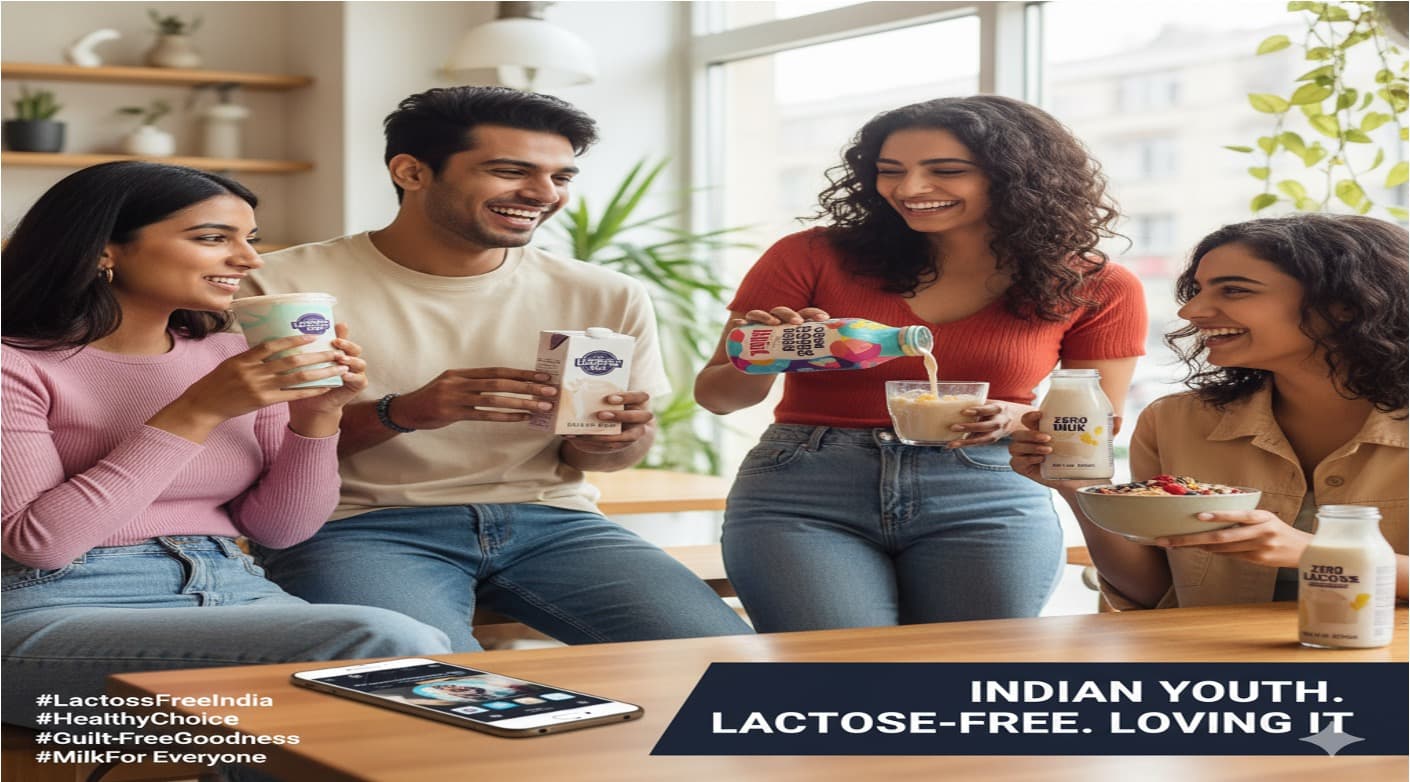
India is a dairy nation, but paradoxically, one that struggles to digest it. Between 60–74% of Indians are lactose mal-absorbers, according to studies by the Sanjay Gandhi Post Graduate Institute of Medical Sciences (SGPGI) and market research agencies such as Grand View Research. That makes the country one of the largest pools of lactose-intolerant consumers anywhere in the world.
Yet awareness remains startlingly low. Studies by Beanery Foods reveal that fewer than 30% of urban, middle- and upper-class consumers even recognise their own intolerance. This mismatch, widespread prevalence but low recognition, has left the market largely underserved.
At present, just a handful of brands are trying to address this gap. Most offerings are niche, metro-focused, or priced at a premium. The result? The everyday Indian consumer, particularly in semi-urban areas, has little access to lactose-free options. And yet, the case for lactose-free is no longer about niche health needs. It is shaping up to be the next big dairy wave in India. It is now mainstream, lifestyle-driven, and powered by rising health consciousness.
Medical and nutritional research consistently shows how deep-rooted this issue is. A landmark study by SGPGI Lucknow found that nearly 74% of Indians are lactose mal-absorbers. Broader estimates place prevalence between 60–66% of the population, with India ranking among the top globally for intolerance.The numbers vary regionally. In Delhi, an earlier multicentre study pegged prevalence at just 27.4%, a reflection of North India’s genetic history of dairy farming and relatively higher lactase persistence. By contrast, in southern states such as Tamil Nadu, Kerala, and Andhra Pradesh, intolerance rates soar to 66–82%. For a country where milk is both a staple and a cultural symbol, this presents a striking paradox. Dairy is central to the Indian diet, but difficult for most Indians to digest.
An underserved market with massive headroom
Despite this vast prevalence, the lactose-free dairy market in India is still at a nascent stage. According to MarkNtel Advisors, the market is projected to grow at a 7% CAGR through 2027, with some segments expected to expand at up to 14.8% CAGR by 2030. And yet, most supermarket shelves in metros stock only two or three brands offering lactose-free variants. The products that do exist are often premium-priced, targeted at niche audiences, and concentrated in big cities. This leaves a clear gap for players who can bring innovation, affordability, and wider distribution to the category, especially into Tier-2 and Tier-3 markets where intolerance rates are high.
Beyond intolerance: Health, indulgence, and lifestyle
The opportunity, however, is not confined to those with medical intolerance. A growing wave of health-conscious Indians is embracing lactose-free products as a lifestyle choice. Lactose-free milk is naturally sweeter and creamier because the enzyme lactase breaks down lactose into glucose and galactose, eliminating the need for added sugar while improving digestibility. This makes it attractive not only for daily consumption but also for indulgent formats such as flavoured milk, milkshakes, and desserts.
The flavoured milk category is already booming, projected to grow at a 15.4% CAGR from 2024 to 2029, adding more than ₹6,000 crore in value. Similarly, the Indian milkshake market, valued at ₹7.6 billion in 2024, is forecast to reach ₹34.2 billion by 2033, growing at a robust 17.47% CAGR. For brands, this shift reframes lactose-free from a medical necessity into a mainstream lifestyle-driven category that promises both health and indulgence.
The no-sugar crossover
The rise of no sugar and low sugar beverages in India dovetails perfectly with the lactose-free wave. In 2024, sales of no-sugar beverages doubled to ₹700–750 crore, now accounting for about 10% of the overall beverage market. Within dairy, however, the no-sugar ready-to-drink milkshake segment remains underserved. A few brands have launched protein shakes with zero sugar, but a comprehensive portfolio is missing. This creates space for lactose-free beverages sweetened with natural alternatives such as jaggery and dates, a preference that aligns with consumer demand for clean-label, functional indulgence. Government initiatives like the Eat Right India campaign further reinforce this trend by encouraging manufacturers to reduce refined sugar in foods and beverages.
Millennials, Gen Z, and regional hotspots leading adoption
The profile of India’s lactose-free consumer is distinct. Unlike traditional dairy, where consumption cuts across all demographics, the early adopters here are younger, more urban, and more discerning. Millennials and Gen Z, especially those in the 25–30 age group, represent the highest consumption cohort. These are consumers who not only recognise the discomfort of lactose intolerance but also actively seek healthier, cleaner, and more functional options.
Geographically, metros like Mumbai, Delhi, Bangalore, and Chennai are leading the trend, driven by exposure to global lifestyles and higher health awareness. But interestingly, the deeper potential lies in semi-urban South India, where lactose intolerance is more prevalent, with rates as high as 66–82% in states like Tamil Nadu, Kerala, and Andhra Pradesh. West India, particularly Gujarat and Maharashtra, is emerging as another hotspot, thanks to a vibrant dairy innovation ecosystem.
What makes these consumers unique is not just their health consciousness but their taste preferences. Beanery Foods’ internal studies shows that more than 75% of urban Millennials and Gen Z prefer Indian-inspired flavours such as Rasmalai, Filter Kaapi, or Rose Kulfi over global standards like vanilla or strawberry. They are also overwhelmingly skewed toward clean-label products with over 90% of respondents revealing their preference for beverages without refined sugar, and with strong interest in natural sweeteners like jaggery and dates.
Packaging as the silent enabler Behind the rise of every successful food category in India lies a quiet enabler which is the packaging & processing technology. For lactose-free to scale, packaging technology is now a critical requirement. The UHT milk market in India, already valued at USD 7.75 billion in 2024, is projected to nearly double to USD 15.53 billion by 2034, growing at 7.2% CAGR. This growth is underpinned by one simple advantage which is the fact that UHT packaging allows milk and milk-based beverages to remain safe for six months without refrigeration.
In a country where cold chain infrastructure is uneven, this single factor removes one of the biggest barriers to scale. It allows products to travel further, last longer, and remain safe without adding cost or logistical complexity. For retailers, it means lower spoilage and easier inventory management. For consumers, it provides hygienic, ready-to-drink convenience that matches modern on-the-go lifestyles.
Source : Dairynews7x7 Oct 15th 2025 First Published in TOI