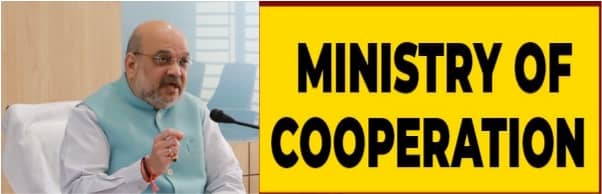
Some 150 years ago, during British reign, big farmers in the western region of Maharashtra agitated over unfair lending practices and demanded a just and inclusive financing structure. This is where the genesis of cooperative movement took place.
The legal architecture of the sector began evolving around 1904 under colonial rule and in 2002 the Multi State Cooperatives Societies Act was passed, taking into account the challenges arising out of liberalization. Fundamentals of cooperatives hinges around sharing of profits among all stakeholders instead of maximizing profits.
There are almost 0.8 million registered cooperatives across the nation, of which, a large number are operative in rural and semi-urban areas. Approximately 400 million people are directly impacted by the cooperatives. So, any control over them opens up an opportunity for political patronage. Considering the fact that cooperatives fall in the State list of the Constitution, the Centre had to innovate to provide legal sanctity for the new Ministry.
Though, cooperatives are dominant in agriculture, credit and marketing, yet these are not limited to these fields only. Some are big – IFFCO has around a third of the market share in fertilizers. In milk, cotton, handlooms, housing, sugar and fisheries, they are formidable. As markets conditions are evolving, cooperatives in some states like Kerala have got into complex operations; running IT parks and medical colleges. Cooperatives have made significant contributions in poverty alleviation and food security.
At the grassroots, there are 95,000 Primary Agriculture Credit Societies (PACS) in the country, which are the closest to the farmers of which close to 65,000 are active, having a presence in nearly all villages of India, with 131 million farmer subscribers. In cities, the loan book of urban cooperative banks (UCBs) has grown from Rupees 1.3 trillion in 2004-05 to Rupees 6.2 trillion in 2019-20, according to the Reserve Bank of India. As of now the existing state cooperative structure is governed by state law and is under state registrar of cooperatives.
The creation of a separate ministry for cooperation at the centre raises a number of uneasy questions with respect to country’s federal structure and development of cooperatives. This ministry may act as a medium to transport more powers in the hands of the Centre. Reasons why the creation of a separate ministry for cooperation is unsolicited are highlighted below:
1. Cooperatives are a state subject as per Schedule 7 of the constitution. So far cooperatives have been under the regulatory control of registrar of cooperatives of different states. There are a few hundred multi state cooperatives (MSCs) in existence. But the numbers are too small to warrant a separate ministry at the centre.
2. States being the stakeholders were not consulted before a separate ministry was formed. Its mandate could not have been described in more vague terms than given in the union government order.
3. Further, to achieve synergy, the new ministry should have been assigned to a minister holding portfolio with strong linkages such as agriculture. Home Ministry has least to do with development of cooperation?
4. Clearly the government has decided to refocus its energies on developing the cooperatives sector, which accounts for 35 percent of India’s sugar and 10 percent of milk production. Politically, too, the focus on cooperatives from the home minister will have the potential of reaping electoral dividends for the ruling party.
5. The formation of the new ministry is a part of a larger sinister agenda to bring the cooperative sector under the BJP heals. The stakes of NCP in Maharashtra cooperatives is not hidden from anyone. Not only in Maharashtra, but also in other states under non-BJP governments, BJP is in haste to intervene through a union ministry. BJP has exhibited a keen interest in cooperative affairs ever since it tasted power at the centre.
6. From now onwards, ministries will have administrative control over their respective cooperatives like agriculture ministry, IFFCO, Nafed, animal husbandry and fisheries ministry over Fishcopfed. However, broad policy decisions regarding the cooperatives sector as a whole will be taken by the newly formed ministry. This move may bring it under direct confrontation with the states, because states also have a major role to play in the functioning of cooperatives.
7. Even, if the new ministry takes a year or two to make an impact, reaching the door steps of these many Indians before another national election in 2024 will certainly help the government.
8. It is not clear at this stage how the new ministry would be linked to the financial outfits that BJP is spawning in some of the states. They could be converted into branches of multi state banks under the centre, or a central cooperative financial institution formed to finance them. The modus operandi is not yet clear.
BJP has hardly any influence in the cooperatives, credit and non-credit, which play very important role especially in Kerala’s economy. Therefore, they have been making wild allegations like cooperatives being a conduit for black money, corruption and financing the major political parties. During the demonetization period they even made an attempt to scuttle the cooperatives by stifling their normal activities.
Meanwhile RBI armed with the last year’s Banking Regulation Amendment has already given notice to registrar of cooperatives against PACS using the title of bank. Once shorn of the title of bank, they cannot use cheque leaves and cannot collect deposits from the public
There are some loans which are extended by specialized financial bodies such as National Cooperative Development Corporation (NCDC) either as term loan, or for meeting working capital need or building permanent infrastructure. NCDC is a Delhi based specialized statutory corporation under the ministry of agriculture. It has regional offices and chapters in almost all parts of the country. State governments or even the Centre can be guarantors for loans taken by coops either from banks or specialized institutions such as NCDC. For instance, in Chhattisgarh, the state’s main procurement agency Markfed borrows around Rs. 10,000 crore annually from NCDC and other financial institutions for undertaking procurement of operations from farmers. The state government of Chhattisgarh stands guarantor for the loans as procurement is a priority.
But the creation of new ministry in cooperative sector with parallel multi state cooperatives and their branches may ruin the system.
Source : Business Economics Aug 22 2021 by Rajiv Khosla and S K Khosla
Never miss an important dairy update
Follow DairyNews7x7 on Google to get live milk prices, policy alerts, and daily headlines directly in your feed.