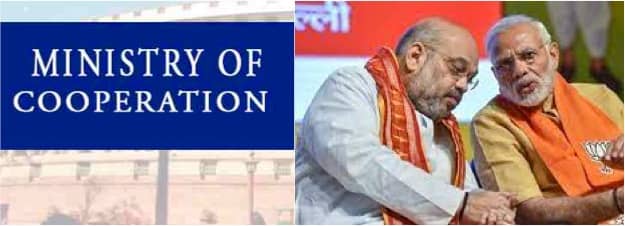
On Monday, the government announced the formation of a separate Union Ministry of Cooperation. A subject that till date was looked after by the Ministry of Agriculture. In the Cabinet reshuffle of July 7, Home Minister Amit Shah was given charge of the new Ministry.
What will be the new Ministry’s objectives?
A media release from the Press Information Bureau said the Ministry of Cooperation will provide a separate administrative legal and policy framework for strengthening the cooperative movement in the country. “It will help deepen Co-operatives as a true people based movement reaching upto the grassroots. In our country, a Co-operative based economic-development-model is very relevant where each member works with a spirit of responsibility. The Ministry will work to streamline processes for ‘Ease of doing business’ for co-operatives and enable development of Multi-State Co-operatives (MSCS),” it said.
In her Budget speech, Finance Minister Nirmala Sitharaman too had mentioned the need to strengthen cooperatives.
What is the cooperative movement?
The Cooperatives are the organisations formed at the grassroots-level by the people to harness the power-of collective-bargaining towards a common goal.
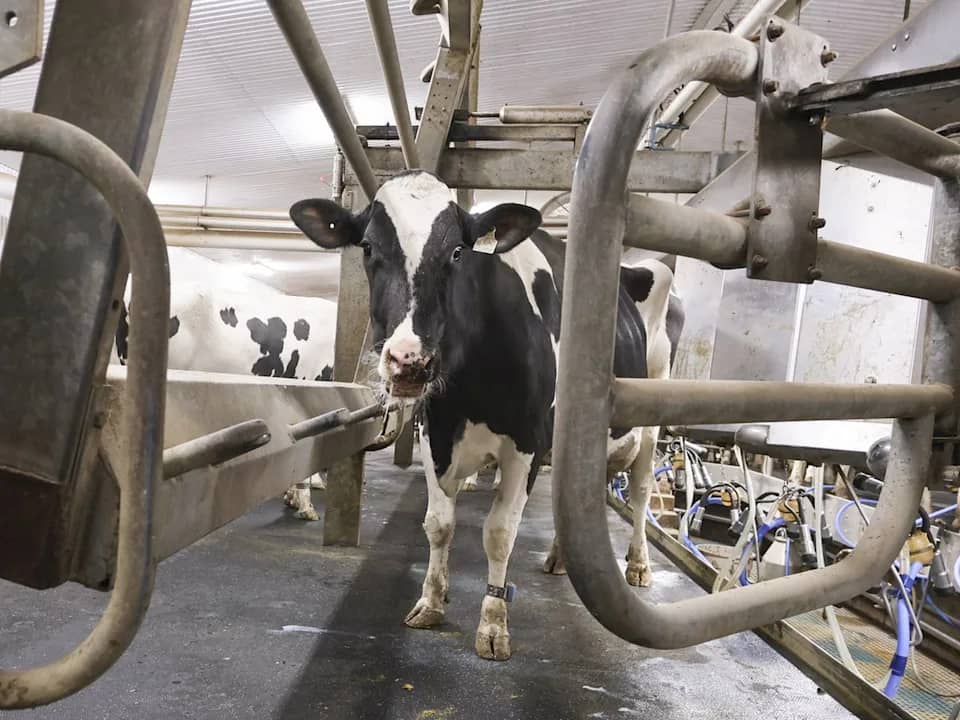
In agriculture, cooperative-dairies, sugar-mills, spinning-mills etc are formed with the pooled resources of farmers who wish to process their produce. The country has 1,94,195 cooperative dairy societies and 330 cooperative sugar mill operations. In 2019-20, dairy-cooperatives had procured 4.80 crore-litres-of-milk from 1.7 crore-members and had sold 3.7 crore litres of liquid-milk per day. (Annual Report, National Dairy Development Board, 2019-20)
Also Read : Ministry of Cooperation:To strengthen cooperative movement in the country
Cooperative sugar mills account for 35% of the sugar produced in the country.
In banking and finance, cooperative institutions are spread across rural and urban areas. Village-level primary agricultural credit societies (PACSs) formed by farmer associations are the best example of grassroots-level credit flow. These societies anticipate the credit demand of a village and make the demand to the district central cooperative banks (DCCBs). State cooperative banks sit at the apex of the rural cooperative lending structure. Given that PACSs are a collective of farmers, they have much more bargaining powers than an individual farmer pleading his case at a commercial bank.
There are also cooperative marketing societies in rural areas and cooperative housing societies in urban areas.
How much finances do these institutions control?
NABARD’s annual report of 2019-20 counts 95,238 PACSs,363 DCCBs and 33 state cooperative banks in the country. The state cooperative banks reported a total paid-up capital of Rs 6,104 crore and deposits of Rs 1,35,393 crore, while the DCCBs’ paid-up capital stood at Rs 21,447 crore and deposits at Rs 3,78,248 crore. The DCCBs, whose main role is disbursal of short-term loans to the farming sector (crop loan), distributed Rs 3,00,034 crore in loans. The state cooperative banks, which mainly finance agri-processing industries such as sugar mills or spinning mills, disbursed Rs 1,48,625 crore in loans. (Annual Report, NABARD, 2019-20)
In urban areas, urban cooperative banks (UCBs) and cooperative credit societies extend banking services to many sectors that would otherwise have found it difficult to get into the institutional credit structure. According to Reserve Bank of India data, the country has 1,539 UCBs whose total capital in 2019-20 stood at Rs 14,933.54 crore with a total loan portfolio of Rs 3,05,368.27 crore.
What laws govern cooperative societies?
Like agriculture, cooperation is in the concurrent list, which means both the central and state governments can govern them. A majority of the cooperative societies are governed by laws in their respective states; with a Cooperation Commissioner and the Registrar of Societies as their governing office. In 2002, the Centre passed a MultiState Cooperative Societies Act that allowed for registration of societies with operations in more than one state. These are mostly banks, dairies and sugar mills whose area of operation spreads across states. The Central Registrar of Societies is their controlling authority, but on the ground the State Registrar takes actions on his behalf.
Why was the new Ministry necessary?
Sanjiv Babar, former managing director of Maharashtra State Federation of Cooperative Sugar Mills; said it was necessary to restore the importance of the cooperative structure in the country. “Various studies conducted by institutions like Vaikunt Mehta Institute of Cooperative Management have shown the cooperative structure has managed to flourish and leave its mark only in a handful of states like Maharashtra, Gujarat, Karnataka etc. The new ministry will provide legal powers necessary for cooperative movement to penetrate into other states also.
Cooperative institutions get capital from the Centre, either as equity or as working-capital, for which the state governments stand guarantee. This formula had seen most of the funds coming to a few states such as Maharashtra, Gujarat, Karnataka while other states failed to keep up.
Over the years, the cooperative sector has witnessed drying out of funding. Babar said that under the new Ministry, the cooperative structure would be able to get a new lease of life.
To what extent does the cooperative structure influence state and national politics?
Cooperative institutions, be it the village-level PACS or the urban cooperative housing societies; elect their leaders democratically, with members voting for a board of directors. Thus, in states such as Maharashtra, cooperative institutions have served as schools for development of leadership. In Gujarat, Amit Shah had headed the Ahmedabad District Central Cooperative Bank for a long time, Babar observed.
In the present Maharashtra legislature, there are at least 150 legislators who have had some connection with the movement. NCP chief Sharad Pawar and Deputy Chief Minister Ajit Pawar had started their respective political careers by contesting cooperative elections The movement has given the state multiple Chief Ministers as well as ministers, many of whom have gone on to make a mark at the national level too.
No matter which party is in power in a state like Maharashtra; the purse strings of the local economy always remain with the cooperative institution. Thus, when Devendra Fadnavis of the BJP was Maharashtra Chief Minister; the financial control of most cooperative institutions remained with the NCP and the Congress. The voter base of the cooperative institutions generally remains stable.
Source : Indian Express 9TH JULY 2021, written by Parthasarathi Biswas
Never miss an important dairy update
Follow DairyNews7x7 on Google to get live milk prices, policy alerts, and daily headlines directly in your feed.