Latest Blogs
See More





Indian Dairy News


DairyNews7x7
Global Dairy News

DairyNews7x7
Dairy industry supporters have been arguing for years that plant-based products should not be allowed to use terms like “milk” or “cheese” on their labels.
Now, that debate is growing to include products that are meant to mimic milk, but are made in a lab instead of by a cow.
Lab-grown or cell-based dairy products use fermentation to create proteins that look like whey protein. These proteins are then turned into powders and can be used to make alternatives for milk, cream cheese and other products.
Democratic U.S. Sen. Tammy Baldwin and seven other senators sent a letter to the Food and Drug Administration on Tuesday, calling for the agency to prevent these products from using dairy names. It’s a similar argument that Baldwin and other lawmakers have made about plant-based alternatives.
Criticizing the FDA for what they describe as “decades of inaction” on dairy labeling, Baldwin and the other senators said in the new letter that many cell-based products are nutritionally inferior to regular dairy products in similar ways to plant-based products. The lawmakers said consumer confusion around the nutritional content of dairy alternatives has led to public health concerns.
Baldwin said in a statement to Wisconsin Public Radio the FDA has failed for years to protect consumers and dairy farmers, as alternative products “have profited off of dairy’s good name”.
“I’m calling on the Biden administration to step up and enforce the rules about dairy labeling, especially as we see new synthetic imitators coming to market,” she said.
Federal regulators acknowledged the nutritional differences of dairy and alternative products when the FDA released new draft guidance for labeling of soy milk, almond milk and similar products in February.
The agency found that consumers do not mistake plant-based alternatives for milk, allowing them to continue to use the word in their labels. But officials expressed concern that growing consumer preference for the products could lead to consumers not getting enough calcium, vitamin D and other important nutrients because of a lack of nutritional standards for the products.
The FDA recommended that alternatives using the term “milk” in their name also state on their primary label that the product contains lower amounts of certain nutrients than milk.
John Lucey is the head of the Center for Dairy Research at the University of Wisconsin-Madison. He said the technology used to make the animal-free products on the market today was actually created in the 1990s. But new companies marketing the process as a way to replace traditional dairy have caught the attention of investors.
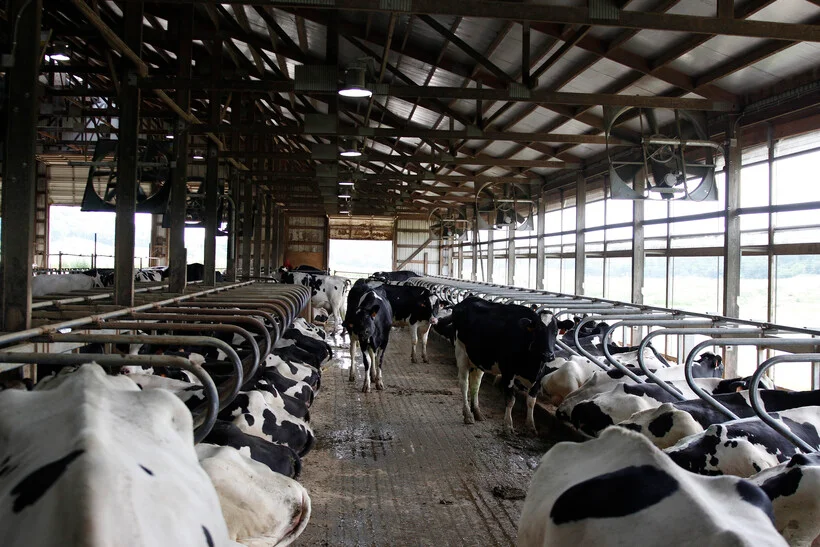
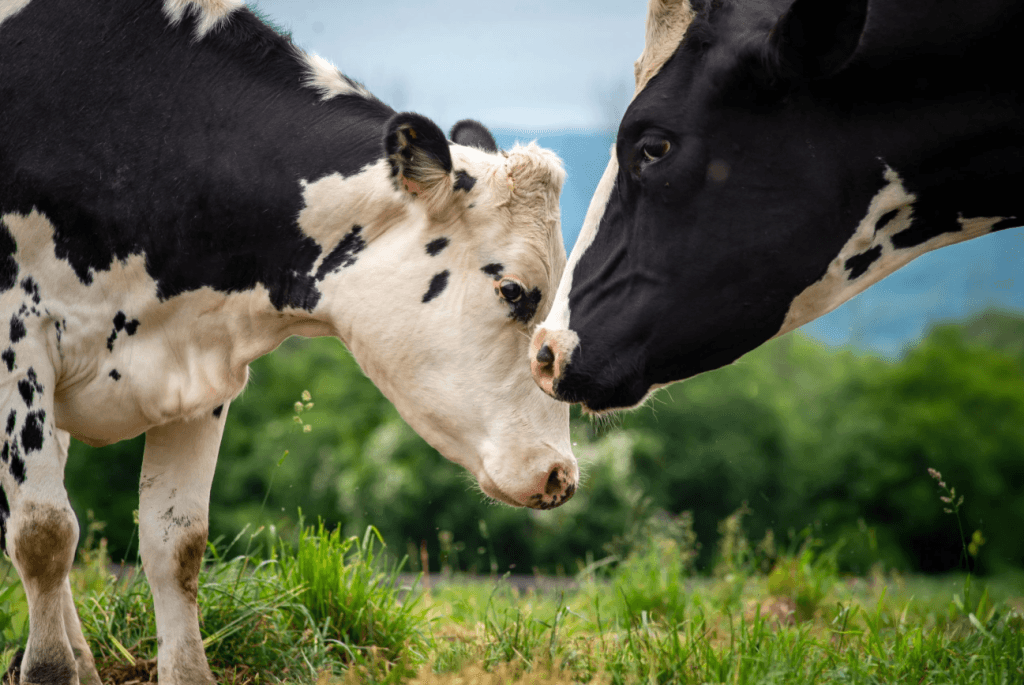
In this June 29, 2017, photo cows stand in stalls at Mystic Valley Dairy in Sauk City, Wis. Carrie Antlfinger/AP Photo
Lucey thinks it’s inaccurate to say the proteins produced through the fermentation process are exactly the same as those from cows. While the amino acid sequences are the same, Lucey said animal proteins have special characteristics that come from the mammary gland.
“(The cow) keeps modifying that protein,” Lucey said. “She adds on phosphate groups. She adds on various types of sugar groups, and she can do other kinds of modifications to make the final products. Those things are an order of magnitude more difficult to do.”
Lucey said these modifications are an important part of the nutritional content of milk and its functionality in making other products like cheese. He said the fermentation technology has been focused on producing whey, but there are more important types of proteins that scientists aren’t yet able to replicate.
“You can’t just say, ‘Hey, I built the Empire State Building because I got one block,'” he said. “You’ve got to assemble it into a structure that makes sense and has order and works.”
But Lucey said the manufactured proteins are similar enough that anyone with a milk protein allergy will also be allergic to the alternative products.
“If people don’t want to consume dairy because they have a sensitivity to it, this is not something they should be consuming,” he said. “So there’s a lot of concern about how you label these things because of that confusion.”
Cell-based milk protein has been on the market for a few years, but have so far only been used in niche products. Lucey said the biggest problem holding back the new product is that it’s expensive to produce. Milk prices have fallen significantly in the last year, so Lucey said alternative producers face an uphill battle in producing products that are similar in price.
“Twenty-five percent of cheddar cheese is protein,” he said. “You’d be spending a lot of money to replicate the milk protein and only get a couple of dollars for the whole thing. So it’s hard to reconcile that.”
Research into animal-free milk is ongoing. Lucey said there are other types of technologies being developed, including one that would genetically modify soybean plants to produce milk proteins and another focused on growing cells from the mammary glands of women to be used for baby formula.
Source: WPR ( Wisconsin Public Radio ) Sep 12th 2023