Logo
IndianGlobalBlogsPublicationsPodcastsMarketAboutContact
Logo
IndianGlobalBlogsPublicationsPodcasts
7News
Mandatory Daily Record of Production and Raw Material UtilisationHeritage Foods inaugurates new Ice Cream PlantFSSAI makes registration to all milk vendors in IndiaGujarat Ice Cream Makers Face Cone ShortageSummer Heat to Stress India’s Dairy Cold Chain

Indian Dairy News

Britannia Bets Big on Dairy and Croissants
Mar 15, 2026

Britannia Bets Big on Dairy and Croissants

Food major Britannia Industries is accelerating its diversification strategy beyond biscuits by expanding into high-growth segments such as dairy, croissants, cakes, wafers and rusk, as it aims to bec...Read More

Uttarakhand Milk Production Rises 3%
Mar 15, 2026

Uttarakhand Milk Production Rises 3%

Milk production in Uttarakhand has increased by 3.1%, reaching 1,957.2 thousand tonnes in FY 2025-26, up from 1,897.8 thousand tonnes in FY 2024-25, according to Dairy Development Minister Saurabh Bah...Read More

FSSAI Licences Get Perpetual Validity
Mar 14, 2026

FSSAI Licences Get Perpetual Validity

India’s food regulator, the Food Safety and Standards Authority of India (FSSAI), has announced a major reform granting perpetual validity to food licences and registration certificates, eliminating t...Read More

DairyNews7x7
Advertisement

Latest Blogs

See More
When the World Feels Uncertain, Milk Still Brings Trust
Mar 15, 2026

When the World Feels Uncertain, Milk Still Brings Trust

Trust: The Next White Revolution The world today is passing through uncertain times. Wars are disrupting global trade routes, commodity markets are behaving unpredictably and regulators everywhere are...Read More

Mandatory Daily Record of Production and Raw Material Utilisation
Mar 14, 2026

Mandatory Daily Record of Production and Raw Material Utilisation

I recently reviewed the notification issued by the Food Safety and Standards Authority of India in the context of Schedule IV of the Food Safety and Standards (Licensing and Registration of Food Busin...Read More

FSSAI makes registration to all milk vendors in India
Mar 13, 2026

FSSAI makes registration to all milk vendors in India

The recent advisory issued by Food Safety and Standards Authority of India (FSSAI) mandating registration of milk vendors is a timely and progressive step towards strengthening traceability and accou...Read More

Rajahmundry Milk Incident: Accident or Adulteration?
Mar 10, 2026

Rajahmundry Milk Incident: Accident or Adulteration?

The recent editorial “Bitter Milk” published by The Hindu raises important concerns about food safety in India. The editorial deserves appreciation for attempting to broaden the conversation and under...Read More

Global Dairy News

Global Dairy Commodity Prices Show Signs of Rally
Mar 14, 2026

Global Dairy Commodity Prices Show Signs of Rally

Global dairy commodity prices have shown a rally in the first quarter of 2026, particularly for products originating from Australia and New Zealand, according to a new Q1 Global Dairy Quarterly report...Read More

How Walmart Keeps Great Value Milk So Affordable
Mar 14, 2026

How Walmart Keeps Great Value Milk So Affordable

Retail giant Walmart has managed to keep the price of its private-label Great Value milk significantly lower than many competing brands through a vertically integrated dairy supply chain and direct co...Read More

Lactose-Free Milk Seen as Growth Driver in Coffee
Mar 13, 2026

Lactose-Free Milk Seen as Growth Driver in Coffee

Lactose-free milk is emerging as a major growth opportunity for the dairy industry, particularly in the rapidly expanding coffee and café segment. A recent US-based study highlighted that lactose-free...Read More

DairyNews7x7
Advertisement
Dairy News 7x7

Your trusted source for all the latest dairy industry news, market insights, and trending topics.

FOLLOW US
CATEGORIES
  • Global News
  • Indian News
  • Blogs
  • Publications
  • Podcasts
SUBSCRIBE TO OUR NEWSLETTER

Stay informed with the latest updates and trending news in the dairy industry.

No spam, unsubscribe at any time

GET IN TOUCH
C-49, C Block, Sector 65,
Noida, UP 201307
+91 7827405029dairynews7x7@gmail.com

© 2026 Dairy News 7x7. All Rights Reserved.

Terms of ServicePrivacy Policy
Prefer Us
Prefer Us

Rising Heat Could Cut Milk Yields by 30%

By DairyNews7x7•Published on March 20, 2025

Rising Heat Could Cut Milk Yields by 30%
Prefer on

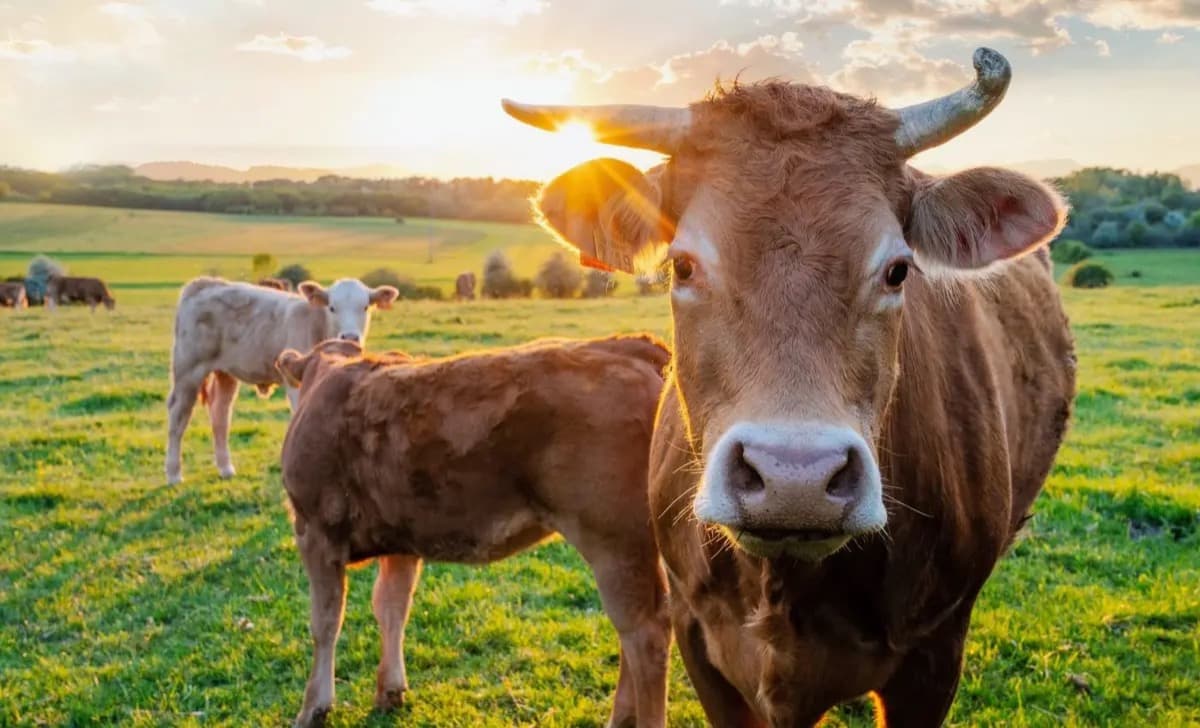
Extreme heat is taking a toll on livestock agriculture. A new study from the University of Illinois Urbana-Champaign examines how heat stress affects U.S. dairy farms.

The researchers found that high temperatures and humidity lead to a 1% annual decline in milk yield. Smaller farms suffer more than large ones, which can adopt management strategies to reduce the effects.

AD

Impact of heat on dairy cows

Study co-author Marin Skidmore is an assistant professor in the Department of Agricultural and Consumer Economics at the University of Illinois.

“Cows are mammals like us, and they experience heat stress just like we do. When cows are exposed to extreme heat, it can have a range of negative physical effects,” explained Professor Skidmore.

“There is an increased risk of infection, restlessness, and decreased appetite, which leads to a decline in milk yield. For dairy producers, the heat impact is a direct hit on their revenue.”

The team studied milk production data from nine Midwest states. They analyzed over 56 million cow-level records from 18,000 dairy farms between 2012 and 2016. The researchers adjusted milk data for protein and fat content to better assess milk quality, which determines its market value.

Heat stress and dairy quality

“Previous studies have focused on fluid milk yield. But in our dairy marketing system, milk is sold on components. When you calculate revenue, it’s not just about how many gallons of milk, but whether it’s high-quality milk with high protein and fat content,” Skidmore said.

The researchers linked milk production records with daily temperature and humidity data. They used temperature-humidity index measurements to gauge how much heat stress cows experience. High heat and humidity make it harder for cows to cool down, leading to reduced milk production.

AD
On average, 1% of annual milk yield is lost to heat stress. That translates to about 1.4 billion pounds of milk over five years for the farms in the study. Based on average milk prices, these losses amount to roughly $245 million in revenue.

Smaller farms suffer more

Most of the losses occur on low- and moderate-stress days, which happen more often.

However, extreme heat days have a much greater impact, causing more than twice the dairy milk loss per cow compared to moderate-stress days.

Smaller farms experience the greatest financial burden. The researchers found that herds with fewer than 100 cows lost an average of 1.6% of their annual milk yield. Though these farms contributed less than 20% of the total output in the study, they accounted for 27% of total damages.

Strategies to combat heat stress

Producers can take steps to reduce heat stress. Open barn sides, fans, and sprinklers can help cool cows.

“There are a number of different adaptive methods, but there is no silver bullet. You can install more sprinklers and sophisticated ventilation systems. You could change the timing of calving to avoid these warmer periods, but that incurs other risks, and it is a complex issue,” noted Professor Skidmore.

Lower levels of heat stress can be managed with current techniques. Large farms experience minimal losses at those levels. However, when temperatures and humidity rise beyond a certain point, no mitigation strategy is fully effective.

Future projections and policy needs

The researchers projected milk yield losses through 2050 using predictions from 22 climate models. The findings suggest extreme heat days will become more common, and milk yield losses could increase by 30%.

If dairy production remains a priority, small farms will need additional support. Professor Skidmore emphasized the importance of financial incentives to help farmers adopt heat mitigation strategies. Further research will also be necessary to manage extreme heat stress.

“If there’s interest in continuing to have a healthy and robust small dairy production presence in the U.S., that probably will require financial incentives to help farmers implement mitigation strategies, as well as investments in further research on how to manage the highest levels of heat stress,” she concluded.

The study is published in the journal Food Policy. The research was funded by a Center for the Economics of Sustainability Seed Grant.

Source : Dairynews7x7 March 21st 2025 Earth by By Sanjana Gajbhiye

Stay Updated

Get the latest dairy industry news directly in your feed.

Prefer Us on Google Search

Swipe to continue reading

Previous Article

Next Article