Logo
IndianGlobalBlogsPublicationsPodcastsMarketAboutContact
Logo
IndianGlobalBlogsPublicationsPodcasts
7News
Mandatory Daily Record of Production and Raw Material UtilisationHeritage Foods inaugurates new Ice Cream PlantFSSAI makes registration to all milk vendors in IndiaGujarat Ice Cream Makers Face Cone ShortageSummer Heat to Stress India’s Dairy Cold Chain

Indian Dairy News

Britannia Bets Big on Dairy and Croissants
Mar 15, 2026

Britannia Bets Big on Dairy and Croissants

Food major Britannia Industries is accelerating its diversification strategy beyond biscuits by expanding into high-growth segments such as dairy, croissants, cakes, wafers and rusk, as it aims to bec...Read More

Uttarakhand Milk Production Rises 3%
Mar 15, 2026

Uttarakhand Milk Production Rises 3%

Milk production in Uttarakhand has increased by 3.1%, reaching 1,957.2 thousand tonnes in FY 2025-26, up from 1,897.8 thousand tonnes in FY 2024-25, according to Dairy Development Minister Saurabh Bah...Read More

FSSAI Licences Get Perpetual Validity
Mar 14, 2026

FSSAI Licences Get Perpetual Validity

India’s food regulator, the Food Safety and Standards Authority of India (FSSAI), has announced a major reform granting perpetual validity to food licences and registration certificates, eliminating t...Read More

DairyNews7x7
Advertisement

Latest Blogs

See More
When the World Feels Uncertain, Milk Still Brings Trust
Mar 15, 2026

When the World Feels Uncertain, Milk Still Brings Trust

Trust: The Next White Revolution The world today is passing through uncertain times. Wars are disrupting global trade routes, commodity markets are behaving unpredictably and regulators everywhere are...Read More

Mandatory Daily Record of Production and Raw Material Utilisation
Mar 14, 2026

Mandatory Daily Record of Production and Raw Material Utilisation

I recently reviewed the notification issued by the Food Safety and Standards Authority of India in the context of Schedule IV of the Food Safety and Standards (Licensing and Registration of Food Busin...Read More

FSSAI makes registration to all milk vendors in India
Mar 13, 2026

FSSAI makes registration to all milk vendors in India

The recent advisory issued by Food Safety and Standards Authority of India (FSSAI) mandating registration of milk vendors is a timely and progressive step towards strengthening traceability and accou...Read More

Rajahmundry Milk Incident: Accident or Adulteration?
Mar 10, 2026

Rajahmundry Milk Incident: Accident or Adulteration?

The recent editorial “Bitter Milk” published by The Hindu raises important concerns about food safety in India. The editorial deserves appreciation for attempting to broaden the conversation and under...Read More

Global Dairy News

Global Dairy Commodity Prices Show Signs of Rally
Mar 14, 2026

Global Dairy Commodity Prices Show Signs of Rally

Global dairy commodity prices have shown a rally in the first quarter of 2026, particularly for products originating from Australia and New Zealand, according to a new Q1 Global Dairy Quarterly report...Read More

How Walmart Keeps Great Value Milk So Affordable
Mar 14, 2026

How Walmart Keeps Great Value Milk So Affordable

Retail giant Walmart has managed to keep the price of its private-label Great Value milk significantly lower than many competing brands through a vertically integrated dairy supply chain and direct co...Read More

Lactose-Free Milk Seen as Growth Driver in Coffee
Mar 13, 2026

Lactose-Free Milk Seen as Growth Driver in Coffee

Lactose-free milk is emerging as a major growth opportunity for the dairy industry, particularly in the rapidly expanding coffee and café segment. A recent US-based study highlighted that lactose-free...Read More

DairyNews7x7
Advertisement
Dairy News 7x7

Your trusted source for all the latest dairy industry news, market insights, and trending topics.

FOLLOW US
CATEGORIES
  • Global News
  • Indian News
  • Blogs
  • Publications
  • Podcasts
SUBSCRIBE TO OUR NEWSLETTER

Stay informed with the latest updates and trending news in the dairy industry.

No spam, unsubscribe at any time

GET IN TOUCH
C-49, C Block, Sector 65,
Noida, UP 201307
+91 7827405029dairynews7x7@gmail.com

© 2026 Dairy News 7x7. All Rights Reserved.

Terms of ServicePrivacy Policy
Prefer Us
Prefer Us

Milk supports gut bacteria; cheese shifts microbiome

By DairyNews7x7•Published on February 21, 2025

Milk supports gut bacteria; cheese shifts microbiome
Prefer on

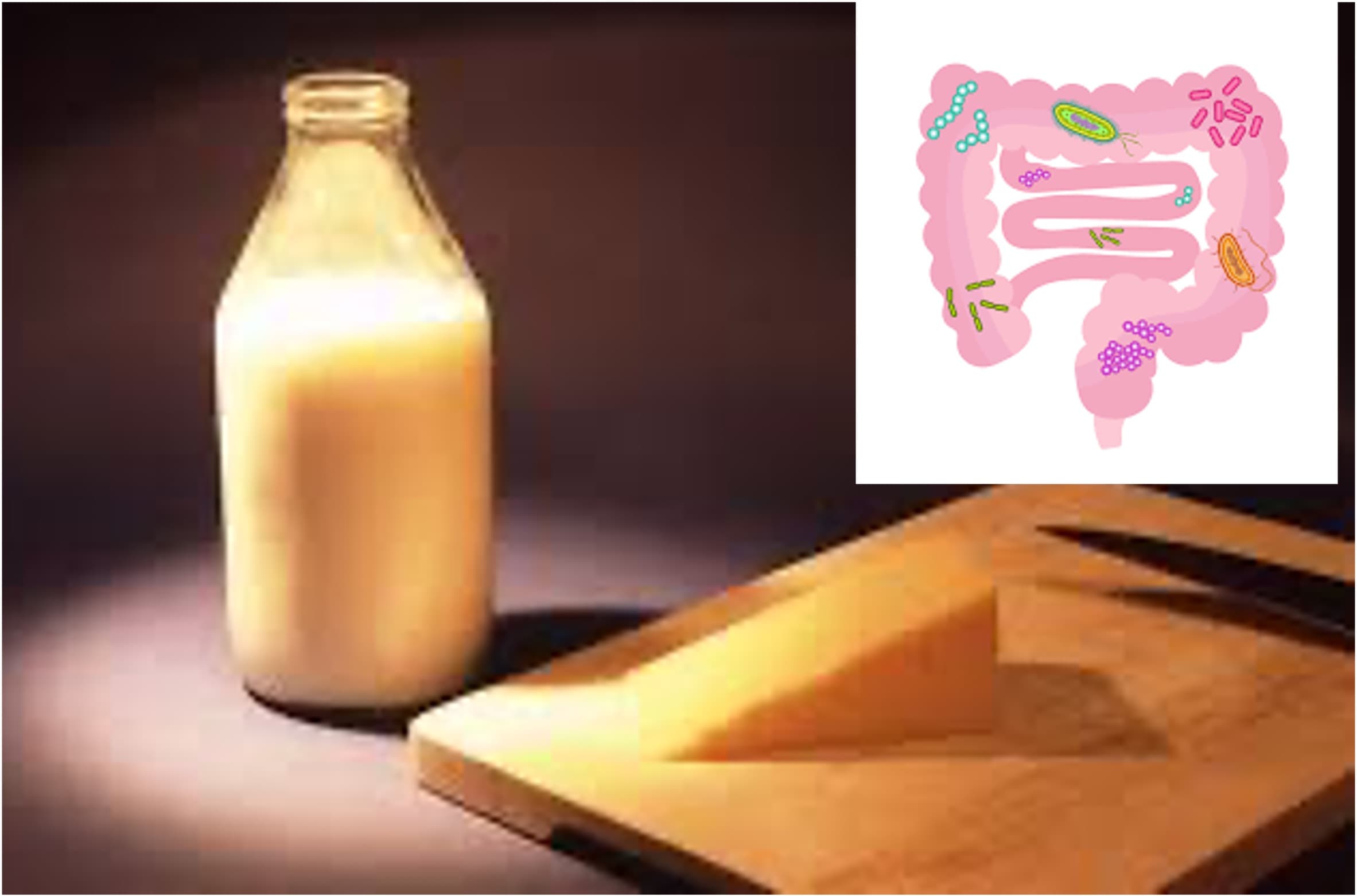
In a recent study published in the journal Nutrients, researchers in the United States explored the influence of dairy consumption on colonic mucosa-associated gut microbiota. By investigating specific bacterial composition changes linked to dairy intake, they highlighted its implications for individual and public health.

Background

Did you know that the human gut houses trillions of bacteria that influence everything from digestion to mental health? Research increasingly points to diet as a crucial factor in shaping our gut microbiome, yet the role of dairy remains controversial. While dairy provides essential nutrients such as calcium, vitamins, and probiotics, conflicting studies raise concerns about its effects on gut health. Some research links dairy consumption to enhanced beneficial gut bacteria, while others suggest potential risks such as inflammation and metabolic disturbances. Given the global prevalence of dairy consumption, understanding its precise effects on gut microbiota is critical for shaping dietary guidelines and public health initiatives. Further research is needed to determine how specific dairy products affect different bacterial species and their long-term influence on health.

About the study

Lactose may act as a prebiotic: The study found that the positive association between milk intake and Akkermansia was weakened after adjusting for lactose intake, suggesting that lactose or other dairy components might stimulate beneficial bacteria growth.

A cross-sectional study was conducted with 34 participants who had undergone a colonoscopy at the Michael E. DeBakey Veterans Affairs Medical Center in Houston, Texas. Participants were selected based on strict eligibility criteria, excluding individuals with inflammatory bowel disease (IBD), recent antibiotic use, or major dietary changes. Self-reported dairy intake over the past year was assessed using a validated food frequency questionnaire (FFQ). Nutrient intake was adjusted for caloric consumption.

Colonic mucosal biopsies were collected and analyzed for microbial composition using 16S ribosomal Ribonucleic acid (rRNA) gene sequencing. Bacterial Deoxyribonucleic Acid (DNA) was extracted, and the V4 region of the 16S rRNA gene was amplified and sequenced using the Illumina MiSeq platform. Operational Taxonomic Unit (OTU) classification was performed using the Unified Platform for Automated Sequence Analysis (UPARSE) and structured Identification of Lifeforms from Various Environments databases (SILVA). Alpha-diversity (species richness and evenness) and beta-diversity (community composition differences) were calculated. Statistical analyses included negative binomial regression models adjusted for demographic and lifestyle factors such as age, body mass index (BMI), smoking status, alcohol use, and dietary quality. The study included a total of 97 mucosal biopsies from these participants. False discovery rate (FDR)-adjusted p-values were used to determine statistical significance.

Study results

Bifidobacterium linked to total dairy intake: Participants who consumed more total dairy (not just milk) showed a higher abundance of Bifidobacterium, a well-known probiotic associated with digestive health and immune support.

Higher consumption of total dairy and milk was associated with increased microbial alpha-diversity, indicating greater bacterial richness and evenness. In contrast, higher cheese consumption was linked to lower microbial diversity. Beta-diversity analysis revealed significant differences in gut bacterial composition based on dairy intake levels.

Participants who consumed more dairy and milk exhibited a higher relative abundance of Faecalibacterium, a bacterium known for its anti-inflammatory properties. Increased milk intake was also associated with greater levels of Akkermansia, a mucin-degrading bacterium linked to improved gut barrier function and metabolic health. However, the association between Akkermansia and milk intake was attenuated after adjusting for lactose intake, suggesting that lactose or other dairy components may act as prebiotics.

Conversely, higher cheese consumption correlated with a lower relative abundance of Bacteroides and Subdoligranulum. While Bacteroides have been implicated in colorectal cancer (CRC), lower levels of Subdoligranulum have been linked to metabolic disorders. Additionally, the study found that higher total dairy intake was negatively associated with Bacteroides, suggesting a complex relationship between dairy components and microbial composition. The varying impact of milk and cheese on gut microbiota composition may be due to differences in their nutrient content and fermentation process. Milk, which contains more lactose, may promote the growth of beneficial bacteria, while cheese, which undergoes fermentation, may have distinct effects on gut microbial communities.

The study did not find significant associations between yogurt intake and microbial composition, likely due to low yogurt consumption among participants. The findings suggest that different dairy products exert varying influences on gut microbiota, which may have implications for dietary recommendations and gut health interventions.

Relative abundance (%) of the major bacterial phyla by total dairy (A), milk (B), cheese (C), and yogurt (D).Relative abundance (%) of the major bacterial phyla by total dairy (A), milk (B), cheese (C), and yogurt (D).

Conclusions

Yogurt’s role remains unclear: Although yogurt is often considered beneficial for gut health, this study did not find a strong association between yogurt intake and microbiota composition, likely due to low yogurt consumption among participants.

To summarize, dairy consumption significantly influences the composition and diversity of colonic mucosa-associated gut microbiota, with potential implications for individual and public health. A higher intake of total dairy and milk promotes beneficial bacteria such as Faecalibacterium and Akkermansia, whereas higher cheese consumption is linked to reductions in Bacteroides and Subdoligranulum. Notably, total dairy intake was inversely associated with Bacteroides, a genus linked to both colorectal cancer and inflammatory conditions. These findings underscore the broader impact of dairy consumption on gut health, which in turn affects metabolic, immune, and digestive functions.

On a community level, dietary guidelines emphasizing balanced dairy consumption could improve public health outcomes. However, the study had limitations, including a small sample size, a predominantly older male participant pool, and reliance on self-reported dietary intake, which may affect generalizability. Globally, understanding the role of dairy in gut health could inform nutrition policies, probiotic interventions, and personalized dietary recommendations. Further research using metagenomic and metabolomic approaches is needed to explore how specific dairy components influence microbial functions and their long-term effects on health.

Source : Dairynews7x7 Feb 21st 2025 News Medical By Vijay Kumar Malesu

Journal reference:
  • Chen E, Ajami NJ, White DL, et al. Dairy Consumption and the Colonic Mucosa-Associated Gut Microbiota in Humans—A Preliminary Investigation. Nutrients. (2025), DOI: 10.3390/nu17030567,

Stay Updated

Get the latest dairy industry news directly in your feed.

Prefer Us on Google Search

Swipe to continue reading

Previous Article

Next Article