Leverage WTO norms to reform the MSP regime: Phase out the freebies
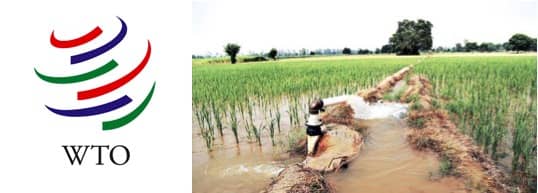
It’s in India’s own interest to phase out free supply electricity and water and focus on productivity boosting infrastructure
The macroeconomic impact of MSP has been neglected in the current debate. It worked, over the years, as a push keeping Indian inflation high. The short-term rise in farmer incomes it delivered was soon eroded, leading to another rise and so on.
In recent years it has led India to fall foul of the WTO. While the WTO is unfair and heavily biased in favour of advanced economies (AEs), perhaps India can use it to make feasible essential reform in its farmer support programmes. It is an issue worth debate in view of the upcoming WTO ministerial.
Multiple government interventions were designed to ensure food security as well as motivate farmers to increase production to feed the growing population. Procurement supported the public distribution scheme that provided subsidised foodgrains to the poor.
Farmers in the northern belt who shifted to these crops had the facility to sell to the state at the MSP, or a higher procurement price. Additional incentives came from subsidised inputs and total exemption from income taxes. Also, restrictions were placed on the movement and marketing of some agricultural goods to restrain speculative hoarding, and on exports to ensure domestic supply. Prices were set based on recommendations from an independent regulator, the Commission for Agricultural Costs and Prices (CACP).
The regional concentration of benefits made it easier for farmer unions to emerge. Higher prices were set in the 1970s as incentives to farmers to adopt new green revolution techniques. The distinction between the procurement and support price was lost after the 1970s. The MSP approached the market price. In the 1990s, it had overtaken the latter. As productivity growth slowed more rapid price increases were granted.
The early 1990s’ double devaluation of the exchange rate contributed to upward pressures by widening the gap between domestic and border prices, which became a focal point for farmer lobbies especially as agricultural exports grew after liberalisation. When the gap between border prices and domestic prices rose, there was strong pressure to raise domestic procurement prices. This created a clear pattern in procurement price increases, changes in stock, and domestic inflation impulses.
Consider wheat. The average level of wheat stocks rose from 10.1 million tonnes (mt) in the 1970s to 13.8 mt in the 1980s and 17.4 mt in the 1990s. Higher domestic inflation meant real rupee appreciation. The MSP rose with an excess of export prices over the MSP. Wheat stocks would then rise. After sharp increase in MSP in the late 1990s, stocks peaked at 63 mt, in July 2002. MSP exceeded export prices over 2000-2004. Some stocks had to be exported at a loss. Minor MSP increase in the early 2000s contributed to a fall in domestic inflation.
The gap between export prices and MSP fell from a positive peak in 1998-99 to negative in 2002-03 then turned positive again. But export prices again exceeded MSP in the period 2006-07 after international food prices rose. MSP was increased again substantially. Once more stocks built up dramatically even as domestic food inflation continued in double digits. Steep depreciation followed over-appreciation and contributed to inflation and to raising export prices, so than MSP had to follow.
Since 2018 the CACP formula recommends FAR (fair and remunerative prices) more than 20 per cent above international prices. The MSP has degenerated into an income support programme.
Since now export prices are lower and cannot be used to lobby, farmers want parity with urban income growth. They are asking for a legal MSP with assured purchases at a 50 per cent mark-up over a broad measure of cost of production. But if prices that used to be below export prices are now above, it implies the limit of relative price adjustment compatible with markets is reached. Foodgrain stocks are large also since of diversification of consumption baskets and indicate prices are too high relative to demand.
If government sells at below market prices the commodity could be sold back to it. Exporting at heavily subsidised prices falls foul of global rules that restrict trade distortion.
WTO rules
The World Trade Organisation (WTO) permissible aggregate measure of support for developing countries under the Agreement on Agriculture (AoA) is 10 per cent of the value of the crop. India has exceeded this amount for rice twice. It had to invoke a temporary peace clause specially negotiated in Bali in 2013 — the only nation to do so. The peace clause prevents a country from being legally barred from food security programmes even if the subsidy breaches the WTO limit.
Sugar is the only crop with a legal MSP so any amount offered has to be purchased. With rising MSPs production is far in excess of domestic requirements. A WTO dispute settlement panel ruled that for five years over 2014-15 to 2018-19, price support to sugarcane producers was in excess of the permitted level. India is contesting the award, but how long can it continue to do so?
The excess production is used to make ethanol or exported at heavy and costly subsidies. Rice and sugar over-consume scarce water resources. Either we are exporting water or wasting it as stocks rot.
In addition to the AoA, the WTO’s Agreement on Subsidies and Countervailing Measures specifies that when a member’s per capita gross national income exceeds $1,000 per annum (at the 1990 exchange rate) for three consecutive years, it has to phase out its export subsidies. India crossed this threshold over 2013-2015. It has eight years, almost getting over, to phase out its trade-distorting export subsidies.
The WTO process is not fair. India gives only a fraction of the subsidies AEs give their farmers, making it difficult for our farmers to compete. But AE subsidies are mostly under the Green box, which is permitted. These include government services such as infrastructure, Direct Benefit Transfers (DBT) for restructuring and food security, which does not distort trade or involve price support.
Since Indian agriculture now accounts for about 16 per cent of GDP but employs over 40 per cent of the labour force, the attempt to give income support through prices will create large distortions.
Using global rules
India argues that it intervenes to support the livelihoods of poor farmers and not for export and in any case it has time to phase out export subsidies.
No country wants to let an unfair global system push it. But it is in India’s own interest not to distort the allocation of resources and to shift more areas to pulses and oilseeds, and away from rice and sugar. This would save both foreign exchange and water. It has the capability for extensive DBT as required, which can reach the small farmer as well, unlike the present subsidies that large farmers capture.
If the WTO is used to resist farm lobbies and political populism by committing to a sequential restructuring, governments could spend more on productivity raising infrastructure, as East Asia did, and phase out free electricity and water. The MSP could again become a floor price that prevents collapse in prices. It could rise at about the inflation target rate of 4 per cent helping anchor inflation expectations. The rupee would be more stable. Procurement prices may be higher as required to maintain adequate, not excessive, food security stocks, which would rise for pulses and oilseeds and fall for foodgrains in line with changing consumer preferences.
Source : The Hindu Business Line 20th Dec written by Ashima Goyal .The writer is Emeritus Professor, IGIDR. Views are personal
Never miss an important dairy update
Follow DairyNews7x7 on Google to get live milk prices, policy alerts, and daily headlines directly in your feed.