Logo
IndianGlobalBlogsPublicationsPodcastsMarketAboutContact
Logo
IndianGlobalBlogsPublicationsPodcasts
7News
Mandatory Daily Record of Production and Raw Material UtilisationHeritage Foods inaugurates new Ice Cream PlantFSSAI makes registration to all milk vendors in IndiaGujarat Ice Cream Makers Face Cone ShortageSummer Heat to Stress India’s Dairy Cold Chain

Indian Dairy News

Britannia Bets Big on Dairy and Croissants
Mar 15, 2026

Britannia Bets Big on Dairy and Croissants

Food major Britannia Industries is accelerating its diversification strategy beyond biscuits by expanding into high-growth segments such as dairy, croissants, cakes, wafers and rusk, as it aims to bec...Read More

Uttarakhand Milk Production Rises 3%
Mar 15, 2026

Uttarakhand Milk Production Rises 3%

Milk production in Uttarakhand has increased by 3.1%, reaching 1,957.2 thousand tonnes in FY 2025-26, up from 1,897.8 thousand tonnes in FY 2024-25, according to Dairy Development Minister Saurabh Bah...Read More

FSSAI Licences Get Perpetual Validity
Mar 14, 2026

FSSAI Licences Get Perpetual Validity

India’s food regulator, the Food Safety and Standards Authority of India (FSSAI), has announced a major reform granting perpetual validity to food licences and registration certificates, eliminating t...Read More

DairyNews7x7
Advertisement

Latest Blogs

See More
When the World Feels Uncertain, Milk Still Brings Trust
Mar 15, 2026

When the World Feels Uncertain, Milk Still Brings Trust

Trust: The Next White Revolution The world today is passing through uncertain times. Wars are disrupting global trade routes, commodity markets are behaving unpredictably and regulators everywhere are...Read More

Mandatory Daily Record of Production and Raw Material Utilisation
Mar 14, 2026

Mandatory Daily Record of Production and Raw Material Utilisation

I recently reviewed the notification issued by the Food Safety and Standards Authority of India in the context of Schedule IV of the Food Safety and Standards (Licensing and Registration of Food Busin...Read More

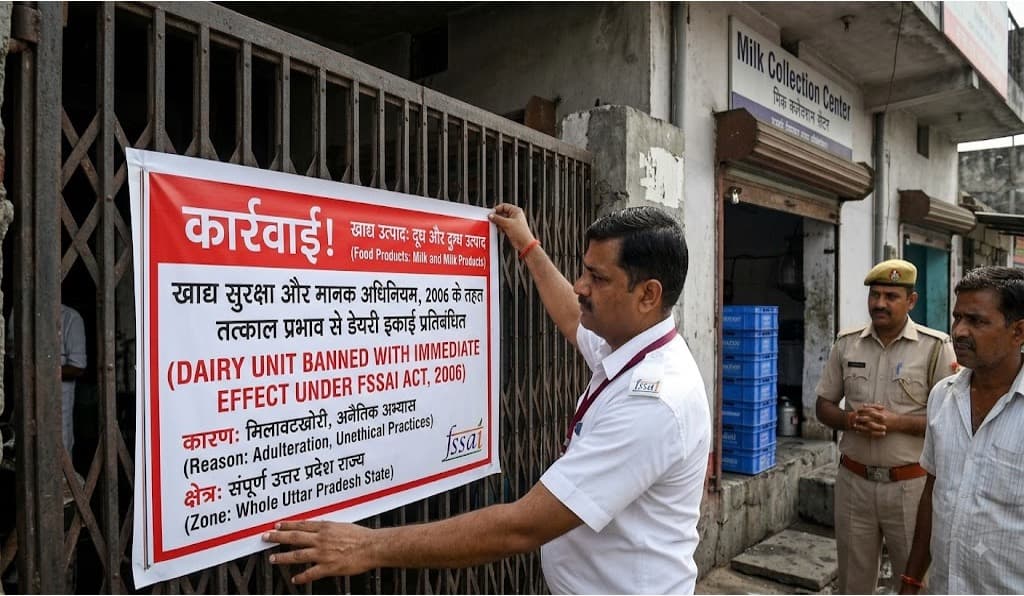
FSSAI makes registration to all milk vendors in India
Mar 13, 2026

FSSAI makes registration to all milk vendors in India

The recent advisory issued by Food Safety and Standards Authority of India (FSSAI) mandating registration of milk vendors is a timely and progressive step towards strengthening traceability and accou...Read More

Rajahmundry Milk Incident: Accident or Adulteration?
Mar 10, 2026

Rajahmundry Milk Incident: Accident or Adulteration?

The recent editorial “Bitter Milk” published by The Hindu raises important concerns about food safety in India. The editorial deserves appreciation for attempting to broaden the conversation and under...Read More

Global Dairy News

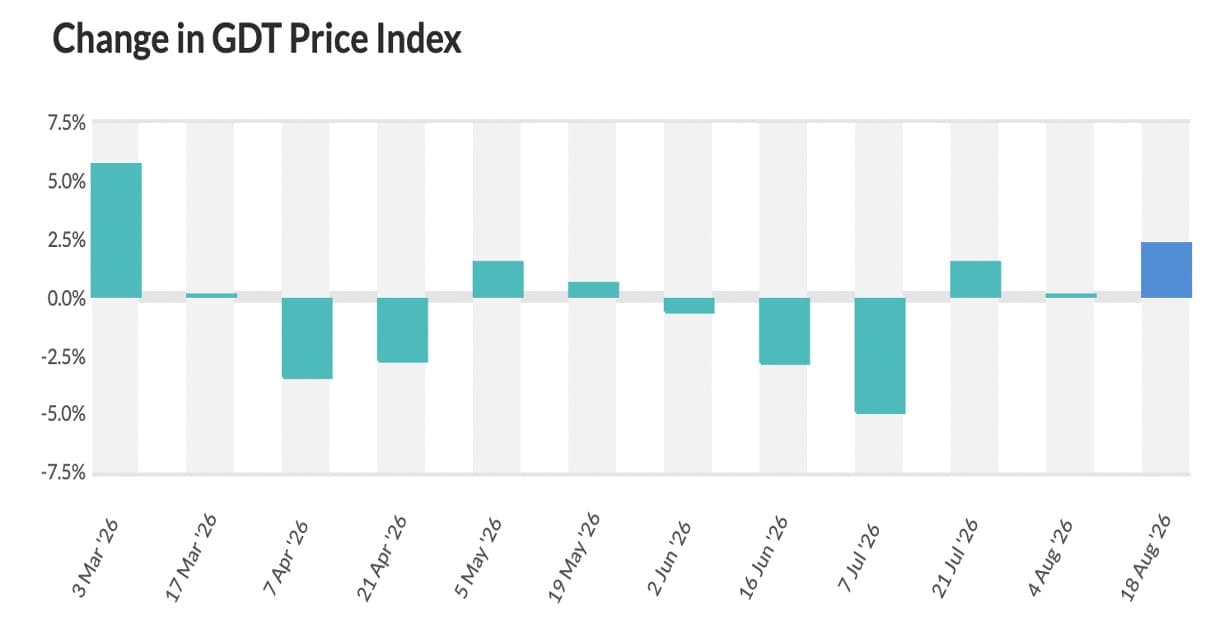
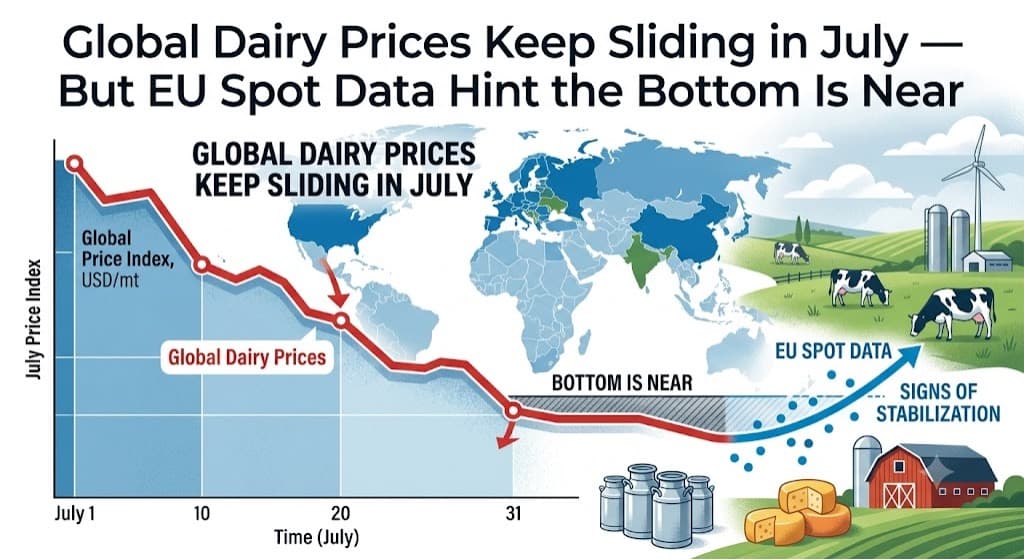
Global Dairy Commodity Prices Show Signs of Rally
Mar 14, 2026

Global Dairy Commodity Prices Show Signs of Rally

Global dairy commodity prices have shown a rally in the first quarter of 2026, particularly for products originating from Australia and New Zealand, according to a new Q1 Global Dairy Quarterly report...Read More

How Walmart Keeps Great Value Milk So Affordable
Mar 14, 2026

How Walmart Keeps Great Value Milk So Affordable

Retail giant Walmart has managed to keep the price of its private-label Great Value milk significantly lower than many competing brands through a vertically integrated dairy supply chain and direct co...Read More

Lactose-Free Milk Seen as Growth Driver in Coffee
Mar 13, 2026

Lactose-Free Milk Seen as Growth Driver in Coffee

Lactose-free milk is emerging as a major growth opportunity for the dairy industry, particularly in the rapidly expanding coffee and café segment. A recent US-based study highlighted that lactose-free...Read More

DairyNews7x7
Advertisement
Dairy News 7x7

Your trusted source for all the latest dairy industry news, market insights, and trending topics.

FOLLOW US
CATEGORIES
  • Global News
  • Indian News
  • Blogs
  • Publications
  • Podcasts
SUBSCRIBE TO OUR NEWSLETTER

Stay informed with the latest updates and trending news in the dairy industry.

No spam, unsubscribe at any time

GET IN TOUCH
C-49, C Block, Sector 65,
Noida, UP 201307
+91 7827405029dairynews7x7@gmail.com

© 2026 Dairy News 7x7. All Rights Reserved.

Terms of ServicePrivacy Policy
Prefer Us
Prefer Us

Infant formula: CMA to help parents save money

By DairyNews7x7•Published on February 16, 2025

Infant formula: CMA to help parents save money
Prefer on

  • CMA infant formula study finds that a combination of factors is leading to poor outcomes for parents, who could be saving around £300 a year by switching to a lower priced brand
  • Issues include the design and operation of current regulations and the responses of consumers to advertising which emphasises branding when, in fact, all infant formula will meet babies’ full nutritional needs
  • CMA heard concerns that parents on lower incomes are disproportionately affected due to higher rates of formula feeding
  • CMA final recommendations cover standardised packaging in hospitals; providing clear information to parents in healthcare and retail settings on the nutritional sufficiency of all infant formula; making it easier to compare prices of different brands; extending the ban on advertising to include follow-on formula; and allowing parents to use vouchers and loyalty points to buy infant formula
  • Given the steer from governments that regulatory restrictions on price promotions of infant formula support breastfeeding, the CMA is not recommending removing this ban at this stage, but stands ready to support further consideration of this option if asked
Following a market study into the infant formula and follow-on formula market, the Competition and Markets Authority (CMA) has issued its final recommendations.

Sarah Cardell, Chief Executive of the CMA, said:

Every parent wants to give their baby the best possible start in life. Many whom need, or choose, to formula feed, pick a brand at a vulnerable moment, based on incomplete information, often believing that higher prices must mean better quality. This is despite NHS advice stating that all brands will meet your baby’s nutritional needs, regardless of brand or price.

Governments across the UK are committed to the tight regulation of infant formula for public health reasons. So, our proposals are designed to help parents make the best choices for them and their babies, with access to better information, while sharpening the effectiveness of the existing rules.

Our proposals will also make it easier for regulations to be properly enforced, while ensuring manufacturers and retailers can be more confident in what they can and can’t do according to law.

We strongly encourage governments to act on the recommendations to stop well-intended regulation driving poor outcomes for consumers. We’re ready to help implement the changes and support thinking around further measures, including removing the ban on price promotions, should governments consider it necessary at a later stage.

CMA findings

Advertising and labelling of infant formula is strictly regulated. For example, advertisement and promotion, including price reductions or deals, is restricted so as not to discourage breastfeeding.

Many parents choose a brand for the first time in vulnerable circumstances – often in hospital immediately after birth – and frequently without the clear, accurate and impartial information needed to make informed decisions. People often feel under pressure, naturally wanting to do what is best for their baby. Many actively choose a more expensive product, assuming this means better quality. However, NHS advice makes clear “It does not matter which brand you choose, they’ll all meet your baby’s nutritional needs, regardless of price”.

Against this backdrop, rather than competing strongly on price, manufacturers place significant emphasis on building brand awareness to secure customers. For example, some regularly supply the NHS with below cost formula to reach new parents – and once parents have found a brand that works for their baby, they rarely switch.

Regulation states that the labelling and presentation of infant and follow-on formulas should be ‘clearly distinct’. Despite this, manufacturers use similar branding and labelling – including similar colour palettes, fonts and imagery – across infant and follow-on formulas. When combined with large marketing budgets, this approach indirectly supports the sale of infant formula, with CMA evidence indicating that parents are disproportionately influenced by such branding practices (be it in hospitals, online or in store).

The CMA heard concerns that parents on lower incomes are more likely to formula feed so are disproportionately impacted by infant formula pricing. While some government support is available to those eligible, most infant formulas exceed the weekly value of benefits available through schemes such as the Healthy Start and Best Start Food. This can lead to parents foregoing food in order to provide for their babies.

On pricing, differences between brands can have a sizeable impact on parents’ finances. Evidence reviewed by the CMA shows that they could make a saving of around £300 over a baby’s first year of life by switching from a popular mid-priced product to a low-priced brand.

Recommendations

The 4 recommendations from the CMA are:
  1. Removing brand influence in healthcare settings: Parents should be provided with timely, clear, accurate and impartial information on nutritional sufficiency of all infant formula products as early as possible. Where parents are given infant formula in healthcare settings, labelling should be standardised to reduce the influence of branding on their decision making. For example, branded formula could be put into non-branded containers, or the NHS could have a white-label formula.
  2. Equipping parents with the right information when they are shopping: Information about nutritional sufficiency should be displayed clearly and prominently on shelves and when buying online. In store, all brands of infant formula should be displayed together and in a separate cluster from other formula milks to enable quick and easy price comparisons.
  3. Strengthening labelling and advertising rules: All packaging should clearly display information on nutritional sufficiency. Claims that are intangible, or cannot be easily checked by parents, should be banned. Like infant formula, advertising (including price promotions and deals) for follow-on milks should be banned. To help shops, manufacturers and enforcers, government should clarify what constitutes ‘advertising’, outlining exactly what shops and manufacturers can and cannot do regarding formula milks. Parents should be allowed to use gift cards, vouchers, loyalty points, and coupons to purchase infant formula.
  4. Effectively enforce current and future rules: Strengthen the roles played by relevant authorities so they must approve the packaging of all infant formula products before sale. At present, companies can put products onto the market before the relevant authority has reviewed the label.
Public Health Minister, Ashley Dalton, said:
I welcome this report and would like to thank the Competition and Markets Authority for their thorough investigation.

There are many benefits of breastfeeding but for those families that cannot or choose not to breastfeed, it is vital that they can access formula that is affordable and high quality. Families should not be paying over the odds to feed their babies because of outdated regulation.

As part of our Plan for Change, we’re determined to ensure every child has the best start to life. We will carefully consider these recommendations and respond fully in due course.

Competition and Markets Minister Justin Madders said:
The government has been clear through our new Strategic Steer to the CMA that competition and consumer protection will drive economic growth.

That work to drive better outcomes for consumers across the infant formula market delivers on this priority. We look forward to working closely with the CMA across government to continue to deliver growth as part of our Plan for Change.

Next steps

Recommendations are made to UK, Northern Irish, Scottish and Welsh governments, working in collaboration with other organisations, where appropriate. The CMA will now engage to explain these measures and support their implementation.

For more information on the CMA’s market study, visit the Infant formula and follow-on formula market study.

Source : DAirynews7x7 Feb 16th 2025 UK Gov Press release

Stay Updated

Get the latest dairy industry news directly in your feed.

Prefer Us on Google Search

Swipe to continue reading

Previous Article

Next Article