Latest Blogs
See More

Indian Dairy News


DairyNews7x7
Global Dairy News


DairyNews7x7
In the Trump 2.0 era, India’s pivot toward bilateral trade deals with trusted Western economies has become a necessity rather than a choice. India’s recent progress on bilateral trade agreements with Western nations are about more than just economic interests – India is undergoing a considerable geoeconomic reorientation in the face of emerging trends. Protectionist waves, supply chain vulnerabilities, and rising geopolitical competition have severely disrupted international trade in recent years. These changes have compelled countries to rethink trade dependencies and rebalance alliances for resilience and strategic advantage. India has been proactive by signing new trade pacts and reactivating dormant ones to become a key node in new global value chains.
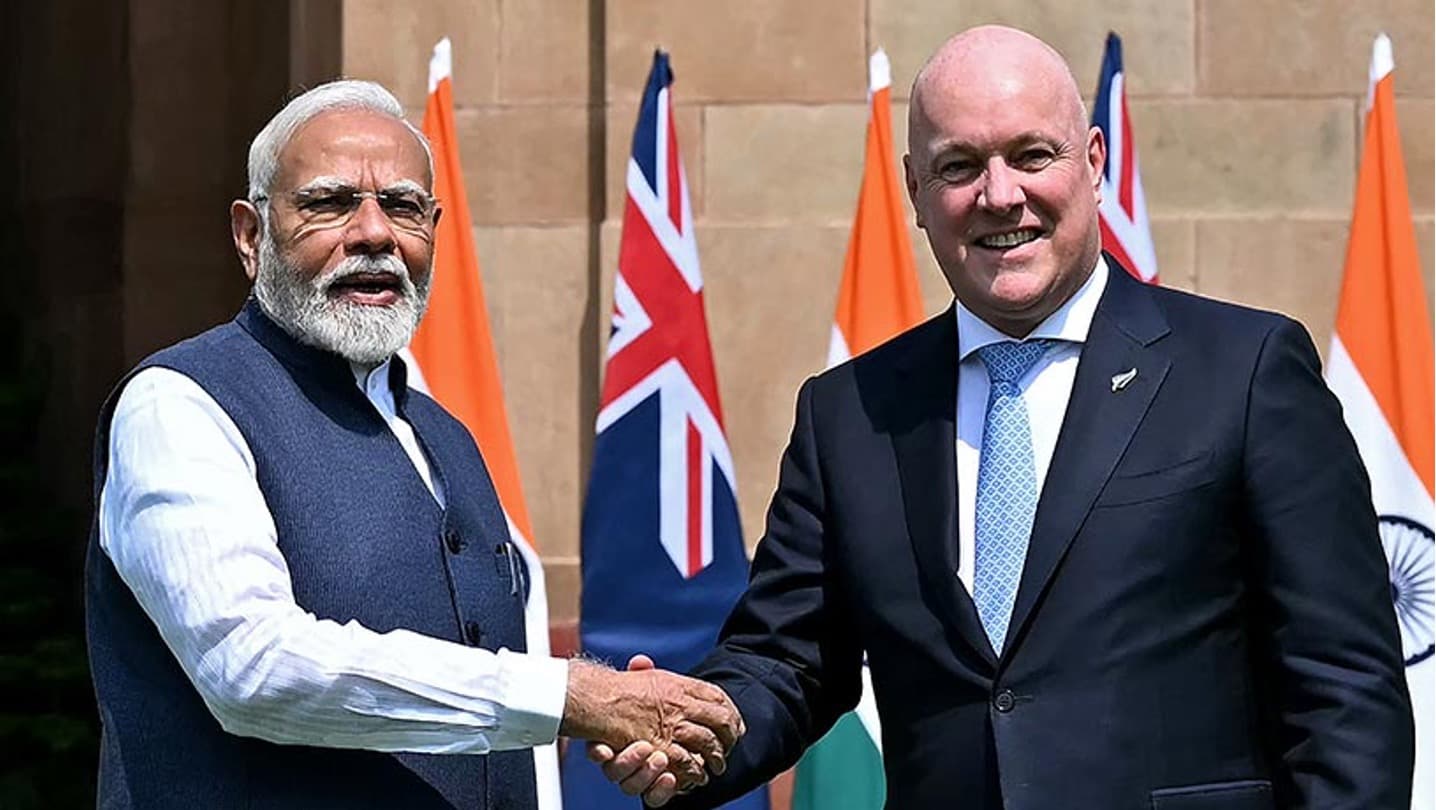
The renewal of free trade agreement (FTA) negotiations between New Zealand and India after a decade carries fresh political commitment and better economic convergence. The main hurdle in earlier negotiations had been India’s protectionism in the dairy sector, which forms the backbone of the country’s rural economy, supporting millions of small farmers. New Zealand’s highly competitive dairy sector wanted increased access to the Indian market – a proposal that proved politically objectionable for India. Today, both countries seem willing to overcome these sensitivities to sign a mutually beneficial agreement.
New Zealand’s highly competitive dairy sector wanted increased access to the Indian market – a proposal that proved politically objectionable for India.During the visit, Luxon said New Zealand would continue pursuing access to dairy while being open to innovative trade-offs and sectoral cooperation. New Delhi echoed the same flexibility by saying the agreement would boost bilateral trade tenfold trade in the next decade.
That vision rests on solid ground: India’s exports to New Zealand reached a record high in 2024, surpassing $600 million for the first time – a 62 percent increase since 2019. However, overall bilateral trade remains modest, growing by just 24 percent over the same period.
Interestingly, while trade between the two countries rose from $862 million in 2015 to $1.2 billion in 2024, the post-COVID era has seen a notable shift – India has transitioned from running a trade deficit to recording a surplus in its trade relationship with New Zealand. India primarily imports goods and services from New Zealand, such as wool, iron and steel, fruits and nuts, and aluminum. Conversely, Indian exports to New Zealand essentially comprise pharmaceuticals, mechanical machinery, textile articles, and precious stones – reflecting both economies’ complementary strengths and the potential for deeper trade integration.
While the trade structure is still fairly balanced, great potential has yet to be tapped in critical minerals, tourism, advanced agri-tech, and education services. As New Zealand attempts to diversify away from China – its largest trade partner – India’s massive consumer base and expanding middle class become more enticing. From the Indian point of view, integrating the South Pacific’s economy by employing New Zealand as the gateway would open up new trade avenues and bargaining strength in the relatively unexplored region.
Moreover, both countries perceive the FTA as falling within the overall vision for enhanced economic and technological convergence in the Indo-Pacific region. Greater mobility for businesses, cooperation in the field of renewable energy, and digital services are expected to feature in the final agreement in accordance with the overall vision for strategic economic convergence.
India and Australia implemented the Economic Cooperation and Trade Agreement (ECTA), marking a significant milestone in their bilateral relations.New Delhi is also negotiating geoeconomically significant and politically mature trade agreements with the United Kingdom and the European Union. These FTAs will be a pivot point for India’s growth strategy, which is driven by exports. They are complemented by domestic priorities such as the growth of the manufacturing sector, empowerment of micro-, small-, and medium-sized enterprises (MSMEs), and technological self-reliance as part of the “Make in India” initiative.
There have been over a dozen rounds of negotiations in the U.K. case. British priorities are enhanced access to automobiles, whisky, and financial services. India’s priorities are relaxing the norms for the movement of businesses, ensuring adequate recognition of data, and enhancing access to textiles, pharma, and agricultural goods. As of fiscal year 2023–24, merchandise exports from India to the U.K. were worth $12.9 billion. Meanwhile, after the FTA agreement is signed, another $6.1 billion worth of goods – such as garments, seafood, mangoes, and engineering goods – will benefit from the tariff reductions.
Meanwhile, in 2022 India and EU rebooted their FTA talks, which had been stalled since 2013. The two sides aim to conclude a trade deal by the end of 2025. However, significant issues remain unresolved. The EU is pressing for tariff cuts on cars, wines, and dairy products, while India is pushing back on what it sees as non-tariff barriers – such as carbon taxes and sustainability clauses – that could disproportionately affect its exporters. In exchange, India demands improved access for IT professionals, generic medicines, and recognition as a data-secure nation to allow more unrestrained cross-border data flows.
In the Trump 2.0 era – marked by a renewed surge in protectionist policies and the weakening of multilateral trade institutions – India’s pivot toward bilateralism with trusted Western economies has become a necessity rather than a choice. India’s expanded FTA engagements with New Zealand, Australia, the United Kingdom, the European Union, and other key Western partners have evolved beyond transactional tariff reductions; they now serve as strategic instruments for integrating into resilient global value chains, fostering innovation, and enhancing India’s economic sovereignty. If executed effectively, these agreements could not only improve market access for Indian enterprises but also consolidate India’s reputation as a credible and central actor in shaping the future architecture of global trade.
Source : DAirynews7x7 MArch 30th 2025 ORF by Soumya Bhowmick