Logo
IndianGlobalBlogsPublicationsPodcastsMarketAboutContact
Logo
IndianGlobalBlogsPublicationsPodcasts
7News
Summer Heat to Stress India’s Dairy Cold ChainSavencia Profit Drops on Rising Milk CostsTN Milk Output Claim Sparks Data DisputeHormuz Disruption Threatens Dairy Supply ChainUP Approves Dairy Expansion in Bundelkhand

Indian Dairy News

Gujarat Ice Cream Makers Face Cone Shortage
Mar 12, 2026

Gujarat Ice Cream Makers Face Cone Shortage

Ice cream manufacturers in Gujarat are bracing for a potential shortage of cones ahead of the peak summer season due to disruptions in natural gas supply triggered by geopolitical tensions in West Asi...Read More

KMF Milk Collection Drops to 95 Lakh Litres
Mar 12, 2026

KMF Milk Collection Drops to 95 Lakh Litres

Milk procurement by the Karnataka Milk Federation (KMF) has declined to around 95 lakh litres per day with the onset of summer, down from nearly 1 crore litres daily earlier, as rising temperatures an...Read More

Old Electronics May Hide 22-Carat Gold
Mar 12, 2026

Old Electronics May Hide 22-Carat Gold

Swiss scientists have discovered that discarded electronic devices—especially computer motherboards and circuit boards—contain valuable amounts of gold that most people unknowingly throw away. Researc...Read More

DairyNews7x7
Advertisement

Latest Blogs

See More
Rajahmundry Milk Incident: Accident or Adulteration?
Mar 10, 2026

Rajahmundry Milk Incident: Accident or Adulteration?

The recent editorial “Bitter Milk” published by The Hindu raises important concerns about food safety in India. The editorial deserves appreciation for attempting to broaden the conversation and under...Read More

Milk Prices Rise in South & West: Is North Next?
Mar 05, 2026

Milk Prices Rise in South & West: Is North Next?

The recent round of retail milk price increases across South India and Maharashtra is no longer an episodic adjustment but a clear signal of structural stress building up in India’s milk economy. Over...Read More

India’s Dairy Climate Paradox: Production Triumph Meets Methane Time-Bomb
Mar 02, 2026

India’s Dairy Climate Paradox: Production Triumph Meets Methane Time-Bomb

India’s rise to the top of the global dairy league board has been one of the most remarkable agricultural success stories of the 21st century. With milk production surpassing 247 million tonnes per ye...Read More

India’s First Cow Culture Museum in Mathura
Feb 16, 2026

India’s First Cow Culture Museum in Mathura

India’s first national “Cow Culture Museum” is set to be established in Mathura, Uttar Pradesh, on the campus of Pandit Deendayal Upadhyaya Veterinary Science University, announced the Uttar Pradesh B...Read More

Global Dairy News

Israel Drops Controversial Dairy Reform From Budget
Mar 12, 2026

Israel Drops Controversial Dairy Reform From Budget

The Israeli government has removed a controversial dairy reform proposed by Finance Minister Bezalel Smotrich from the 2026 Arrangements Law, a key legislative package linked to the country’s state bu...Read More

Savencia Profit Drops on Rising Milk Costs
Mar 11, 2026

Savencia Profit Drops on Rising Milk Costs

Savencia Profit Drops on Rising Milk Costs French dairy major Savencia Fromage & Dairy reported a sharp fall in profitability for 2025, with its net income dropping by €32.2 million to €74.7 million,...Read More

Hormuz Disruption Threatens Dairy Supply Chain
Mar 11, 2026

Hormuz Disruption Threatens Dairy Supply Chain

Escalating geopolitical tensions around the Strait of Hormuz are creating new risks for the global dairy sector by disrupting key inputs such as energy, fertilisers and shipping routes. The strait car...Read More

DairyNews7x7
Advertisement
Dairy News 7x7

Your trusted source for all the latest dairy industry news, market insights, and trending topics.

FOLLOW US
CATEGORIES
  • Global News
  • Indian News
  • Blogs
  • Publications
  • Podcasts
SUBSCRIBE TO OUR NEWSLETTER

Stay informed with the latest updates and trending news in the dairy industry.

No spam, unsubscribe at any time

GET IN TOUCH
C-49, C Block, Sector 65,
Noida, UP 201307
+91 7827405029dairynews7x7@gmail.com

© 2026 Dairy News 7x7. All Rights Reserved.

Terms of ServicePrivacy Policy
Prefer Us
Prefer Us

How animal milk and plant-based diverge in terms key nutrients

By DairyNews7x7•Published on September 17, 2023

How animal milk and plant-based diverge in terms key nutrients
Prefer on

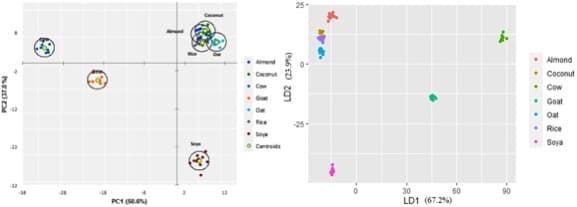
The decline in fresh milk in the Western world has in part been substituted by an increased consumption of plant-based beverages (PBB). These are often marketed as healthy and sustainable alternatives to milk and dairy foodstuff, although studies have suggested PBB to be of lower nutrient quality. The current study considered different brands of almond-, oat-, rice-, coconut- and soya-based beverages for a comparative analysis and found that they indeed presented lower contents of total protein, lipids, amino acids, and minerals than cow and goat milk. The only exception was given by soya-based beverages which approximated the protein content (3.47% vs. 3.42 and 3.25% in cow and goat milk, respectively) and amino acid composition of animal milk, and also demonstrated high mineral content. The natural presence of phyto-compounds in PBB characterised as antinutrients and their potential to exacerbate the issue of low nutrient quality by lowering bioavailability have been discussed.

Introduction

Dairy products have been historically important sources of nutrients particularly in the Western world and in certain Asian countries. Today their consumption is recommended in numerous national dietary guidelines for their high levels of essential nutrients including minerals, fatty acids (FA), and proteins1. Indeed, dairy provides 49% of global dietary calcium, 15% of dietary fat, and 12% of proteins2. Despite this, the consumption of animal milk is in decline in Europe and the U.S. In 2011 the per capita fresh milk consumption in the EU amounted to 56.3 kg, but a 14.6% decline has been projected between 2011 and 20313, translating into a decrease of 394 mL/year. In the U.S. the annual consumption per capita in 2021 was 62.31 kg for milk, 2.92 kg for butter, and 17.2 kg for cheese (ref. 4; https://www.clal.it/en/?section=tabs_consumi_procapite), but the milk intake has been declining by 830 mL/year since 19755. This decline has in part been replaced by a greater consumption of processed derivatives as well as plant-based beverages (PBB). These PBB are often marketed as healthier substitutes and are frequently, although improperly, referred to as “milk”. In Europe, the misuse of the term “milk” has led to the addition of the legally binding definition for milk in the Common Organisation of Markets Regulation (EU) No 1308/20136. The term “milk” has thereby been banned on PBB labelling since 2013 to prevent consumer misguidance.

The recent expansion of non-dairy alternatives has largely been driven by issues concerning lactose intolerance and milk protein allergies7. The growing prevalence of veganism, awareness of animal welfare, and the perceived idea of lower environmental impact and improved health has further encouraged the growth of PBB on the mainstream market8. The most popular PBB are of almond, oat, soya, cashew and coconut origin, or a mixture of these9, but the innovative nature of this market allows for continues expansion of new products. As such, the nutritional content of PBB vary markedly depending on their plant origin, fortification, and industrial processing. Beyond the quantity of the major nutrients, i.e. lipids, carbohydrates, and proteins, the fractional profiles also greatly differ between animal milk and PBB, to which evidence suggest PBB to have a poorer nutritional profile10. Among micronutrients, PBB have demonstrated particularly poor in the mean content of the mineral I10. Iodine is a rate-limiting element for the synthesis of thyroid hormones that play a central role in growth and neurological development, especially in children11. Indeed, I deficiency represents the first preventable cause of brain damage worldwide and its recommended intake vary during lifespan12. Iodine is obtained almost exclusively from diets constituting seafood and dairy products as the main dietary components13,14. Salt iodisation and I fortification of common house-hold food products have therefore become frequent practices to avoid deficiency15.

To address other common micronutrient deficiencies associated with vegan and vegetarian diets, and to thereby be considered as appropriate substitutes to bovine milk, many PBB are often fortified with other minerals beyond I as well as with vitamins, appealing to perceived consumer health benefits. However, despite the growing demand and capitalization of PBB, research into the nutritional aspects of these beverages remains limited, with the exception given by the culturally important soya, whose culinary use has been documented for centuries in many diverse countries. Such research, however, is commonly conducted based on the declared nutrition content on the packaging rather than on composition measurements of actual contents. Indeed, studies have shown nutrient composition declared on food packaging does not always align with actual contents16,17. As milk is, above all, a precious source of high-quality protein and minerals, and its substitution for PBB may thus promote deficiencies of these nutrients, the present study aimed to (i) quantify the gross composition and the amino acids, fatty acids, and minerals in different PBB and animal milk (Table 1), and (ii) carry out a comparative analysis to elucidate which PBB types approximate the nutritional profile of animal milk. The present study applied the detailed FA and amino acid composition as well as gross composition and mineral content of several PBB and milk to identify which nutritive components best discriminate between the beverage types.

Source : Nature Sep 16th 2023 A Research Paper

Stay Updated

Get the latest dairy industry news directly in your feed.

Prefer Us on Google Search

Swipe to continue reading

Previous Article

Next Article