Latest Blogs
See More





Indian Dairy News

DairyNews7x7
Global Dairy News



DairyNews7x7
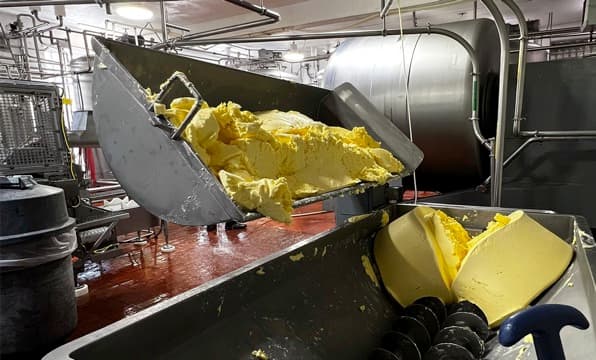
This January, U.S. butterfat levels pushed to a record 4.46%. That’s up from 4.35% just 12 months ago and a remarkable jump from 4.03% in the January 2020 milk supply, according to data published by USDA’s Agricultural Marketing Service.
The increasing production has some people asking, “Are we beginning to produce too much butterfat?”
“That’s a legitimate question,” says Corey Geiger, lead dairy economist for CoBank. There’s some indication that the current markets might be oversupplied with butterfat based on recent reports.
“Plenty of cream is available throughout the country, and it is generally affordable for butter makers,” wrote the authors of USDA’s Dairy Market News in mid-March regarding the overall national market.
The regional story is much the same. “Some butter contacts say they are not able to take in any more cream beyond their contracted amounts,” stated the AMS authors about the East Coast markets. “Cream availability is wide open [in the central U.S. region]. Cream volumes remain readily available in the West. Plenty of comfortably priced contractual and spot cream loads continue to make their way into butter-processing facilities.” The Western region produces nearly half of the nation’s butter.
“Spot cream, the product discussed in the Western region report, is created when fluid milk processors skim cream to standardize pasteurized milk destined for beverage milk,” Geiger explains. “Spot cream also heads to tankers when cheesemakers manufacture low-fat cheeses like mozzarella or standardize milk for American-style cheese. There are other ways sweet cream gets generated, but those are among the largest sources.”
That sweet cream then makes its way to butter, ice cream, cream cheese and other dairy-processing facilities, Geiger continues. “In recent years, sweet cream prices pushed toward record highs as full-fat dairy products continued to grow in demand. As of late, it’s almost a buyer’s market on spot cream tankers,” he says.
When you look at spot butter markets on the CME, the $2.30 spot butter prices prevailing in mid-March are the lowest since January 2023. That also would indicate slowed demand, oversupply or a combination of both, Geiger says.
“However, when looking at markets, it’s important to take a long look at the situation. It wasn’t that long ago that butter prices rarely went over the $2-per-pound range,” Geiger says. “It was only after [January 2022] that butter prices trotted over the $3-per-pound range on three separate occasions.”
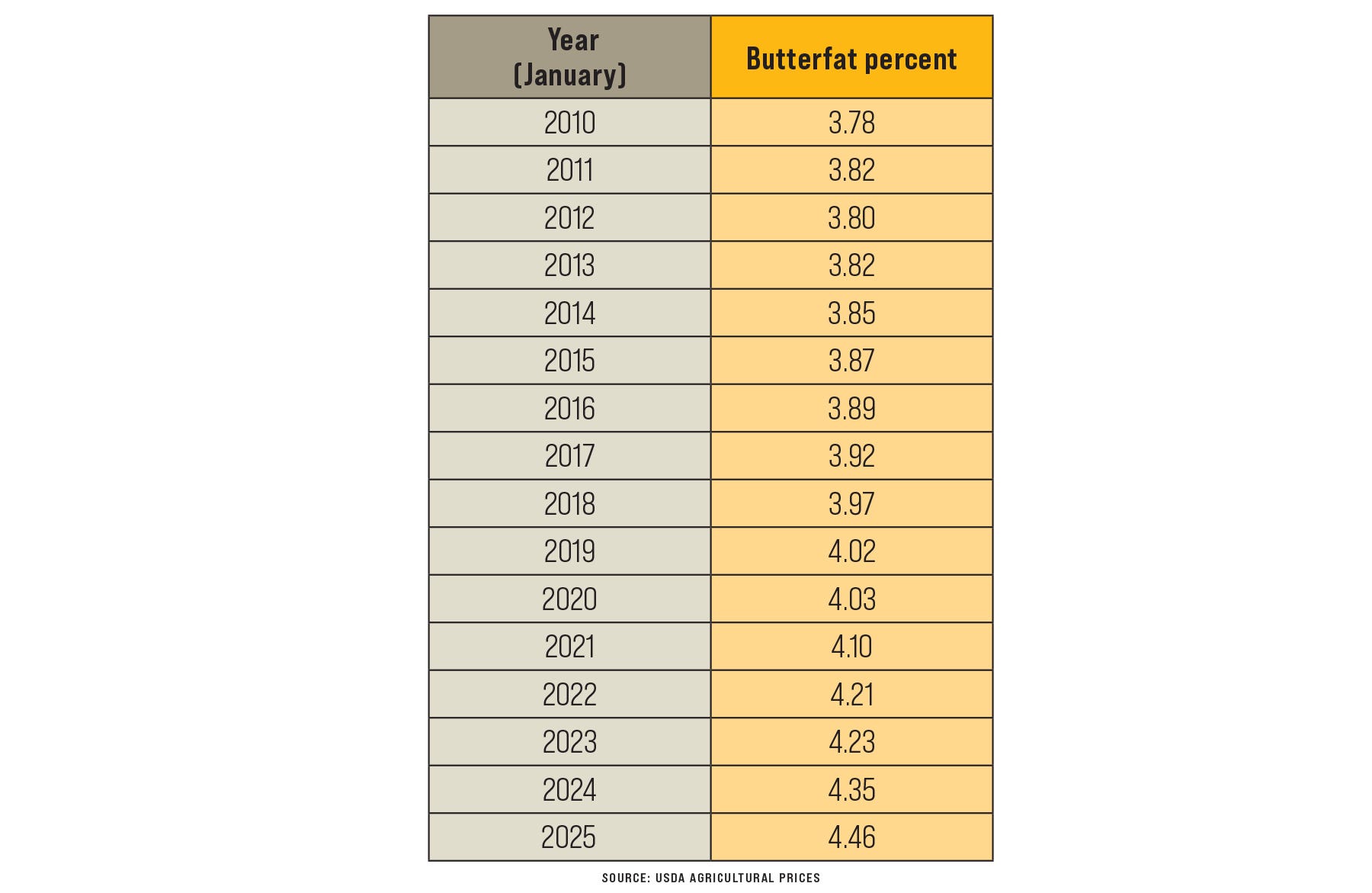
There are multiple ways to measure demand for butterfat. U.S. dairy farm milk production has grown about 35% since 2000. Meanwhile, butterfat production has jumped 55%, Geiger notes.
“Cheese has been a big benefactor,” Geiger says. “On a milk-fat basis, cheese moved from absorbing 37.7% of farmgate milk to 42.2%. The story is the same for butter, as the category grew from 16.3% to 18% from 2000 to 2023. Ultimately, that means that consumers are purchasing more dairy fats. Of course, that’s a historical perspective and some could argue that the market simply cannot absorb all the new butter coming from our dairy farms.”
In 2024, the U.S. produced a record 2.2 billion pounds of butter. Despite this record production, U.S. butter makers are not filling domestic demand. Here are the imported butter and anhydrous milk fat statistics from USDA’s Economic Research Service:
10.2 million pounds in 2010
52.2 million pounds in 2016
100.5 million pounds in 2021
172.6 million pounds in 2024
Each year represents another record set.
“The 2024 data is the most compelling, as it represented 72% growth for imported butter and anhydrous milk fat from the prior year that posted 118.5 million pounds of imported products and ingredients,” Geiger says. “Of the imported butterfat, about 65% came from Ireland. That butter is 82% butterfat and offers more appeal to those making lamented dough for French pastries and other high-end croissants. The product demand represents new opportunity for American butter makers.”
Aside from the record levels of imported butter, there are signs that the U.S. hasn’t been producing enough butterfat for its international customers that purchase about 16% of the U.S. milk supply as dairy products and ingredients, Geiger says.
“In 2011, the U.S. exported 4.6% of its milk production when measured on a milk-fat basis, meaning that the butterfat was still in the product,” he explains. “That number barely moved as the most recent data indicates America exports 4.7% of its milk production on a milk-fat basis.”
Meanwhile, the U.S. exported 16.6% of its milk production on a skim-solids basis back in 2011. Skims solids means manufacturers skimmed off the butterfat and kept the product for domestic market needs. Fast-forward to the present and the U.S. exports 22.1% of its milk production on a skim-solids basis.
“All these metrics point to this fact — while butterfat and spot cream markets have ample supplies now, January milk typically has the highest butterfat levels for the year. Even though butterfat and sweet cream prices might be soft right now, the long-term trend for more full-fat products remains on course,” Geiger explains. “The demand for milk components — butterfat and protein — should be strong for the years to come.”
Source : DAirynews7x7 March 18th 2025 Farm Progress by Fran O'Leary, Senior Editor