Logo
IndianGlobalBlogsPublicationsPodcastsMarketAboutContact
Logo
IndianGlobalBlogsPublicationsPodcasts
7News
Summer Heat to Stress India’s Dairy Cold ChainSavencia Profit Drops on Rising Milk CostsTN Milk Output Claim Sparks Data DisputeHormuz Disruption Threatens Dairy Supply ChainUP Approves Dairy Expansion in Bundelkhand

Indian Dairy News

1.5 Lakh Kg Expired Amul Products Destroyed in Jaipur
Mar 11, 2026

1.5 Lakh Kg Expired Amul Products Destroyed in Jaipur

In a major food safety crackdown, authorities in Jaipur destroyed around 1.5 lakh kilograms of expired Amul-branded packaged food products after uncovering an alleged scheme to erase expiry dates and...Read More

Summer Heat to Stress India’s Dairy Cold Chain
Mar 11, 2026

Summer Heat to Stress India’s Dairy Cold Chain

India’s dairy industry could face a major operational test this summer as rising temperatures and growing demand for chilled dairy products put increasing pressure on the country’s cold-chain infrastr...Read More

TN Milk Output Claim Sparks Data Dispute
Mar 11, 2026

TN Milk Output Claim Sparks Data Dispute

A debate has emerged over Tamil Nadu’s milk production after the Tamil Nadu Milk Dealers’ Welfare Association (TNMDWA) challenged claims made by Chief Minister M.K. Stalin that the State produces 3 cr...Read More

DairyNews7x7
Advertisement

Latest Blogs

See More
Rajahmundry Milk Incident: Accident or Adulteration?
Mar 10, 2026

Rajahmundry Milk Incident: Accident or Adulteration?

The recent editorial “Bitter Milk” published by The Hindu raises important concerns about food safety in India. The editorial deserves appreciation for attempting to broaden the conversation and under...Read More

Milk Prices Rise in South & West: Is North Next?
Mar 05, 2026

Milk Prices Rise in South & West: Is North Next?

The recent round of retail milk price increases across South India and Maharashtra is no longer an episodic adjustment but a clear signal of structural stress building up in India’s milk economy. Over...Read More

India’s Dairy Climate Paradox: Production Triumph Meets Methane Time-Bomb
Mar 02, 2026

India’s Dairy Climate Paradox: Production Triumph Meets Methane Time-Bomb

India’s rise to the top of the global dairy league board has been one of the most remarkable agricultural success stories of the 21st century. With milk production surpassing 247 million tonnes per ye...Read More

India’s First Cow Culture Museum in Mathura
Feb 16, 2026

India’s First Cow Culture Museum in Mathura

India’s first national “Cow Culture Museum” is set to be established in Mathura, Uttar Pradesh, on the campus of Pandit Deendayal Upadhyaya Veterinary Science University, announced the Uttar Pradesh B...Read More

Global Dairy News

Savencia Profit Drops on Rising Milk Costs
Mar 11, 2026

Savencia Profit Drops on Rising Milk Costs

Savencia Profit Drops on Rising Milk Costs French dairy major Savencia Fromage & Dairy reported a sharp fall in profitability for 2025, with its net income dropping by €32.2 million to €74.7 million,...Read More

Hormuz Disruption Threatens Dairy Supply Chain
Mar 11, 2026

Hormuz Disruption Threatens Dairy Supply Chain

Escalating geopolitical tensions around the Strait of Hormuz are creating new risks for the global dairy sector by disrupting key inputs such as energy, fertilisers and shipping routes. The strait car...Read More

Data Replaces Handshakes in Dairy Lending
Mar 10, 2026

Data Replaces Handshakes in Dairy Lending

The dairy financing landscape is undergoing a major transformation as traditional relationship-based lending gives way to data-driven credit evaluation, according to industry insights. Historically, d...Read More

DairyNews7x7
Advertisement
Dairy News 7x7

Your trusted source for all the latest dairy industry news, market insights, and trending topics.

FOLLOW US
CATEGORIES
  • Global News
  • Indian News
  • Blogs
  • Publications
  • Podcasts
SUBSCRIBE TO OUR NEWSLETTER

Stay informed with the latest updates and trending news in the dairy industry.

No spam, unsubscribe at any time

GET IN TOUCH
C-49, C Block, Sector 65,
Noida, UP 201307
+91 7827405029dairynews7x7@gmail.com

© 2026 Dairy News 7x7. All Rights Reserved.

Terms of ServicePrivacy Policy
Prefer Us
Prefer Us

DSM World Mycotoxin Survey 2023

By DairyNews7x7•Published on January 27, 2023

DSM World Mycotoxin Survey 2023
Prefer on

Mycotoxins continued to provide the cereals sector with considerable challenges last year as producers turned to cheaper products to manage risks.

The Covid-19 pandemic affected logistics and availability of feed materials. This coupled with increased input and energy costs caused by the war in Ukraine meant significantly higher costs for producers. As a result, some farmers turned to cheaper products to manage their mycotoxin risk.

Annelise Mueller, global product manager DSM and responsible for its annual survey, which has been running since 2004, said a total of 27,279 samples were taken last year with 122,240 analyses from 87 countries for 6 main mycotoxins (aflatoxins, zearalenones (ZEN), fumonisins (FUM), deoxynivalenols (DON), ochratoxins and T-2s).

Areas with extreme risk category

Mueller said mycotoxin prevalence and risk last year was categorised as extreme in China, South Asia and North America with samples showing a total risk of more than 75%. The risk level expresses the percentage of samples testing positive for at least 1 mycotoxin above the threshold level in parts per billion (ppb).

For example, the total risk level in the China/Taiwan was 97% with FUM 93%, DON 84% and ZEN 82% being the most common mycotoxins found.

Samples from the Middle East and North Africa, Sub-Saharan and South Africa had total risk levels above the 50% threshold while levels were lower but still significant in Europe and Oceania. Turbulent weather including heavy rainfall raises concerns about compromised crop conditions and potential mycotoxin challenges throughout the year. Mycotoxins can adversely affect dairy cattle performance and health and cause serious economic issues.

European risk levels

DSM Animal Nutrition and Health mycotoxin risk managers, Dr Wolfgang Markert and Sander Janssen, spoke of varying results across Europe from the nearly 9,000 samples taken. The European risk level of around 40% contained some extremely high DON levels of, for example, 445,000ppb.

In all samples, DON was the most prevalent (46%), followed by ZEN (42%) and FUM (34%) although T-2 levels were significant at 34%. In corn, average levels of DON and ZEN were higher when compared to 2021 statistics.

…most concerning European statistics had come from Hungarian corn
Higher risk in southern & eastern Europe

In general, higher percentage of mycotoxins were found in southern and eastern Europe. For example, in Italian finished feed, FUM levels were very high (99%), with the hot climate ensuring that FUM grew easily. ZEN and DOM were also highly prevalent, and a 42% aflatoxin level was found. Aflatoxins can be transmitted from milk to humans.

Ukraine and Turkey

FUM was also found in 80% of Turkish samples, with high levels of contamination, while in Ukraine a high volumes of ZEN contamination were found in wheat grains samples with levels of 48ppb – close to the risk for sensitive species, such as piglets and up to a maximum of 153ppb. Janssen and Markert said if farmers were to mix grains from Ukraine with finished feed, mycotoxin levels could be too high, so proper analysis and mitigation methods were needed.

Hungary

Markert pointed out that some of the most concerning European statistics had come from Hungarian corn (kernels), where levels across all 6 mycotoxins were relatively high (76% DON, 72% FUM, 40% T-2, 37% ZEN, 33% OTA and 30% aflatoxin).

The Netherlands

Turning to the Dutch results, the presenters said the Netherlands imported a lot of compound feed and the results showed 67% contamination with more than 1 mycotoxin and some high T-2 ppb figures which can be a specific risk to poultry.

Mycotoxins are secondary metabolites produced by fungi, which can multiply and grow fast in a variety of feedstuffs and stages of crop production, especially in warm and humid conditions often observed in southern EU countries.

Middle East and Africa

Further afield, Janssen said samples in the Middle East and North Africa showed FUM mycotoxins were highly abundant and the prevalence of ZEN, FUM and especially DON and T-2 had increased, which was concerning for poultry producers. 100% of corn kernel samples were contaminated with at least 2 mycotoxins.

In sub-Saharan Africa, DON (67%) is the main risk, while ZEN and aflatoxin abundance increased, while there were nearly 800 samples taken from South Africa, showing that nearly 70% had more than 1 mycotoxin.

Advantages of rapid testing

Nora Kogelnik, Romer Labs product manager, talked about the main advantages of mycotoxin rapid tests, highlighting:
  • Fast and precise results
  • No laboratory experience needed
  • Test and results can be carried out on-site
  • Minimising/preventing disposal of organic solvents
However, while rapid testing is great for raw grains, nuts and grain by-products, Kogelnik admitted it was more limited for finished feed or silage samples. Finished feed is often a complex matrix with formulations which can vary widely.

For example, feed formulations can be split into protein meal (vegetable proteins, soybean, canola, animal proteins, meat, bone or fish), grains (wheat, corn, barley, sorghum or rye) and vitamins, minerals and fats (fats and oils, vitamins, minerals, amino acids).

Multi-mycotoxin analysis

Mueller touch on multi-mycotoxin analysis and highlighted 3 which could cause issues for livestock producers:
  1. Beauvericin and Enniatin: These have effects on immune systems and accumulate in fat-rich tissue. Enn B, B1+Beauvericin showed effect on microbiome of piglets and caused histological lesions in piglet’s liver.
  2. Moniliformin: Broilers can be very susceptible as this mycotoxin can cause heart damage, muscular weakness, respiratory distress and immuno-suppression issues.
  3. Alternariol: No acute toxicity; cytotoxic and mutagenic in vitro, effects on reproductive and immune system in vitro.
She also spoke about some analysis carried out on peas, lupins, beans and chickpeas, saying that although sample levels (60) were low, she had been surprised by the number of contaminations (FUM at 28% being the highest) and the range of metabolites.

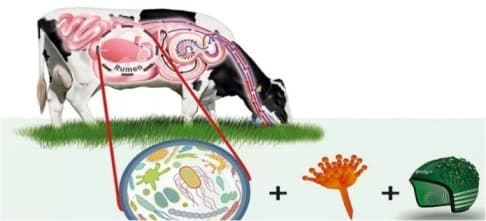
She urged the sector to look at the 3 areas of solutions to reduce mycotoxins – adsorption (synergistic blend of minerals), biotransformation, and bio protection products.

Stay Updated

Get the latest dairy industry news directly in your feed.

Prefer Us on Google Search

Swipe to continue reading

Previous Article

Next Article