Logo
IndianGlobalBlogsPublicationsPodcastsMarketAboutContact
Logo
IndianGlobalBlogsPublicationsPodcasts
7News
Mandatory Daily Record of Production and Raw Material UtilisationHeritage Foods inaugurates new Ice Cream PlantFSSAI makes registration to all milk vendors in IndiaGujarat Ice Cream Makers Face Cone ShortageSummer Heat to Stress India’s Dairy Cold Chain

Indian Dairy News

Britannia Bets Big on Dairy and Croissants
Mar 15, 2026

Britannia Bets Big on Dairy and Croissants

Food major Britannia Industries is accelerating its diversification strategy beyond biscuits by expanding into high-growth segments such as dairy, croissants, cakes, wafers and rusk, as it aims to bec...Read More

Uttarakhand Milk Production Rises 3%
Mar 15, 2026

Uttarakhand Milk Production Rises 3%

Milk production in Uttarakhand has increased by 3.1%, reaching 1,957.2 thousand tonnes in FY 2025-26, up from 1,897.8 thousand tonnes in FY 2024-25, according to Dairy Development Minister Saurabh Bah...Read More

FSSAI Licences Get Perpetual Validity
Mar 14, 2026

FSSAI Licences Get Perpetual Validity

India’s food regulator, the Food Safety and Standards Authority of India (FSSAI), has announced a major reform granting perpetual validity to food licences and registration certificates, eliminating t...Read More

DairyNews7x7
Advertisement

Latest Blogs

See More
When the World Feels Uncertain, Milk Still Brings Trust
Mar 15, 2026

When the World Feels Uncertain, Milk Still Brings Trust

Trust: The Next White Revolution The world today is passing through uncertain times. Wars are disrupting global trade routes, commodity markets are behaving unpredictably and regulators everywhere are...Read More

Mandatory Daily Record of Production and Raw Material Utilisation
Mar 14, 2026

Mandatory Daily Record of Production and Raw Material Utilisation

I recently reviewed the notification issued by the Food Safety and Standards Authority of India in the context of Schedule IV of the Food Safety and Standards (Licensing and Registration of Food Busin...Read More

FSSAI makes registration to all milk vendors in India
Mar 13, 2026

FSSAI makes registration to all milk vendors in India

The recent advisory issued by Food Safety and Standards Authority of India (FSSAI) mandating registration of milk vendors is a timely and progressive step towards strengthening traceability and accou...Read More

Rajahmundry Milk Incident: Accident or Adulteration?
Mar 10, 2026

Rajahmundry Milk Incident: Accident or Adulteration?

The recent editorial “Bitter Milk” published by The Hindu raises important concerns about food safety in India. The editorial deserves appreciation for attempting to broaden the conversation and under...Read More

Global Dairy News

Global Dairy Commodity Prices Show Signs of Rally
Mar 14, 2026

Global Dairy Commodity Prices Show Signs of Rally

Global dairy commodity prices have shown a rally in the first quarter of 2026, particularly for products originating from Australia and New Zealand, according to a new Q1 Global Dairy Quarterly report...Read More

How Walmart Keeps Great Value Milk So Affordable
Mar 14, 2026

How Walmart Keeps Great Value Milk So Affordable

Retail giant Walmart has managed to keep the price of its private-label Great Value milk significantly lower than many competing brands through a vertically integrated dairy supply chain and direct co...Read More

Lactose-Free Milk Seen as Growth Driver in Coffee
Mar 13, 2026

Lactose-Free Milk Seen as Growth Driver in Coffee

Lactose-free milk is emerging as a major growth opportunity for the dairy industry, particularly in the rapidly expanding coffee and café segment. A recent US-based study highlighted that lactose-free...Read More

DairyNews7x7
Advertisement
Dairy News 7x7

Your trusted source for all the latest dairy industry news, market insights, and trending topics.

FOLLOW US
CATEGORIES
  • Global News
  • Indian News
  • Blogs
  • Publications
  • Podcasts
SUBSCRIBE TO OUR NEWSLETTER

Stay informed with the latest updates and trending news in the dairy industry.

No spam, unsubscribe at any time

GET IN TOUCH
C-49, C Block, Sector 65,
Noida, UP 201307
+91 7827405029dairynews7x7@gmail.com

© 2026 Dairy News 7x7. All Rights Reserved.

Terms of ServicePrivacy Policy
Prefer Us
Prefer Us

Climate change and Fodder crisis in India dairying

By DairyNews7x7•Published on April 12, 2025

Climate change and Fodder crisis in India dairying
Prefer on

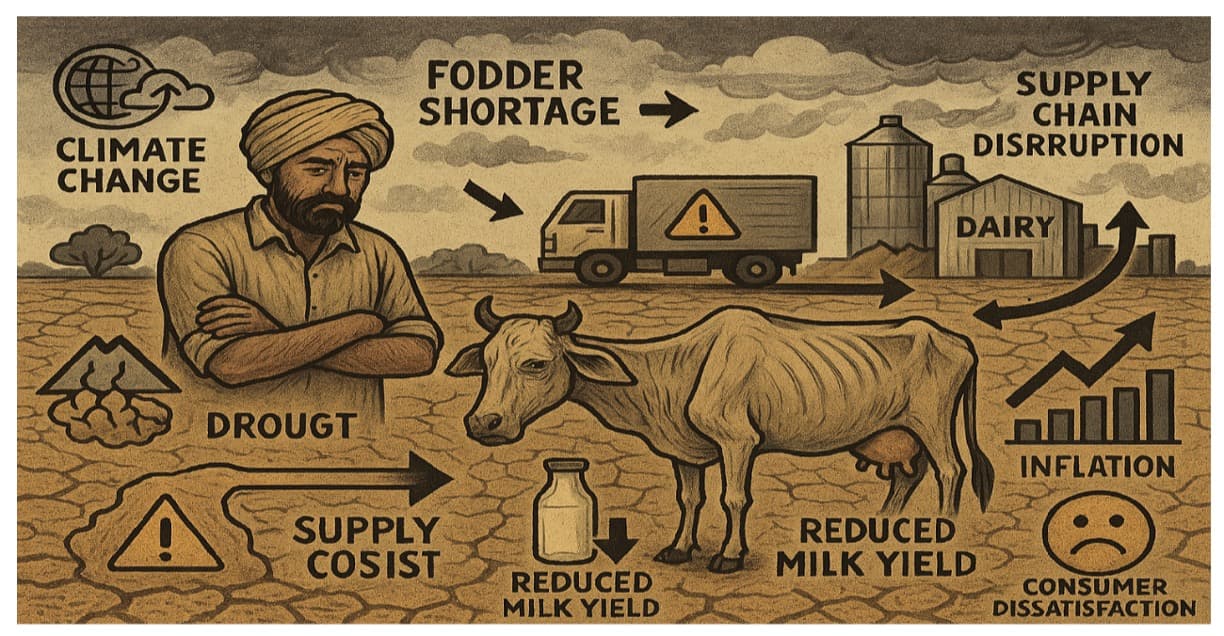
India is the world’s largest producer of milk, contributing nearly 22% of global milk production. The dairy industry plays a vital role in rural livelihoods, food security, and the national economy. However, the sector is increasingly vulnerable to the adverse impacts of climate change, particularly through disruptions in fodder production. These challenges not only affect the operational sustainability of dairy farming but also shape marketing strategies, product pricing, consumer perception, and long-term competitiveness.

Climate Change and Fodder Production in India

The Intergovernmental Panel on Climate Change (IPCC) highlights South Asia, including India, as one of the most climate-vulnerable regions. Rising temperatures, erratic monsoons, droughts, and floods are increasingly affecting India’s fodder production. Green fodder is essential for maintaining milk yield and animal health. According to the Indian Council of Agricultural Research (ICAR), India faces a deficit of around 35.6% in green fodder and 11% in dry fodder. Fodder crops such as maize, sorghum, napier grass, and berseem are highly climate-sensitive. Variations in temperature and rainfall adversely affect their growth cycles, yields, and nutritional content. This impacts milk productivity, reproduction efficiency, and the economic stability of smallholder dairy farmers. The reduction in green cover also contributes to soil degradation and water inefficiency, further limiting fodder growth.

Impact on Dairy Farming and Livelihoods

The unavailability of quality fodder leads to a reliance on low-nutrient feed, which reduces milk yield and quality. Farmers are compelled to sell cattle prematurely, often at distress prices, impacting income and dairy sustainability. Livestock heat stress, increased disease prevalence, and water scarcity further compound these challenges. Regions such as Rajasthan, Maharashtra, and parts of Karnataka have already reported declines in dairy productivity due to climate-related factors. Additionally, the economic strain on smallholder farmers often leads to reduced reinvestment in dairy infrastructure, limiting adoption of modern techniques. Vulnerable farmers may also withdraw from dairy farming altogether, threatening the rural employment ecosystem. The feminization of the dairy workforce also indicates a gender dimension to climate vulnerability, as women are disproportionately impacted.

Marketing Implications of Climate-Induced Fodder Crisis

The fodder crisis has profound implications for marketing dairy products:  Rising Costs and Product Pricing: Increased feed and fodder costs elevate the input cost of milk production, potentially leading to higher product prices. Marketers must maintain profitability while ensuring price competitiveness. Price elasticity becomes a critical factor in retaining consumer segments sensitive to inflation.

 Brand Positioning and Consumer Perception: Environmentally conscious consumers are increasingly influencing market dynamics. Brands that adopt and transparently communicate climate-smart practices, such as low-carbon dairy or sustainable sourcing, can gain consumertrust and market differentiation. Green certifications and eco-labels can serve as important marketing tools.

 Supply Chain Management: Irregular milk supply due to fodder shortages disrupts inventory planning and product availability, especially for fresh dairy products. Resilient supply chains and diversified sourcing strategies become essential. Companies must also explore cold-chain expansion and logistics optimization to minimize post-production losses.

 Packaging and Green Labelling: Incorporating sustainability metrics on product packaging—such as water-efficient fodder practices or renewable energy usage—enhances brand credibility and consumer engagement. Digital storytelling through QR codes linking to origin stories and farm practices can reinforce transparency.

 Consumer Education and Awareness Campaigns: Consumer awareness campaigns focusing on the effects of climate change on food systems, including dairy, can reshape consumption behaviour. Educated consumers may be more willing to support ethical pricing and choose climate-friendly products.

Climate-Resilient Strategies for Dairy Marketing

To mitigate risks and harness opportunities, the following strategies are recommended:

 Sustainable Fodder Production: Adoption of hydroponics, silage storage, and climate- resilient fodder crops ensures consistent feed supply. Public-private partnerships (PPPs) can scale such innovations. Encouraging Farmer Producer Organizations (FPOs) and cooperative models can help disseminate sustainable practices.

 Diversification into Dairy Alternatives: The rising demand for plant-based dairy products offers new market opportunities. Established dairy brands are diversifying their portfolios to include environmentally friendly options. This also reduces pressure on livestock systems and lowers overall carbon emissions.

 Transparency through Digital Platforms: Digital marketing and QR-code-enabled traceability systems help convey sustainability credentials, building stronger consumer relationships. Social media, mobile apps, and storytelling can be utilized to demonstrate farmers' resilience efforts.

 Localized Branding: Promoting region-specific dairy products that reflect unique environmental and cultural characteristics can strengthen consumer loyalty and regionalidentity. Examples include “Himalayan Organic Milk” or “Desert Resilient Dairy,” which can command premium pricing.

 CSR and Environmental Campaigns: Investing in campaigns focused on water conservation, reforestation, fodder banks, and biodiversity restoration enhances brand image and community engagement. Collaborations with NGOs and academic institutions can lend credibility and impact.

Policy Implications and Recommendations

Policymakers must facilitate access to sustainable fodder technologies, incentivize climate-smart dairy practices, and create awareness campaigns to promote green dairy marketing. Financial and technical support for smallholder farmers is essential to improve resilience. Suggested policy measures include:

 Subsidies for hydroponic and silage technologies

 Fodder banks and reserves during lean seasons

 Inclusion of climate resilience in dairy development schemes

 Training programs on climate adaptation for dairy farmers

Multi-stakeholder collaboration is essential, involving the Ministry of Agriculture, NDDB, NABARD, NGOs, private players, and local communities.

1. Climate Change and Fodder Production in India

The Intergovernmental Panel on Climate Change (IPCC) classifies South Asia as one of the most climate-vulnerable regions globally. Rising temperatures, altered rainfall patterns, and extreme weather events like floods and droughts are disrupting fodder availability across India.

Key Fodder Crops Affected

 Maize, sorghum, napier grass, and berseem are central to green fodder supply but highly sensitive to climatic variation.

 ICAR (2021) reports a 35.6% deficit in green fodder and an 11% deficit in dry fodder.

 Diminished nutritional value and digestibility of fodder due to heat and water stress reduces livestock productivity.

Regional Disparities

 Arid and semi-arid regions (Rajasthan, Gujarat, Maharashtra, Karnataka) are worst hit due to erratic monsoons and frequent droughts.

 In northeast and Himalayan states, fodder is affected by landslides and glacial melt affecting pastureland.

(ICAR 2021, IPCC 2023, FAO 2022, Mongabay India 2024)

2. Impact on Dairy Farming and Livelihoods

Livestock Health and Milk Productivity

 Reduced green fodder leads to poor-quality feed substitutes, affecting milk yield, fat content, and animal immunity.

 Heat stress in cattle lowers reproductive efficiency and milk yield by 10–20%.

 Outbreaks of climate-sensitive diseases (like Foot and Mouth Disease, Theileriosis) are rising. Livelihoods of Smallholder Farmers

 Small and marginal farmers, who contribute to over 70% of dairy production, are unable to afford costly feed alternatives.

 Forced cattle sales and migration from dairying reduce household income and contribute to agrarian distress.

 Women, who form a significant share of the dairy workforce, are disproportionately impacted due to added caregiving roles and limited access to resources. Loss of Indigenous Breeds

 Indigenous breeds like Gir, Sahiwal, and Tharparkar, though climate-resilient, are being abandoned due to lack of breeding support and fodder availability.

(NDDB 2023, NABARD 2021, FAO 2022, Devex 2024)

3. Water Scarcity and Soil Degradation

Declining Groundwater Levels

 Fodder cultivation demands substantial irrigation, but depleting aquifers are limiting water availability.

 States like Punjab and Haryana are seeing groundwater tables fall by 0.5 to 1 meter annually.

Soil Health Decline

 Unsustainable land-use practices and monocropping reduce soil fertility and affect fodder quality.

 Soil degradation also limits the capacity for regenerative practices like multi-tier fodder cropping.

(NABARD 2021, FAO 2022, Ministry of Jal Shakti 2023)

4. Marketing Implications of the Fodder Crisis

Rising Input Costs and Pricing Pressure

 Feed contributes to 70% of the total milk production cost.

 Price hikes may alienate price-sensitive consumers, especially in Tier II and III cities.

Changing Consumer Preferences

 Rise in environmentally conscious urban consumers demanding sustainably produced dairy.

 Brands that show commitment to climate action are gaining loyalty and can command premium pricing.

Supply Chain Vulnerability

 Fodder shortages result in milk supply inconsistency, impacting fresh milk, paneer, curd, and ghee markets.

 Logistics disruption and increased need for cold chain infrastructure inflate operational costs.

Green Labelling and Sustainable Packaging

 QR-coded packaging with origin traceability, water usage disclosures, or “climate-smart” logos are gaining traction.

 Brands like Amul, Mother Dairy, and Nestlé are exploring eco-labelling and climate narratives to engage new-age consumers.

Marketing Through Storytelling

 Storytelling via social media about resilient dairy farmers, climate-smart cooperatives, and green technologies enhances emotional connect and consumer trust.

(FoodUnfolded 2023, NDDB 2023, Devex 2024)

5. Climate-Resilient Strategies for Dairy Sustainability and Marketing

Technological Interventions

 Hydroponic fodder systems provide 6–8 kg of green fodder per square meter daily using minimal water.

 Silage pits and baled fodder systems ensure off-season availability.

Community-Based Fodder Banks

 Decentralized fodder banks stocked during monsoons can act as buffers during droughts. Plant-Based Dairy Diversification

 Brands entering the almond, oat, and soy milk markets reduce pressure on traditional livestock systems and tap into vegan trends.

Localized Branding Strategies

Branding linked to regional identity:

 “Himalayan Climate-Smart Milk”

 “Sundarbans Sustainable Ghee”

 “Marwar Camel Milk”

CSR and Climate Adaptation Campaigns

Dairy companies can improve brand equity through investments in:

 Fodder plantations on common lands  Watershed management  Women’s cooperatives and training centers

(NABARD 2021, IPCC 2023, FAO 2022, Mongabay 2024)

Policy Implications and Recommendations

Government Support Mechanisms

 Subsidies on hydroponic kits and silage machinery.  Crop insurance and livestock insurance schemes covering climate-related losses.  Inclusion of fodder planning in MNREGA activities to create local employment.

Capacity Building and Farmer Training

Climate education and training modules for:

 Climate-resilient animal husbandry

 Smart fodder planning

 Drought-tolerant fodder crop cultivation

Public-Private-NGO Collaborations

Multi-stakeholder approach involving:

 Ministry of Fisheries, Animal Husbandry & Dairying

 NDDB, NABARD

 Agri-tech startups and FPOs

 Local self-governments and women’s SHGs

(NDDB 2023, NABARD 2021, FAO 2022)

Conclusion

Climate change poses a significant threat to India’s dairy industry by undermining fodder production and livestock productivity. However, these challenges also offer an opportunity for the industry to innovate and realign its marketing strategies toward sustainability. By integrating climate- resilient practices, transparent communication, and diversified product lines, dairy marketers can ensure long-term growth and consumer trust in an evolving climate landscape. A coordinated approach involving policy reform, industry innovation, and consumer engagement will be crucial to building a sustainable dairy ecosystem in India.

Source : Dairynews7x7 April 12th Research paper by Dr. Simranjeet Kaur 1 , Dr. Harsimran Kaur 2 , Dr. Harinder Singh 3 , Dr. Ramandeep Singh 4

Stay Updated

Get the latest dairy industry news directly in your feed.

Prefer Us on Google Search

Swipe to continue reading

Previous Article

Next Article