Latest Blogs
See More

Lactose-free dairy is emerging as a potential high-growth, value-added opportunity for India’s dairy industry, driven by changing consumer preferences and widespread lactose malabsorption. According to a 2015 study by the Sanjay Gandhi Post Graduate Institute of Medical Sciences (SGPGI), an estimated 60–74% of Indians are lactose mal-absorbers, while industry estimates cited in the report place lactose intolerance at 60–70% of the population, with rates as high as 66.6% among South Indian populations.
Globally, the lactose-free milk category is projected to grow from approximately $13.8 billion to $21.6 billion by 2031, representing a CAGR of more than 9%, while India’s segment is forecast to expand at around 7% CAGR through 2027, with milk remaining the largest sub-category. The category is increasingly attracting not only consumers with diagnosed intolerance but also health-conscious households, fitness-focused consumers and food-service businesses seeking easier-to-digest dairy options.
For dairy companies facing slower growth in conventional milk and intense competition in commoditised categories, lactose-free products offer opportunities to premiumise portfolios and expand into adjacent segments such as high-protein dairy, fortified milk, flavoured beverages and specialised nutrition products. India’s broader dairy industry has crossed $30 billion, while lactose-free, organic and fortified dairy categories remain under-penetrated at below 4% share, indicating significant headroom for expansion.
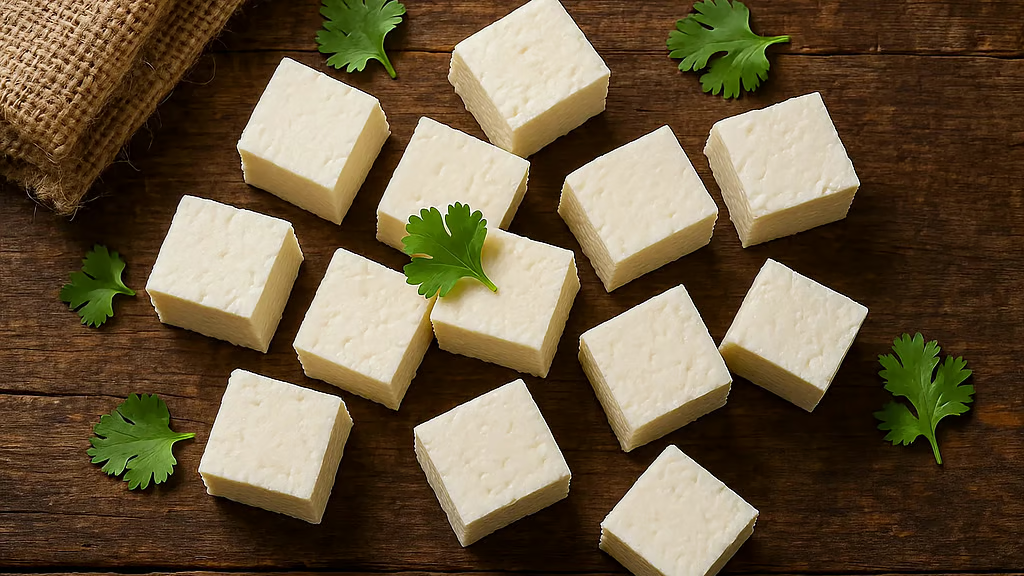
Technology is supporting this growth through controlled lactase-enzyme processing, UHT technology and aseptic packaging, enabling consistent production, longer shelf life and distribution beyond metropolitan markets and areas with limited cold-chain infrastructure. Lactose-free dairy is also gaining traction across cafés, restaurants and hospitality, with products being developed in formats including milk, milkshakes, yoghurt and paneer. Importantly, lactose-free milk remains real dairy milk: lactase breaks lactose into glucose and galactose, making the product slightly sweeter while retaining key nutritional components such as protein and calcium.
The opportunity therefore extends beyond lactose intolerance to broader consumer demand for nutrition, convenience, digestibility and gut-health-oriented products, positioning lactose-free dairy as a potential next frontier for Indian dairy premiumisation and innovation.
Source: Dairynews7x7 14 Aug, 2026 Read full story here
#LactoseFreeDairy #DairyInnovation #ValueAddedDairy #DairyNutrition #IndianDairy #DairyIndustry #DairyNews7x7