Latest Blogs
See More




Indian Dairy News



DairyNews7x7
Global Dairy News


DairyNews7x7
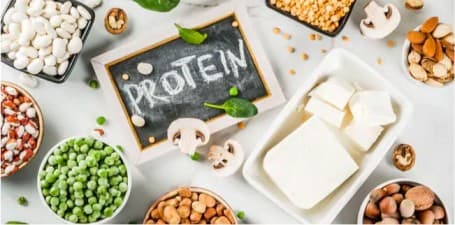
Muscle-building” cookies, “refueling” smoothies and “satiating” breakfast foods often rely on protein to make such marketing claims — but not just any protein. Many food formulations are fueled by dairy proteins, namely whey, in one of its many formats.
The choice of protein is an important marketing tool of the product’s “power.” Unfortunately, marketers are limited in how they may communicate this because regulators have put the topic of protein quality and availability on the backburner. Some argue it’s time to bring it back into the conversation.
“As headlines proliferate around the need to supply protein to an ever-growing global population, the common argument has emerged that people around the world are already consuming more than they need,” said Paul Moughan, distinguished professor at Massey University and a fellow laureate of the Riddet Institute, Fitzherbert Palmerston North, New Zealand. “While this may indeed be true in terms of total protein, it is unfortunately not the case when it comes to their intake of available protein.
“A child in India, for example, may be consuming a diet that is heavily based on cereals and root crops. The child may be getting plenty of protein but could still be heavily deficient in available protein and key amino acids. This deficiency can lead to stunted growth during childhood and result in them never fulfilling their true potential.”
Currently the Protein Digestibility Corrected Amino Acid Score (PDCAAS) is used to assess the quality of all protein. The score is an adjustment for the quality of the protein. It is based on the types and amounts of amino acids in the food as well as the overall digestibility. The PDCAAS values range from 0.0 to 1.0, where values are truncated to a maximum score of 1.00, which cow’s milk, casein, whey, eggs and soy protein all possess. Most plant protein sources have much lower values.
Dr. Moughan, and other protein authorities, believe Digestible Indispensable Amino Acid Score (DIAAS) is a better reference point. The DIASS analysis enables the differentiation of protein sources by their ability to supply amino acids for use by the human body. It also demonstrates the higher bioavailability of dairy proteins when compared to plant-based protein sources.
“I think DIAAS is a method that provides a measure of protein quality that reflects the true digestibility of a protein,” said Kimberlee Burrington, vice president of technical development, American Dairy Products Institute, Elmhurst, Ill. “I think it could boost dairy’s reputation as a high-quality protein, but to be truthful, we haven’t done the best job communicating that even with the high PDCAAS values for dairy protein.
“Consumer research shows most consumers aren’t aware of, or aren’t able to distinguish, that proteins have differences in protein quality. We use the Nutrition Facts panel to communicate the grams per serving of protein, but the only way to show a difference in protein quality is by using the % Daily Value.”
The % Daily Value for protein is determined using PDCAAS. A yogurt containing 10 grams of milk protein may make an “excellent source of protein” claim. A cultured vegan product with 10 grams of protein from peas and nuts most likely only qualifies for a “good source of protein” claim, and when doing so, should not flag 10 grams of protein per serving, as it is misleading. When making or implying any protein content claim, the Food and Drug Administration requires the inclusion of the % Daily Value.
“Most products that don’t claim anything about the level of protein on the product will not show anything in the % Daily Value column,” Ms. Burrington said.
If DIAAS were put into place, products containing whey proteins would be able to better communicate their value. Unfortunately, it’s been 10 years since a report from the Expert Consultation of the Food and Agriculture Organization of United Nations (FAO) recommended using DIAAS, yet it has not been implemented.
Data in the FAO report showed whole milk powder to have a DIAAS score of 1.22, far superior to the DIAAS score of 0.64 for peas and 0.40 for wheat. When compared to the highest refined soy isolate, dairy protein DIAAS scores were 10% to 30% higher.
Dairy proteins have a high DIAAS score because of the presence of branched-chain amino acids, which help stimulate muscle protein synthesis. Each dairy protein has more branched-chain amino acids than egg, meat, soy and wheat proteins. Whey protein, specifically, is seen as higher quality because of the presence of leucine, a branched-chain amino acid accountable for muscle synthesis.
“We strongly support adaptation of DIAAS for measuring protein quality,” said Peggy Ponce, director of product innovation for Agropur, which has US offices in Minneapolis. “Foods and beverages are being marketed by highlighting the ‘grams of protein’ without a meaningful comparison of the protein quality. Once DIAAS is widely accepted, product developers can discern the nutritional value of proteins in formulations, which will lead to better consumer choices of protein-fortified foods and beverages. Consumer education will be a critical part of making sure they understand the high nutritional quality of proteins from milk and whey.”
What’s holding up the implementation of DIAAS? While there are some in the plant-based community who oppose DIAAS, one of the most significant holdups is the development and implementation of a protein database.
The Riddet Institute led a research program to address the supply of protein for human diets. The program is funded by a consortium of commercial food organizations through the Global Dairy Platform.
The first stage has been completed. This stage was a collaboration between the Riddet Institute, Wageningen University in The Netherlands, the University of Illinois Urbana – Champaign and AgroParisTech in France. The researchers developed, standardized and validated methods based on the growing population to determine the digestibility of amino acids for human foods. The methods were applied in different laboratories in different parts of the world and achieved consistent results, Dr. Moughan said.
They now are working with Wageningen University and the University of Illinois to examine the digestibility of numerous protein sources in a form consumed by humans using DIAAS. An openly available global database of protein quality will be constructed, including 100 different protein sources. The protein sources will be from a large range of different protein types, including protein sources commonly consumed in developing countries.