Logo
IndianGlobalBlogsPublicationsPodcastsMarketAboutContact
Logo
IndianGlobalBlogsPublicationsPodcasts
7News
Mandatory Daily Record of Production and Raw Material UtilisationHeritage Foods inaugurates new Ice Cream PlantFSSAI makes registration to all milk vendors in IndiaGujarat Ice Cream Makers Face Cone ShortageSummer Heat to Stress India’s Dairy Cold Chain

Indian Dairy News

Britannia Bets Big on Dairy and Croissants
Mar 15, 2026

Britannia Bets Big on Dairy and Croissants

Food major Britannia Industries is accelerating its diversification strategy beyond biscuits by expanding into high-growth segments such as dairy, croissants, cakes, wafers and rusk, as it aims to bec...Read More

Uttarakhand Milk Production Rises 3%
Mar 15, 2026

Uttarakhand Milk Production Rises 3%

Milk production in Uttarakhand has increased by 3.1%, reaching 1,957.2 thousand tonnes in FY 2025-26, up from 1,897.8 thousand tonnes in FY 2024-25, according to Dairy Development Minister Saurabh Bah...Read More

FSSAI Licences Get Perpetual Validity
Mar 14, 2026

FSSAI Licences Get Perpetual Validity

India’s food regulator, the Food Safety and Standards Authority of India (FSSAI), has announced a major reform granting perpetual validity to food licences and registration certificates, eliminating t...Read More

DairyNews7x7
Advertisement

Latest Blogs

See More
When the World Feels Uncertain, Milk Still Brings Trust
Mar 15, 2026

When the World Feels Uncertain, Milk Still Brings Trust

Trust: The Next White Revolution The world today is passing through uncertain times. Wars are disrupting global trade routes, commodity markets are behaving unpredictably and regulators everywhere are...Read More

Mandatory Daily Record of Production and Raw Material Utilisation
Mar 14, 2026

Mandatory Daily Record of Production and Raw Material Utilisation

I recently reviewed the notification issued by the Food Safety and Standards Authority of India in the context of Schedule IV of the Food Safety and Standards (Licensing and Registration of Food Busin...Read More

FSSAI makes registration to all milk vendors in India
Mar 13, 2026

FSSAI makes registration to all milk vendors in India

The recent advisory issued by Food Safety and Standards Authority of India (FSSAI) mandating registration of milk vendors is a timely and progressive step towards strengthening traceability and accou...Read More

Rajahmundry Milk Incident: Accident or Adulteration?
Mar 10, 2026

Rajahmundry Milk Incident: Accident or Adulteration?

The recent editorial “Bitter Milk” published by The Hindu raises important concerns about food safety in India. The editorial deserves appreciation for attempting to broaden the conversation and under...Read More

Global Dairy News

Global Dairy Commodity Prices Show Signs of Rally
Mar 14, 2026

Global Dairy Commodity Prices Show Signs of Rally

Global dairy commodity prices have shown a rally in the first quarter of 2026, particularly for products originating from Australia and New Zealand, according to a new Q1 Global Dairy Quarterly report...Read More

How Walmart Keeps Great Value Milk So Affordable
Mar 14, 2026

How Walmart Keeps Great Value Milk So Affordable

Retail giant Walmart has managed to keep the price of its private-label Great Value milk significantly lower than many competing brands through a vertically integrated dairy supply chain and direct co...Read More

Lactose-Free Milk Seen as Growth Driver in Coffee
Mar 13, 2026

Lactose-Free Milk Seen as Growth Driver in Coffee

Lactose-free milk is emerging as a major growth opportunity for the dairy industry, particularly in the rapidly expanding coffee and café segment. A recent US-based study highlighted that lactose-free...Read More

DairyNews7x7
Advertisement
Dairy News 7x7

Your trusted source for all the latest dairy industry news, market insights, and trending topics.

FOLLOW US
CATEGORIES
  • Global News
  • Indian News
  • Blogs
  • Publications
  • Podcasts
SUBSCRIBE TO OUR NEWSLETTER

Stay informed with the latest updates and trending news in the dairy industry.

No spam, unsubscribe at any time

GET IN TOUCH
C-49, C Block, Sector 65,
Noida, UP 201307
+91 7827405029dairynews7x7@gmail.com

© 2026 Dairy News 7x7. All Rights Reserved.

Terms of ServicePrivacy Policy
Prefer Us
Prefer Us

Camel milk is high in Bio-peptide creation

By DairyNews7x7•Published on January 29, 2025

Camel milk is high in Bio-peptide creation
Prefer on

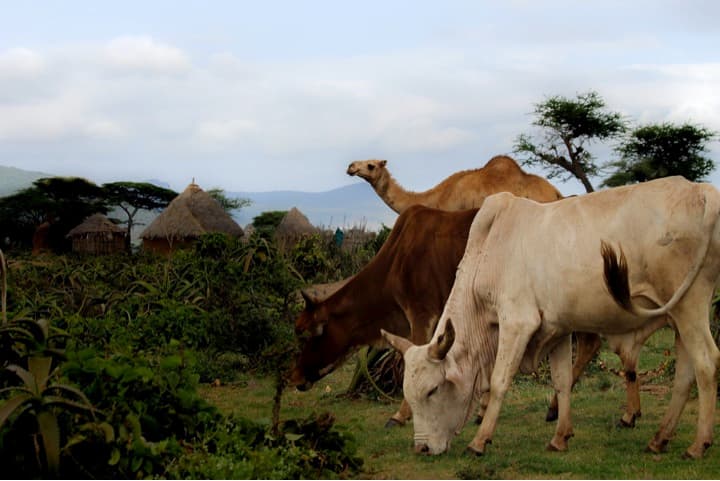
In a recent study published in Food Chemistry, researchers compared cow and camel milk proteomes, focusing on immune proteins, bioactive peptides (BPs), and allergens. They also evaluated the impact of fractionation and processing methods.

Background

Milk, a hallmark of mammals, provides nutrition and immunological protection through its balanced composition of proteins, fats, and lactose. Beyond sustenance, milk proteins and BPs play therapeutic roles, including antimicrobial, antihypertensive, and antioxidant effects.

Camel milk, which is gaining popularity due to its perceived health benefits, differs significantly from cow milk in composition and allergenicity. It notably lacks β-lactoglobulin (β-Lg), a major allergen in cow milk. However, milk proteins can trigger immunoglobin-E (IgE) —mediated allergic responses.

Further research is needed to explore immune-related functions, therapeutic potentials, and allergenic risks of milk proteins and peptides to ensure safe and beneficial consumption.

About the study

Commercially pooled raw cow milk (Cleopatra's Bath Milk, New South Wales, Australia) and Arabian camel milk (Good Earth Dairy, Western Australia, Australia) were analyzed through four technical repeats. Milk samples were separated into skimmed and cream portions via centrifugation. The cream fraction was washed with phosphate buffer solution and treated with 0.4% sodium dodecyl sulfate (SDS) to solubilize hydrophobic proteins, followed by vortexing, sonication, and fat separation. Skimmed milk was used as a benchmark for SDS treatment.

Protein concentrations were measured using the Bradford assay. Proteins were reduced, alkylated, and digested with trypsin for peptide analysis using SWATH-MS and DIA-NN, employing FASTA reference proteomes for Bos taurus and Camelus dromedarius. Native peptides were purified via Solid Phase Extraction (SPE) and analyzed with IDA mass spectrometry. Bioactive proteins (BPs) and allergens were mapped using a custom database and AllerCatPro.

Data were visualized with R, Cytoscape, and Circos plots to identify immune proteins, potential allergens, and bioactivities. Statistical analyses included KEGG pathway enrichment and differential protein abundance testing to compare cow and camel milk proteomes.

Study results

In the present comparative analysis of camel and cow milk, the highest number of protein groups was identified in the cream fraction of both species, with camel milk yielding 537 distinct proteins and cow milk 560. These findings highlighted the protein diversity within the cream fraction.

Overlapping protein groups were observed across all milk fractions, with camel milk showing greater overlap between cream and whole milk (579 proteins) than between cream and skimmed milk (438 proteins). Similarly, cow milk exhibited a higher overlap between cream and whole milk (271 proteins) compared to cream and skimmed milk (241 proteins). This indicated the effectiveness of SDS treatment in solubilizing cream-associated proteins, particularly in camel milk.

Immune system-related proteins were more abundant in the cream fraction for both camel and cow milk. Camel cream contained 49 immune-related proteins, while cow cream had 47, significantly higher than whole or skimmed milk fractions.

Statistical analysis using the Kruskal-Wallis test confirmed significant differences in immune protein abundance between cream and other milk fractions. In contrast, no significant differences were observed between skimmed and whole milk. Notably, immune-related pathways, including antigen processing and endocytosis, were enriched in cream, particularly in camel milk.

Differential protein abundance analysis revealed that camel cream exhibited upregulation of 307 proteins compared to whole milk and 189 proteins compared to skimmed milk. These proteins were predominantly associated with immune pathways, such as antigen presentation and ribosome function.

Cow cream also showed significant upregulation of proteins involved in immune processes, including Fc gamma receptor-mediated phagocytosis and leukocyte migration. Protein-protein interaction (PPI) network analysis identified key immune proteins, such as integrin β2 and complement C3 in camel milk and integrin β2 and heat shock protein 90 in cow milk, as central nodes critical for network stability.

The study also highlighted differences in BP enrichment between camel and cow milk. Camel milk demonstrated greater BP diversity, with the filtration method yielding 888 native peptides, compared to 223 in cow milk. Predicted bioactivities included antihypertensive, antimicrobial, antioxidant, and antidiabetic properties. Camel milk also exhibited a higher number of tryptic peptides with potential bioactivity compared to cow milk.

In allergenicity profiling, camel and cow milk contained 53 and 52 potentially allergenic proteins, respectively. High overlap was observed between the allergen profiles of the two species, with 32 cow milk allergens having orthologous counterparts in camel milk. Notably, β-Lg, a major allergen in cow milk, was absent in camel milk, underscoring its lower allergenic potential.

Conclusions

To summarize, the cream fraction showed the highest protein recovery, with camel milk exhibiting greater proteomic diversity and BP abundance. Key immune proteins, including integrin β2 and heat shock proteins, were enriched in cream, emphasizing its role in immune-related pathways.

Camel milk displayed a higher capacity for BP generation and lacked β-Lg, a major cow milk allergen, supporting its hypoallergenic potential. These findings highlight camel milk's therapeutic properties and the importance of fractionation for studying milk proteins.

Source: Dairynews7x7 Jan 29th 2025 News medical
Journal reference:
  • Manujaya W. Jayamanna Mohottige, Angéla Juhász, et al. Beyond nutrition: Exploring immune proteins, bioactive peptides, and allergens in cow and Arabian camel milk, Food Chemistry (2025) doi: https://doi.org/10.1016/j.foodchem.2024.142471 https://www.sciencedirect.com/science/article/pii/S0308814624041219

Stay Updated

Get the latest dairy industry news directly in your feed.

Prefer Us on Google Search

Swipe to continue reading

Previous Article

Next Article