Logo
IndianGlobalBlogsPublicationsPodcastsMarketAboutContact
Logo
IndianGlobalBlogsPublicationsPodcasts
7News
Mandatory Daily Record of Production and Raw Material UtilisationHeritage Foods inaugurates new Ice Cream PlantFSSAI makes registration to all milk vendors in IndiaGujarat Ice Cream Makers Face Cone ShortageSummer Heat to Stress India’s Dairy Cold Chain

Indian Dairy News

FSSAI Licences Get Perpetual Validity
Mar 14, 2026

FSSAI Licences Get Perpetual Validity

India’s food regulator, the Food Safety and Standards Authority of India (FSSAI), has announced a major reform granting perpetual validity to food licences and registration certificates, eliminating t...Read More

Dairy Sector a ‘Safety Net’ for Farmers: NABARD
Mar 14, 2026

Dairy Sector a ‘Safety Net’ for Farmers: NABARD

The Chairman of National Bank for Agriculture and Rural Development, Shaji K V, has highlighted the crucial role of India’s dairy industry in protecting rural livelihoods, describing it as a “safety n...Read More

Bihar Dairy Officer Arrested in ₹30,000 Bribery Case
Mar 14, 2026

Bihar Dairy Officer Arrested in ₹30,000 Bribery Case

A field officer of the district dairy development department in Bihar was arrested by the Vigilance Investigation Bureau (VIB) for allegedly accepting a bribe of ₹30,000 in West Champaran district. Th...Read More

DairyNews7x7
Advertisement

Latest Blogs

See More
Mandatory Daily Record of Production and Raw Material Utilisation
Mar 14, 2026

Mandatory Daily Record of Production and Raw Material Utilisation

I recently reviewed the notification issued by the Food Safety and Standards Authority of India in the context of Schedule IV of the Food Safety and Standards (Licensing and Registration of Food Busin...Read More

FSSAI makes registration to all milk vendors in India
Mar 13, 2026

FSSAI makes registration to all milk vendors in India

The recent advisory issued by Food Safety and Standards Authority of India (FSSAI) mandating registration of milk vendors is a timely and progressive step towards strengthening traceability and accou...Read More

Rajahmundry Milk Incident: Accident or Adulteration?
Mar 10, 2026

Rajahmundry Milk Incident: Accident or Adulteration?

The recent editorial “Bitter Milk” published by The Hindu raises important concerns about food safety in India. The editorial deserves appreciation for attempting to broaden the conversation and under...Read More

Milk Prices Rise in South & West: Is North Next?
Mar 05, 2026

Milk Prices Rise in South & West: Is North Next?

The recent round of retail milk price increases across South India and Maharashtra is no longer an episodic adjustment but a clear signal of structural stress building up in India’s milk economy. Over...Read More

Global Dairy News

Global Dairy Commodity Prices Show Signs of Rally
Mar 14, 2026

Global Dairy Commodity Prices Show Signs of Rally

Global dairy commodity prices have shown a rally in the first quarter of 2026, particularly for products originating from Australia and New Zealand, according to a new Q1 Global Dairy Quarterly report...Read More

How Walmart Keeps Great Value Milk So Affordable
Mar 14, 2026

How Walmart Keeps Great Value Milk So Affordable

Retail giant Walmart has managed to keep the price of its private-label Great Value milk significantly lower than many competing brands through a vertically integrated dairy supply chain and direct co...Read More

Lactose-Free Milk Seen as Growth Driver in Coffee
Mar 13, 2026

Lactose-Free Milk Seen as Growth Driver in Coffee

Lactose-free milk is emerging as a major growth opportunity for the dairy industry, particularly in the rapidly expanding coffee and café segment. A recent US-based study highlighted that lactose-free...Read More

DairyNews7x7
Advertisement
Dairy News 7x7

Your trusted source for all the latest dairy industry news, market insights, and trending topics.

FOLLOW US
CATEGORIES
  • Global News
  • Indian News
  • Blogs
  • Publications
  • Podcasts
SUBSCRIBE TO OUR NEWSLETTER

Stay informed with the latest updates and trending news in the dairy industry.

No spam, unsubscribe at any time

GET IN TOUCH
C-49, C Block, Sector 65,
Noida, UP 201307
+91 7827405029dairynews7x7@gmail.com

© 2026 Dairy News 7x7. All Rights Reserved.

Terms of ServicePrivacy Policy
Prefer Us
Prefer Us

Are lab-grown dairy proteins truly identical to natural dairy?

By DairyNews7x7•Published on July 31, 2025

Are lab-grown dairy proteins truly identical to natural dairy?
Prefer on

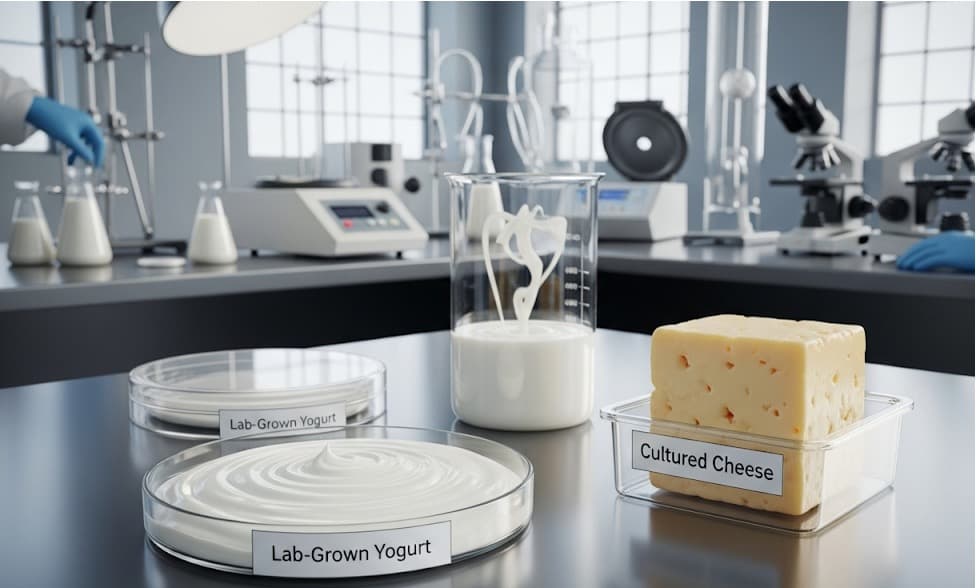
For centuries, nature has been humanity’s primary source of protein. But today, alongside fields, farms and seas, laboratories are joining the list, an innovation that is likely to reshape the future of food.

By combining traditional fermentation and modern biotechnology, scientists are using genetically modified yeast that acts like tiny factories to produce lab-based proteins similar to those found in milk. A growing number of food startups now use these proteins in products such as dairy-free ice cream and plant-based burgers, often promoted as “identical to” or “one-to-one replacements” for dairy proteins.

However, a recent study led by researchers at the University of Nevada, Reno raises questions about how similar they really are. Led by Matthew Bolino, a doctoral candidate in biochemistry and Steven Frese, an assistant professor in the Department of Nutrition at the University’s College of Agriculture, Biotechnology & Natural Resources, the research found key differences between lab-made whey protein and the kind that comes from cows.

The study showed that while both versions share a core protein component, the synthetic one had fewer types of protein and different sugar structures, known as N-glycans, which may affect how the proteins interact with gut bacteria.

“Functionally, they behave like whey and taste like whey,” said Frese, who also conducts research as part of the University’s Experiment Station. “But at the molecular level, they are decorated differently, and those decorations, called post-translational modifications, appear to influence how our gut microbes respond.

The analysis found that both proteins were mostly made up of β-lactoglobulin, the main protein in cow’s milk whey. But the cow-derived version also included a wider variety of proteins, such as α-lactalbumin, albumin and casein. In contrast, the yeast-derived whey was nearly 98% β-lactoglobulin, with very little diversity. When tested in a lab “mini-gut,” cow’s milk whey supported a more diverse mix of gut bacteria, while the yeast-derived version led to lower microbial diversity.

“Lower diversity isn’t necessarily bad,” Frese said. “But what matters is that we now know these proteins are not identical in how they interact with our biology. That is a conversation the food and nutrition industry needs to have.”

The findings were published June 26 in Microbiology Spectrum, a journal of the American Society for Microbiology. The research team included scientists from the University of Nevada, Reno, as well as from Çanakkale Onsekiz Mart University, Hacettepe University and Karabük University, all based in Turkey.
Preparing students for real-world results through mentorship and research

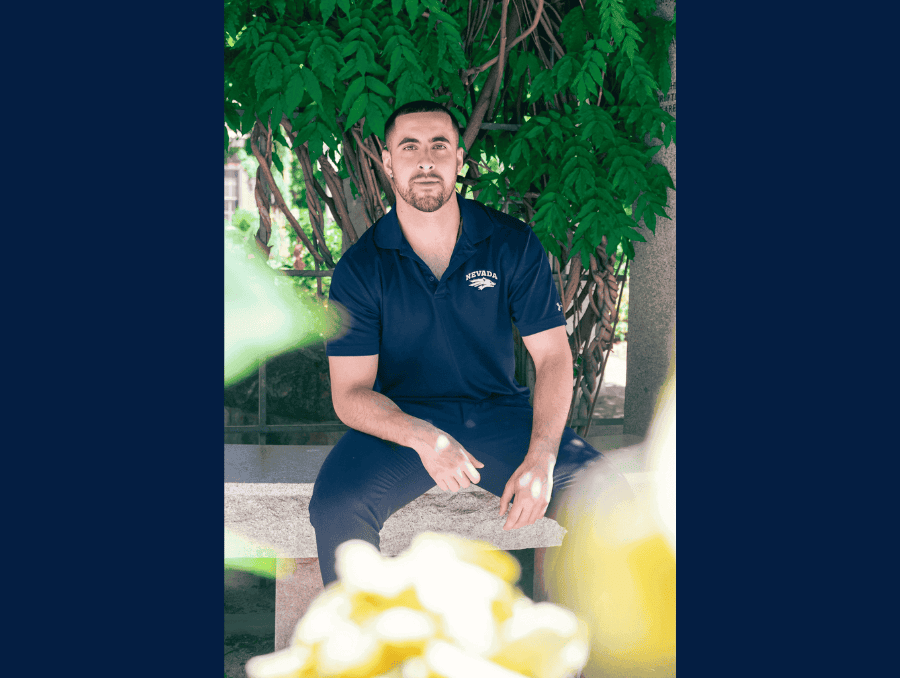
A man in a navy blue T-shirt and pants poses for a photo while seated on a stone bench in front of a leafy tree.
Lead author, Matt Bolino, a doctoral candidate in the Department of Nutrition, conducted lab experiments comparing how the lab-grown whey dairy protein and natural dairy affect gut microbes. Photo by Robert Moore.
Bolino, who served as lead author on the study, conducted lab experiments comparing how the two proteins affect gut microbes, work that builds on his doctoral research into how subtle molecular differences in food influence the gut microbiome.

“I’m incredibly grateful to have contributed to a study of this scale, working alongside such a multidisciplinary and international team of scientists,” Bolino said. “The experience not only deepened my scientific skills but also taught me the value of diverse perspectives.”

Methodology: Exploring protein-microbiome interactions

To understand how structural differences in whey protein might affect the body, the researchers conducted a three-part study: analyzing protein composition, examining the sugar structures attached to the proteins, and testing microbiome responses.

The team analyzed purified samples of store-bought cow’s milk whey protein and commercially available synthetic whey at the University’s Proteomics Center. They broke the proteins into smaller pieces and used mass spectrometry to identify them. This confirmed that while both samples were mostly β-lactoglobulin, the cow-derived whey contained a more diverse mix of proteins.

Next, the team collaborated with glycan chemistry experts in Turkey to study the sugar molecules attached to the proteins. Using advanced mass spectrometry, they found that yeast-derived proteins had fewer and structurally different glycans, which could affect how the body processes them.

Finally, to test how these proteins affect gut microbes, the researchers used a fecal fermentation model developed at the University. The lab-based system simulates human gut conditions by introducing proteins into cultured fecal samples representing different gut microbiomes. Across all samples, cow’s milk whey supported a more diverse and beneficial mix of gut bacteria, while the yeast-derived version led to lower microbial diversity.

“This research wasn’t about saying one protein is better than the other,” Frese said. “It was about understanding whether they are truly interchangeable. If we are going to introduce novel proteins into the food supply, we need to understand how they behave once they are in the body.”

Behind the breakthrough: multinational team and support

Other members of the research team from the University of Nevada, Reno included Juli Petereit with the University’s Nevada Bioinformatics Center and Chandler Zundel, a recent graduate of the Nutrition Sciences Program in the Department of Nutrition. International collaborators included Hatice Duman and Sercan Karav from the Department of Molecular Biology and Genetics at Çanakkale Onsekiz Mart University; Izzet Avci and Bekir Salih from the Department of Chemistry at Hacettepe University; and Hacı Mehmet Kayili from the Department of Biomedical Engineering at Karabuk University.

This research was funded by the National Institute of Food and Agriculture (NIFA) and the National Institute of General Medical Sciences (NIGMS) of the National Institutes of Health. Additional support came from the University of Nevada, Reno’s Department of Nutrition; College of Agriculture, Biotechnology & Natural Resources; Experimental Station; and Office of the Vice President for Research and Innovation.

Source : DAirynews7x7 July 31st 2025.. Read full story here 

Stay Updated

Get the latest dairy industry news directly in your feed.

Prefer Us on Google Search

Swipe to continue reading

Previous Article

Next Article