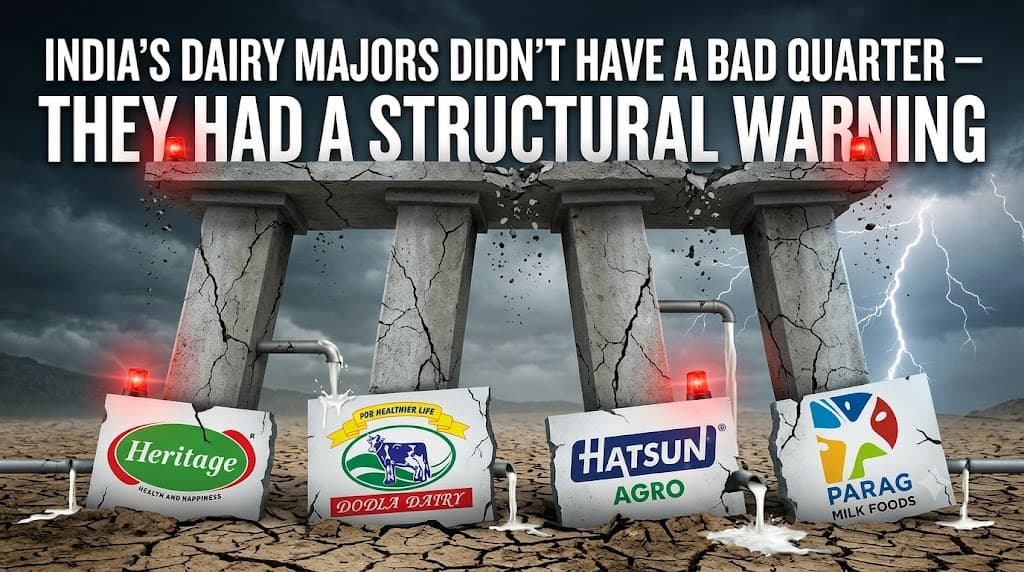
India's dairy sector is facing mounting climate risks as rising temperatures, heatwaves and drought conditions increasingly threaten milk production, despite the country remaining the world's largest milk producer. According to a Hindustan Times analysis, Indian cows produce an average of 4.87 kg of milk per day, significantly below the global average of 7.18 kg, leaving the sector more vulnerable to climate-related productivity losses.
High temperatures place severe physiological stress on dairy animals, while drought conditions can reduce milk yields by more than 25%. Global evidence from El Niño-induced droughts in smallholder dairy systems indicates milk production can decline by 25–30%, alongside reductions in livestock holdings—findings considered highly relevant to India's predominantly smallholder dairy sector.
Beyond the biological impact, climate stress is also changing farmer behaviour, with rising feed, fodder and water shortages prompting farmers to prioritise productive animals, delay herd expansion and reduce investment in dairy operations.
The report highlights that making India's dairy industry climate-resilient will require greater investment in heat stress management, climate-smart livestock practices, improved feed and water management, better genetics, stronger extension services and policy support to safeguard milk production and the livelihoods of millions of dairy farmers as climate variability intensifies.