Latest Blogs
See More

Indian Dairy News


DairyNews7x7
Global Dairy News



DairyNews7x7
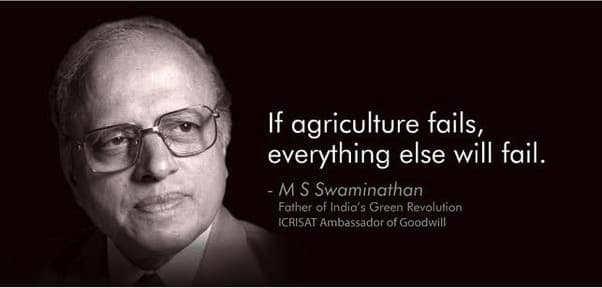
There is no clear-cut definition of a farmer in any government reports, but a comprehensive definition is provided in the National Policy for Farmers. This policy was drafted by the National Commission of Farmers, led by MS Swaminathan, and officially approved by the Centre in 2007.
As per this policy, the term ‘farmer’ refers to a person who is actively engaged in the economic and/or livelihood activity of growing crops and producing other primary agricultural commodities. The definition encompasses agricultural operational holders, cultivators, agricultural labourers, share-croppers, tenants, poultry and livestock rearers, fishers, beekeepers, gardeners, pastoralists, non-corporate planters and planting labourers, as well as persons engaged in various farming-related occupations such as sericulture, vermiculture, and agro-forestry.
Additionally, the definition also includes tribal families/persons engaged in shifting cultivation and in the collection, use and sale of minor and non-timber forest produce.
The government seems to be avoiding this definition. In reply to Rajya Sabha MP Ajay Pratap Singh’s question, Agriculture Minister Narendra Singh Tomar emphasised that agriculture is a State subject and, therefore, it is up to each State to define who is a farmer. However, the Centre does provide income support to all farmer families who own cultivable land through the PM-KISAN scheme.
The PM-KISAN scheme alone cannot provide a conclusive definition and number of farmers in India. The latest instalment data shows that only 87 million farmers received it, which may be due to eligibility norms that limit its applicability to certain farmers. However, when compared to estimates from the NSSO and Agricultural Census (about 150 million by the latter), there is a large difference in the number of farmers, which highlights the problem of an inconclusive definition of a farmer.
For instance, the Rural Financial Inclusion Survey of 2015-16 defined agricultural households as those that had at least one member self-employed in agriculture in the past year and derived at least ₹5,000 from agricultural produce. In contrast, the NSS 77th Round survey of 2018-19 defined agricultural households as those that receive more than ₹4,000 as the value of produce from agricultural activities and have at least one member self-employed in agriculture either in the principal or subsidiary status during the last 365 days. However, in previous rounds, households that were entirely agricultural labour households and those receiving income entirely from coastal fishing, rural artisan activities, and agricultural services were considered agricultural households and included in the survey.
These contradictory definitions highlight the importance of the need for having a clear and comprehensive definition of a farmer.
According to the NSSO 77th Round survey of 2018-19, the income of farmer households from crop cultivation decreased by 1.5 per cent per year between 2012-13 and 2018-19. However, including livestock income results in a slight increase of 0.6 per cent per year. Additionally, including non-farm income leads to a growth rate of 2.8 per cent per year, largely due to the non-farm income of farmer households.
The NABARD All India Financial Inclusion Survey (NAFIS) provides different data on the income of agricultural households for 2015-16, showing a growth rate of 1.7 per cent per year from all sources between 2015-16 and 2018-19, which is less than half of the previous period’s growth rate between 2012-13 and 2015-16.
The current situation highlights a significant issue where landless agricultural workers who cultivate land owned by others, are not considered farmers. This exclusion from the definition of farmers means they do not have access to agricultural credit, interest subvention for farm loans, crop insurance, loan waivers, and other welfare schemes. Most government schemes designed to aid farmers, including the procurement of wheat and paddy at Minimum Support Prices (MSP), are only available to landowners.
Additionally, identifying as a farmer is crucial for access to subsidised crop inputs and compensation in case of crop failure. Direct income support schemes such as PM-KISAN also limit benefits to landowners. Furthermore, the identification of farmers based on land ownership has a disproportionate impact on women farmers, as their names are often not included in ownership documents. This has implications for the accurate counting of farmer suicides and further exacerbates the gender gap in agriculture.
Hence, the definition of a farmer is not just a matter of semantics but has significant practical implications. It is important to develop a legal and actionable framework for identifying farmers, based on the definition put forth by the MS Swaminathan Commission. Some State governments, such as Odisha’s KALIA, Tamil Nadu’s GRAINS, and Karnataka’s FRUIT, have already established excellent databases that provide a comprehensive way to identify farmers. This demonstrates the political will and commitment of these States. In addition to including criteria beyond land ownership for identifying farmers, it is equally important to establish exclusion criteria to exclude absentee landlords. By developing a clear and comprehensive framework for identifying farmers, governments can ensure that their policies and initiatives are targeted to at the right beneficiaries and are more effective in achieving their intended objectives.
Source : The Hindu BusinessLine May 11th 2023 by S Sarath