Logo
IndianGlobalBlogsPublicationsPodcastsMarketAboutContact
Logo
IndianGlobalBlogsPublicationsPodcasts
7News
FSSAI makes registration to all milk vendors in IndiaGujarat Ice Cream Makers Face Cone ShortageSummer Heat to Stress India’s Dairy Cold ChainSavencia Profit Drops on Rising Milk CostsTN Milk Output Claim Sparks Data Dispute

Indian Dairy News

17 High-Genetic US Bulls Arrive to Boost Kashmir Dairy
Mar 13, 2026

17 High-Genetic US Bulls Arrive to Boost Kashmir Dairy

In a major step to strengthen dairy productivity, the Animal Husbandry Department (AHD) of Jammu & Kashmir has imported 17 high-genetic-merit dairy bulls from the United States as part of a breeding i...Read More

Jigawa to Partner India for Dairy Development
Mar 13, 2026

Jigawa to Partner India for Dairy Development

The Jigawa State Government in Nigeria has announced plans to collaborate with the National Dairy Development Board (NDDB) of India to promote livestock development and expand dairy production in the...Read More

Scientific Breeding Boosts Gujarat Dairy Incomes
Mar 13, 2026

Scientific Breeding Boosts Gujarat Dairy Incomes

A 63-year-old artificial insemination (AI) specialist, Deepak Patel, from Vaheval village in Gujarat, is helping strengthen the dairy economy by promoting scientific breeding techniques that improve c...Read More

DairyNews7x7
Advertisement

Latest Blogs

See More
FSSAI makes registration to all milk vendors in India
Mar 13, 2026

FSSAI makes registration to all milk vendors in India

The recent advisory issued by Food Safety and Standards Authority of India mandating registration of milk vendors is a timely and progressive step towards strengthening traceability and account...Read More

Rajahmundry Milk Incident: Accident or Adulteration?
Mar 10, 2026

Rajahmundry Milk Incident: Accident or Adulteration?

The recent editorial “Bitter Milk” published by The Hindu raises important concerns about food safety in India. The editorial deserves appreciation for attempting to broaden the conversation and under...Read More

Milk Prices Rise in South & West: Is North Next?
Mar 05, 2026

Milk Prices Rise in South & West: Is North Next?

The recent round of retail milk price increases across South India and Maharashtra is no longer an episodic adjustment but a clear signal of structural stress building up in India’s milk economy. Over...Read More

India’s Dairy Climate Paradox: Production Triumph Meets Methane Time-Bomb
Mar 02, 2026

India’s Dairy Climate Paradox: Production Triumph Meets Methane Time-Bomb

India’s rise to the top of the global dairy league board has been one of the most remarkable agricultural success stories of the 21st century. With milk production surpassing 247 million tonnes per ye...Read More

Global Dairy News

Lactose-Free Milk Seen as Growth Driver in Coffee
Mar 13, 2026

Lactose-Free Milk Seen as Growth Driver in Coffee

Lactose-free milk is emerging as a major growth opportunity for the dairy industry, particularly in the rapidly expanding coffee and café segment. A recent US-based study highlighted that lactose-free...Read More

Nigeria’s Dairy Challenge: Many Cows, Little Milk
Mar 13, 2026

Nigeria’s Dairy Challenge: Many Cows, Little Milk

Despite having more than 20 million cattle, Nigeria produces far less milk than it consumes, highlighting deep structural challenges in its dairy sector. Most cattle in the country are...Read More

Israel Drops Controversial Dairy Reform From Budget
Mar 12, 2026

Israel Drops Controversial Dairy Reform From Budget

The Israeli government has removed a controversial dairy reform proposed by Finance Minister Bezalel Smotrich from the 2026 Arrangements Law, a key legislative package linked to the country’s state bu...Read More

DairyNews7x7
Advertisement
Dairy News 7x7

Your trusted source for all the latest dairy industry news, market insights, and trending topics.

FOLLOW US
CATEGORIES
  • Global News
  • Indian News
  • Blogs
  • Publications
  • Podcasts
SUBSCRIBE TO OUR NEWSLETTER

Stay informed with the latest updates and trending news in the dairy industry.

No spam, unsubscribe at any time

GET IN TOUCH
C-49, C Block, Sector 65,
Noida, UP 201307
+91 7827405029dairynews7x7@gmail.com

© 2026 Dairy News 7x7. All Rights Reserved.

Terms of ServicePrivacy Policy
Prefer Us
Prefer Us

The problems scale up faster than the solutions

By Kuldeep Sharma•Published on September 19, 2022

The problems scale up faster than the solutions
Prefer on

It was like a dream becoming part of recently concluded IDF WDS 2022 in India. I was sure that if this event occurs every 48 years in India then I don’t stand any chance attending it next time. During the event Mr R S Sodhi MD GCMMF forecasted that India’s milk production is expected to jump three-fold to 628 million tonnes in the next 25 years with an average annual growth of 4.5 per cent. This statement reignited the hope in my heart to be part of this event soon. IDF can not ignore India for 48 years anymore to organise this annual event. The way India is leading the world in milk production, I believe the subsequent editions of WDS will be more for capturing India’s experience in the dairy sector than the other way round. If everything goes as forecast then the year India will be celebrating its 100th birthday, it will be contributing to almost half of the global milk production. The GCMMF MD also said that the per capita availability of milk in India will increase to 852 grams per day in the next 25 years from 428 grams per day in 2021.

Before moving towards India@100, I thought of looking back at India@50 in 1997. I wanted to understand the dynamics of growth and the challenges being faced by the Indian dairy sector in achieving these phenomenal numbers of 210 mill MT of milk production and 428 gms of per capita milk availability in 2021. There has been an increment of around 42 crores in population and 14000 crore litres of milk per annum from 1997 to 2022. India had a population of 100 crores and milk production of 7000 Crores litres per annum in 1997. It also means that India created a capability to increase per capita incremental milk availability by almost 1 liter in those 25 years. It will be appropriate to mention the role played by Dr Kurien and his visionary Operation Flood program here for India even to dream becoming a global giant in the dairy sector.

Journey towards India @100

The United Nations projects India’s population to be 1.64 billion by 2047, of which nearly 0.82 billion (~50%) shall be residing in urban areas. As per another Lancet’s report India’s population to peak in 2048 at around 1.6 bn, to decline to 1.09 bn in 2100. This means that we will have an incremental population of 22 crores in next 25 years with an incremental milk production of 41800 Crore litres per annum in 2047. It also means that we shall be required to build capacity to make an incremental per capita milk availability of 5.25 litres per day. This is an area to be seen as it would require a huge investment in terms of creating appropriate infrastructure. Even following the current milk utilisation structure, we shall require an additional infrastructure for processing 20 crore litres of milk per day. That reminds me of approval of a Dairy Processing & Infrastructure Development Fund” (DIDF) with an outlay of Rs 10,881 crore during the period from 2017-18 to 2028-29.

With this investment, 95,00,000 farmers in about 50,000  villages would be benefitted. Additional Milk processing capacity of 126 lakh litre per day, milk drying capacity of 210 MT per day, milk chilling capacity of 140 lakh litre per day, installation of 28000 Bulk Milk Coolers (BMCs) along with electronic milk adulteration testing equipment and value added products manufacturing capacity of 59.78 lakh litre per day of milk equivalent shall be created. It means that Rs 11000 crores would be able to create infrastructure for around 1.5-2 crore litres per day of milk only. We are talking of 20 Crores LPD which means over 1 lakh crores investment is needed for establishing processing infrastructure only

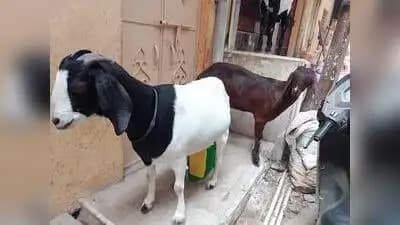
Cattle Population and the stray animals

Total population of bovine cattle may increase by around 3% by 2047 to become 311 Million.The indigenous cows and exotic/cross breed cows population may show some growth due to government support . The exotic/crossbred will show very high growth due to their high milk production and the buffaloes may grow by 1%. However these cattle will be required to show exponential growth in their milk production if the desired level of milk production of 628 Mill LPD is to be met. If the same is to be met with a low productive cattle population then stray animals will pose a great challenge. The situation of stray animals in the country is as follows :

In some states, legislation banning the slaughtering of cattle is known to have resulted in farmers abandoning their cattle in certain places, once the animal loses the ability to produce milk, and stops being useful.  Such stray cattle, in the absence of shelter, cause damage to crops in rural areas and cause traffic disruptions in urban areas. Data on the number of stray cattle across states is provided in the census report. The issue of stray cattle and whether their number has increased over the years because of legislation & other reasons has been raised in the Parliament multiple times. The increased urbanisation in the future and shifting of young generation from farming business may make this stray animal problem to grim to solve in near future. A good numbers of think tanks have expressed that manure and urine collection and cow shelters may not be a long term solution to this problem.

Of the 50.21 lakhs stray cattle in the country as of 2019, 25.4% were in Rajasthan (12.7 lakh), followed by 23.6% in Uttar Pradesh (11.84 lakhs). Along with Madhya Pradesh, the three states alone account for almost 66% of the stray cattle in the country. The states of Gujarat, Chhattisgarh, Maharashtra, Odisha, Punjab, and Haryana have more than one lakh stray cattle each and together accounted for 23.9% of the stray cattle in the country, as per the 2019 livestock census. West Bengal, Bihar, Karnataka, Andhra Pradesh, and Tamil Nadu with more than 50,000 stray cattle each accounted for more than 1% of the stray cattle each. The number of stray cattle in Uttar Pradesh went up from 10,09,436 in 2012 to 11,84,494 in 2019, according to the Union Ministry of Fisheries, Animal Husbandry and Dairying.

Fodder Availability

High milk production and higher milk productivity will put pressures on Fodder requirements also. Considering a feed efficiency of around 0.5, we shall be requiring 1256 Million MT of Dry Matter for our cattle. If the same is converted into green fodder then in layman’s language we need around 6000 Mill MT of greens for milk production alone. As a reference India produces around 250 Mill MT of both wheat and rice put together today. The area under fodder cultivation is limited to about 4% of the cropping area, and it has remained static for the last four decades. Owing to the importance of food crops and other cash crops, it is very unlikely that the area under fodder cultivation would increase substantially.

According to the report, there is a deficit of 23.4 per cent in the availability of dry fodder, 11.24 per cent in that of green fodder, and 28.9 per cent for concentrates. This means that for every 100 kg required, India is short of 23.4 kg of dry fodder, 11.24 kg of green fodder, and 28.9 kg of concentrates. In changing demographic conditions, the rate of urbanisation will be over 50% by 2047 so land will be under tremendous pressure for growing fodder in the future.

The future

Globally Biosciences are creating a paradigm shift in industrial orientation. Climate activists are trying to find solutions to replace agricultural products with lab made solutions.The most drastic change will be the elimination of animal agriculture. Experts say the current system – whereby crops are grown to feed the animals that we eat – is appallingly inefficient, not to mention morally problematic. By 2050, we will all be eating more fruit, vegetables and whole grains, and a lot less meat, dairy and junk food. Yet some of the plants we eat will look nothing like the plants of today thanks to innovations within microorganism cultivation and 3D printing.

We will be forced to switch our protein requirements from 20% of animal based proteins today to an insignificant single digit percentage by 2050. It will be due to food shortages and cost effective scaled up lab based solutions. The Vegan market alone may cross 1.4 Trillion dollars by that time. Everything needs to be seen from the lens of possibility of a disruption in the market place also.

The purpose of this analysis is not to discourage the growth which the Indian dairy sector is poised to achieve. The objective is to immediately create a working group to start building scenarios around this forecast so as to circumvent all the challenges from the key areas as mentioned above. I seek suggestions from all of you to build such scenarios and what all is needed to convert Sodhi sir’s dream into a lifetime reality.

Source : A blog by Kuldeep Sharma , Chief Editor dairynews7x7

Stay Updated

Get the latest dairy industry news directly in your feed.

Prefer Us on Google Search

Swipe to continue reading

Previous Article

Next Article