Latest Blogs
See More

The number of U.S. dairy farms is projected to drop below 20,000 by the end of the decade, even as milk production continues to expand. 🥛
The U.S. dairy industry is continuing its long-term transformation, with new projections indicating that the number of dairy farms could fall below 20,000 before the end of the decade, even as national milk production continues to grow.
According to an analysis by consulting firm Terrain, the industry’s evolution reflects more than three decades of consolidation, during which production has become increasingly concentrated among larger dairy operations.
The scale of that shift becomes evident when comparing today’s industry with the early 1990s.
In 1992, the United States had more than 123,000 dairy farms. By 2025, that figure is projected to decline to 23,609 operations, representing the loss of more than 100,000 dairy farms over the period.
Despite the sharp reduction in farm numbers, national milk output has moved in the opposite direction.
U.S. milk production reached 231.7 billion pounds in 2025, representing a 54% increase compared with 1992. The expansion occurred even though the national dairy herd includes approximately 190,000 fewer cows than three decades earlier.
The figures illustrate an industry where productivity gains have offset the decline in both farm numbers and animal inventory.
Farm size has become an increasingly important factor in that transformation.
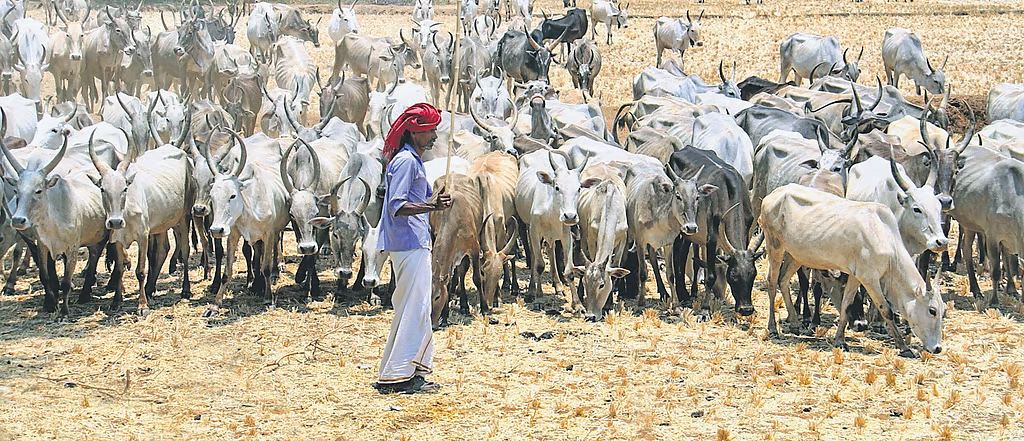
According to the report, half of all U.S. dairy farms currently milk fewer than 100 cows, yet together they account for only 4% of national milk sales.
By contrast, farms with 2,500 cows or more represent only 4% of all dairy operations, but they produce 45% of the milk sold across the country.
Industry leaders say this reflects a structural change rather than a decline in production capacity.
Corey Gillins, of Dairy Farmers of America, noted that while the sector continues to lose producers, its ability to produce milk has remained strong.
Ben Laine, an analyst with Terrain, said the remaining farms tend to be larger and increasingly rely on advanced technology together with modern management practices to improve efficiency.
The report identifies economies of scale as one of the principal drivers behind industry consolidation.
Smaller dairy farms often face greater challenges in covering administrative expenses, labor requirements, infrastructure investments and technology adoption.
According to the analysis, approximately 90% of labor on farms with fewer than 100 cows consists of unpaid family work.
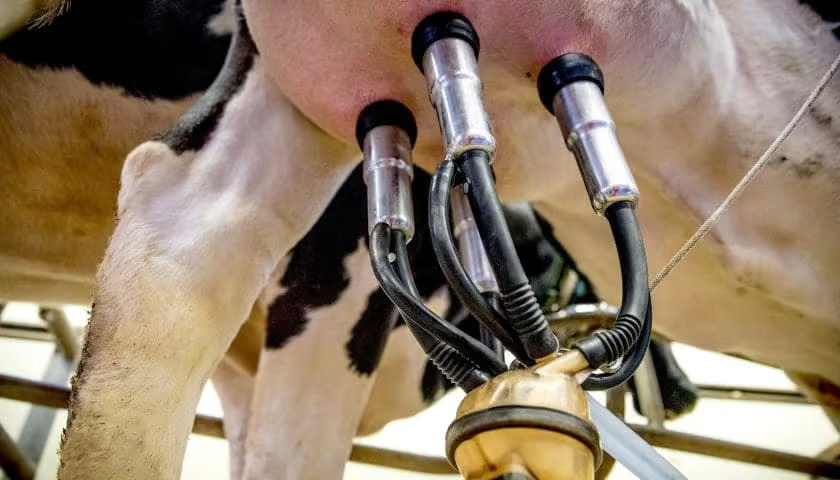
Larger operations, meanwhile, are better positioned to spread fixed costs across greater milk volumes through investments in high-capacity milking parlors, automated herd monitoring systems, improved genetics, specialized employees and digital management technologies.
As this consolidation continues, the structure of the U.S. dairy market is also expected to evolve.
The report suggests larger dairy businesses may play an increasingly influential role throughout the supply chain, potentially contributing to longer price and margin cycles while accelerating vertical integration.
For smaller dairy operations, the analysis points toward alternative business models focused on product differentiation, premium dairy products and direct-to-consumer marketing as potential opportunities within a changing marketplace.
Although the number of dairy farms continues to decline, the report concludes that the U.S. dairy sector is steadily moving toward a production model in which larger, technologically advanced enterprises account for an expanding share of national milk output.
Source: 08 Aug, 2026 From our partner channel en.edairynews.com