Logo
IndianGlobalBlogsPublicationsPodcastsMarketAboutContact
Logo
IndianGlobalBlogsPublicationsPodcasts
7News
Summer Heat to Stress India’s Dairy Cold ChainSavencia Profit Drops on Rising Milk CostsTN Milk Output Claim Sparks Data DisputeHormuz Disruption Threatens Dairy Supply ChainUP Approves Dairy Expansion in Bundelkhand

Indian Dairy News

Gujarat Ice Cream Makers Face Cone Shortage
Mar 12, 2026

Gujarat Ice Cream Makers Face Cone Shortage

Ice cream manufacturers in Gujarat are bracing for a potential shortage of cones ahead of the peak summer season due to disruptions in natural gas supply triggered by geopolitical tensions in West Asi...Read More

KMF Milk Collection Drops to 95 Lakh Litres
Mar 12, 2026

KMF Milk Collection Drops to 95 Lakh Litres

Milk procurement by the Karnataka Milk Federation (KMF) has declined to around 95 lakh litres per day with the onset of summer, down from nearly 1 crore litres daily earlier, as rising temperatures an...Read More

Old Electronics May Hide 22-Carat Gold
Mar 12, 2026

Old Electronics May Hide 22-Carat Gold

Swiss scientists have discovered that discarded electronic devices—especially computer motherboards and circuit boards—contain valuable amounts of gold that most people unknowingly throw away. Researc...Read More

DairyNews7x7
Advertisement

Latest Blogs

See More
Rajahmundry Milk Incident: Accident or Adulteration?
Mar 10, 2026

Rajahmundry Milk Incident: Accident or Adulteration?

The recent editorial “Bitter Milk” published by The Hindu raises important concerns about food safety in India. The editorial deserves appreciation for attempting to broaden the conversation and under...Read More

Milk Prices Rise in South & West: Is North Next?
Mar 05, 2026

Milk Prices Rise in South & West: Is North Next?

The recent round of retail milk price increases across South India and Maharashtra is no longer an episodic adjustment but a clear signal of structural stress building up in India’s milk economy. Over...Read More

India’s Dairy Climate Paradox: Production Triumph Meets Methane Time-Bomb
Mar 02, 2026

India’s Dairy Climate Paradox: Production Triumph Meets Methane Time-Bomb

India’s rise to the top of the global dairy league board has been one of the most remarkable agricultural success stories of the 21st century. With milk production surpassing 247 million tonnes per ye...Read More

India’s First Cow Culture Museum in Mathura
Feb 16, 2026

India’s First Cow Culture Museum in Mathura

India’s first national “Cow Culture Museum” is set to be established in Mathura, Uttar Pradesh, on the campus of Pandit Deendayal Upadhyaya Veterinary Science University, announced the Uttar Pradesh B...Read More

Global Dairy News

Israel Drops Controversial Dairy Reform From Budget
Mar 12, 2026

Israel Drops Controversial Dairy Reform From Budget

The Israeli government has removed a controversial dairy reform proposed by Finance Minister Bezalel Smotrich from the 2026 Arrangements Law, a key legislative package linked to the country’s state bu...Read More

Savencia Profit Drops on Rising Milk Costs
Mar 11, 2026

Savencia Profit Drops on Rising Milk Costs

Savencia Profit Drops on Rising Milk Costs French dairy major Savencia Fromage & Dairy reported a sharp fall in profitability for 2025, with its net income dropping by €32.2 million to €74.7 million,...Read More

Hormuz Disruption Threatens Dairy Supply Chain
Mar 11, 2026

Hormuz Disruption Threatens Dairy Supply Chain

Escalating geopolitical tensions around the Strait of Hormuz are creating new risks for the global dairy sector by disrupting key inputs such as energy, fertilisers and shipping routes. The strait car...Read More

DairyNews7x7
Advertisement
Dairy News 7x7

Your trusted source for all the latest dairy industry news, market insights, and trending topics.

FOLLOW US
CATEGORIES
  • Global News
  • Indian News
  • Blogs
  • Publications
  • Podcasts
SUBSCRIBE TO OUR NEWSLETTER

Stay informed with the latest updates and trending news in the dairy industry.

No spam, unsubscribe at any time

GET IN TOUCH
C-49, C Block, Sector 65,
Noida, UP 201307
+91 7827405029dairynews7x7@gmail.com

© 2026 Dairy News 7x7. All Rights Reserved.

Terms of ServicePrivacy Policy
Prefer Us
Prefer Us

Stanford – How the meat and dairy sector resists competition

By DairyNews7x7•Published on August 21, 2023

Stanford – How the meat and dairy sector resists competition
Prefer on

The summertime barbecue – an American tradition synonymous with celebrating freedom – may be tainted by a decidedly unfree market. A new Stanford study reveals how meat and dairy industry lobbying has influenced government regulations and funding to stifle competition from alternative meat products with smaller climate and environmental impacts. The analysis, published Aug. 18 in One Earth, compares innovations and policies related to plant-based meat alternatives and lab-grown meat in the U.S. and European Union. Its findings could help ensure legislation, such as the $428 billion U.S. Farm Bill set to expire Sept. 30, levels the food industry playing field.

“The lack of policies focused on reducing our reliance on animal-derived products and the lack of sufficient support to alternative technologies to make them competitive are symptomatic of a system still resisting fundamental changes,” said study lead author Simona Vallone, an Earth system science research associate in the Stanford Doerr School of Sustainability  at the time of the research.

A growing problem

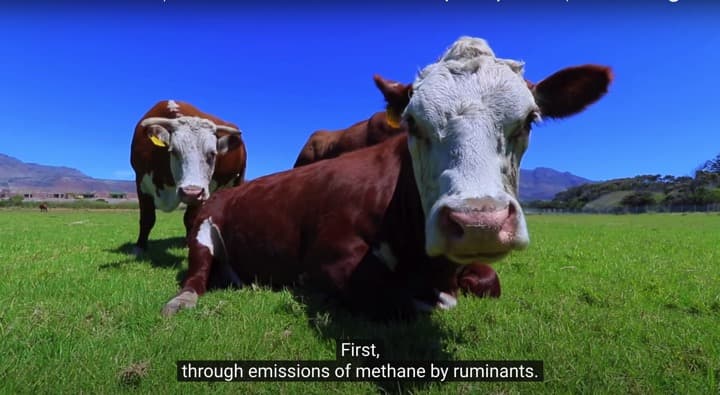
Livestock production is the agriculture sector’s largest emitter of the potent greenhouse gas methane, due to emissions from ruminants such as cattle, sheep, and goats. It’s also the main direct cause of tropical deforestation, due to pasture expansion and feed crop production. Numerous studies have demonstrated that dietary changes hold great potential to reduce humanity’s ecological footprint, especially a reduction in red meat consumption. At the same time, Western-style meat-heavy diets are becoming more popular around the world.

https://youtu.be/kVDhQC17ecQ

The researchers reviewed major agricultural policies from 2014 to 2020 that supported either the animal food product system or alternative technologies, and compared government spending on both systems. They also looked at related lobbying trends.

They found that governments consistently devoted most of their agricultural funding to livestock and feed production systems, avoided highlighting food production sustainability dimensions in nutrition guidelines, and attempted to introduce regulatory hurdles, such as narrow labeling standards, to the commercialization of meat alternatives. Major U.S. meat and dairy companies actively lobbied against environmental issues and regulations to tip the scales in their favor.

In the U.S., about 800 times more public funding and 190 times more lobbying money goes to animal-source food products than alternatives. In the EU, about 1,200 times more public funding and three times more lobbying money goes to animal-source food products. In both regions, nearly all plant-based meat patents were published by a small number of private companies or individuals, with just one U.S. company, Impossible Foods, owning half of the patents.

Among the anecdotes cited by the study:

  • EU cattle producers were highly dependent on direct subsidy payments, which constituted at least 50% of their income during the study period. Some of these payments incentivized farmers to maintain herd size, keep pasture in production, or increase overall output.
  • In 2017, following a European Court of Justice ruling, dairy terms such as milk and cheese could no longer be used to market most alternative milk and dairy products. Similarly, a proposed amendment to the U.S. Federal Food, Drug, and Cosmetic Act would prohibit the sale of alternative meats unless the product label included the word “imitation” and other clarifying statements indicating the non-animal origin.

Restoring competition

This past June, the U.S. Department of Agriculture approved the sale of lab-grown chicken, the first such authorization to cultivated meat producers in the country. The Stanford study points to recent policy developments as similar glimmers of hope for a shift to more sustainable diets. In the U.S., the Inflation Reduction Act passed last year includes investments in technical and financial assistance to support farmers and ranchers implementing practices to reduce greenhouse emissions or sequester carbon. In the EU, a policy proposal set for debate this fall aims at accelerating a sustainable transition of the food system to support climate mitigation solutions, and reduce biodiversity loss and environmental impacts.

To ensure a fair marketplace for alternative meat products, policymakers should craft legislation that ensures meat’s price reflects its environmental costs, increases research on alternative meat and dairy products, and informs consumers on alternatives to meat via dietary guidelines, according to the researchers.

“It’s clear that powerful vested interests have exerted political influence to maintain the animal-farming system status quo,” said study senior author Eric Lambin , the George and Setsuko Ishiyama Provostial Professor at Stanford and senior fellow at the Stanford Woods Institute for the Environment . “A significant policy shift is required to reduce the food system impact on climate, land use, and biodiversity.”

Stay Updated

Get the latest dairy industry news directly in your feed.

Prefer Us on Google Search

Swipe to continue reading

Previous Article

Next Article