Logo
IndianGlobalBlogsPublicationsPodcastsMarketAboutContact
Logo
IndianGlobalBlogsPublicationsPodcasts
7News
Summer Heat to Stress India’s Dairy Cold ChainSavencia Profit Drops on Rising Milk CostsTN Milk Output Claim Sparks Data DisputeHormuz Disruption Threatens Dairy Supply ChainUP Approves Dairy Expansion in Bundelkhand

Indian Dairy News

1.5 Lakh Kg Expired Amul Products Destroyed in Jaipur
Mar 11, 2026

1.5 Lakh Kg Expired Amul Products Destroyed in Jaipur

In a major food safety crackdown, authorities in Jaipur destroyed around 1.5 lakh kilograms of expired Amul-branded packaged food products after uncovering an alleged scheme to erase expiry dates and...Read More

Summer Heat to Stress India’s Dairy Cold Chain
Mar 11, 2026

Summer Heat to Stress India’s Dairy Cold Chain

India’s dairy industry could face a major operational test this summer as rising temperatures and growing demand for chilled dairy products put increasing pressure on the country’s cold-chain infrastr...Read More

TN Milk Output Claim Sparks Data Dispute
Mar 11, 2026

TN Milk Output Claim Sparks Data Dispute

A debate has emerged over Tamil Nadu’s milk production after the Tamil Nadu Milk Dealers’ Welfare Association (TNMDWA) challenged claims made by Chief Minister M.K. Stalin that the State produces 3 cr...Read More

DairyNews7x7
Advertisement

Latest Blogs

See More
Rajahmundry Milk Incident: Accident or Adulteration?
Mar 10, 2026

Rajahmundry Milk Incident: Accident or Adulteration?

The recent editorial “Bitter Milk” published by The Hindu raises important concerns about food safety in India. The editorial deserves appreciation for attempting to broaden the conversation and under...Read More

Milk Prices Rise in South & West: Is North Next?
Mar 05, 2026

Milk Prices Rise in South & West: Is North Next?

The recent round of retail milk price increases across South India and Maharashtra is no longer an episodic adjustment but a clear signal of structural stress building up in India’s milk economy. Over...Read More

India’s Dairy Climate Paradox: Production Triumph Meets Methane Time-Bomb
Mar 02, 2026

India’s Dairy Climate Paradox: Production Triumph Meets Methane Time-Bomb

India’s rise to the top of the global dairy league board has been one of the most remarkable agricultural success stories of the 21st century. With milk production surpassing 247 million tonnes per ye...Read More

India’s First Cow Culture Museum in Mathura
Feb 16, 2026

India’s First Cow Culture Museum in Mathura

India’s first national “Cow Culture Museum” is set to be established in Mathura, Uttar Pradesh, on the campus of Pandit Deendayal Upadhyaya Veterinary Science University, announced the Uttar Pradesh B...Read More

Global Dairy News

Savencia Profit Drops on Rising Milk Costs
Mar 11, 2026

Savencia Profit Drops on Rising Milk Costs

Savencia Profit Drops on Rising Milk Costs French dairy major Savencia Fromage & Dairy reported a sharp fall in profitability for 2025, with its net income dropping by €32.2 million to €74.7 million,...Read More

Hormuz Disruption Threatens Dairy Supply Chain
Mar 11, 2026

Hormuz Disruption Threatens Dairy Supply Chain

Escalating geopolitical tensions around the Strait of Hormuz are creating new risks for the global dairy sector by disrupting key inputs such as energy, fertilisers and shipping routes. The strait car...Read More

Data Replaces Handshakes in Dairy Lending
Mar 10, 2026

Data Replaces Handshakes in Dairy Lending

The dairy financing landscape is undergoing a major transformation as traditional relationship-based lending gives way to data-driven credit evaluation, according to industry insights. Historically, d...Read More

DairyNews7x7
Advertisement
Dairy News 7x7

Your trusted source for all the latest dairy industry news, market insights, and trending topics.

FOLLOW US
CATEGORIES
  • Global News
  • Indian News
  • Blogs
  • Publications
  • Podcasts
SUBSCRIBE TO OUR NEWSLETTER

Stay informed with the latest updates and trending news in the dairy industry.

No spam, unsubscribe at any time

GET IN TOUCH
C-49, C Block, Sector 65,
Noida, UP 201307
+91 7827405029dairynews7x7@gmail.com

© 2026 Dairy News 7x7. All Rights Reserved.

Terms of ServicePrivacy Policy
Prefer Us
Prefer Us

Shall the government control milk prices in current times ?

By DairyNews7x7•Published on April 17, 2023

Shall the government control milk prices in current times ?
Prefer on

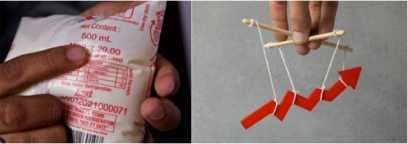
The milk supply chain has been in trouble in several states over the last few months. Industry leaders expect shortages and price hikes to continue until winter. Besides making your next cup of filter kaapi or chai hard on the pocket, this situation reveals a lot about the consequences of government intervention and price distortions.

In his seminal 1945 paper, The Use of Knowledge in Society, economist FA Hayek explained that prices are a vital signal—a decentralised coordination mechanism between dispersed producers and consumers. Increasing prices signal consumers to seek substitutes or rationalise consumption, reducing demand. The same information, in turn, signals producers to increase supply, as they can make more profit. A reduction in prices has the reverse effect on producers and consumers. Eventually, the demand and supply attain equilibrium again. Thus, prices incentivise individuals and firms to make decisions that are in their self-interest but also contribute to society’s overall well-being. The signal called price makes all this magic happen. Prices are “precious”.

This valuable signal loses fidelity when the price system is interfered with. And when governments do this interference, bizarre things happen. The ongoing milk shortage is tailor-made to appreciate Hayek’s insight. Let’s see how.

To be sure, minimum support prices or subsidies for milk producers are popular with governments worldwide. But in India, that’s just the beginning. Classified as an ‘essential’ commodity under the Essential Commodities Act (ECA), 1955, the designation gives governments carte blanche to fix procurement prices, cap consumer prices, and run the supply chain between the producer and the consumer.

Take Karnataka, where milk shortage has been in the news recently.

The Karnataka Milk Federation (KMF) is the second-largest dairy cooperative in India and procures nearly 50% of all the milk supplied by the state’s farmers. What makes the situation complicated and tragicomic is the state government’s role in supply chain. While the system seemed functional in normal circumstances, the cracks surfaced in recent weeks. As the summer season began early this year, demand for milk rose. After all, a glass of buttermilk is a wonderful refresher in the heat. Simultaneously, supply naturally dropped in the summer, as milch animals produce less than usual in the hotter months. A bout of lumpy skin disease further exacerbated the gap between demand and supply this year.

For another product, a market-based price rise would have quickly ironed out this demand-supply gap. But when governments occupy centre stage, prices become sticky political issues, and a series of bizarre events unfold.

First, electoral concerns circle over pricing decisions like vultures.

The government will not want to touch prices with a barge pole because the state elections are due in May. Instead, it tried a roundabout way by making the packet size smaller while retaining the old packet price.

Second, since the administered price rises have not done enough to make the demand-supply gap go away, milk shortages emerge. The rich can afford to buy premium milk at higher prices from other suppliers. But for the poor, the milk packets disappear from shelves.

Instead of paying a slightly higher price until supply rises again, the less-privileged consumers are only left with empty glasses.

Third, the government resorts to blaming private dairies for offering higher prices to dairy farmers. Given the economic situation of farmers, we should have celebrated private players providing a better deal to them. Instead, they become villains in a story where the government is the sole hero. It’s no wonder some dairy farmers in Tamil Nadu emptied milk containers on the road demanding a better procurement price from the state government.

Fourth, a quotidian issue becomes a front for inter-state tensions. The Karnataka government blames dairies in Maharashtra and Tamil Nadu for offering higher prices to farmers within Karnataka. In contrast, the Tamil Nadu government resorted to blaming private companies from Andhra Pradesh. Even the entry of a competitor like Amul that could have quickly reduced shortage gets opposed on the grounds of sub-national pride.

Amazing, the things that happen when governments obstruct a control system called “prices”. Even as this satire unfolds, the root cause of milk shortages isn’t even being discussed. The Bangalore Milk Union president admitted that “many small milk producers have given up on rearing cows as it has become unsustainable”.

Though he doesn’t say why, one reason could be that the 2020 state law banning cow slaughter and frequent attacks on people transporting cattle has discouraged smaller farmers from stepping into this minefield called milk production.

This milk saga reiterates that government intervention in the market must only be done after careful consideration and under specific conditions

Stay Updated

Get the latest dairy industry news directly in your feed.

Prefer Us on Google Search

Swipe to continue reading

Previous Article

Next Article