Latest Blogs
See More
Indian Dairy News


DairyNews7x7
Global Dairy News


DairyNews7x7
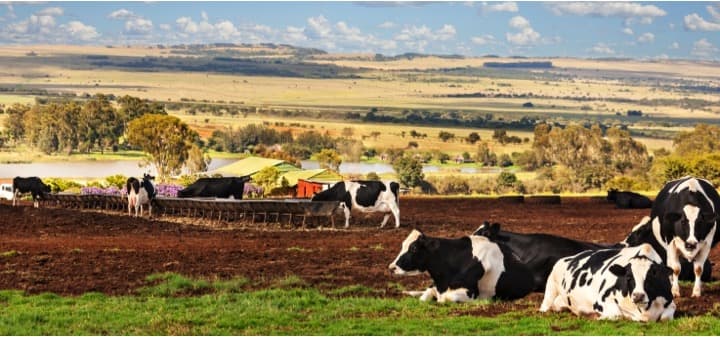
Global milk production is projected to grow at 1.8% p.a. (to 1060 million tonnes by 2031) over the next decade, faster than most other main agricultural commodities. India has been the leading producer and consumer of dairy products worldwide since 1998 with a sustained growth. India is the largest producer of milk and ranked 1st contributing to 23 per cent of global milk production. Milk production in the country has grown at a compound annual growth rate (CAGR) of about 6.2 % to reach 209.96 million tones, which is amounting worth Rs 8.50 Lakh Crore annually, more than the turnover of wheat and rice. Dairying is one of the most important sector and a vast population of around 4.70 lac household and household enterprises in Kashmir Valley own dairy cattle, both in rural and urban areas and the annual milk production of Union Territory is around 2.6 million tones, with the per capita availability of more than 570 gm per day (National per capita availability is 427 gm per day).
The demand for animal based food is expected to double during the first half of this century and it is apparent that the livestock sector will need to expand. Due to increase in population, rise in per capita income, changing lifestyle, food habits, export opportunities etc., the demand for milk and milk products is expected to continue and rise. It is expected that there would be 25% increase in demand for milk by 2025 in developing countries. Milk and dairy products constitute critical components in the diets of many globally. While considering the growing challenges of hunger and malnutrition, food accessibility and nutritional disparity, it is clear that many people in the world could benefit from sustainable dairying. Dairying is an occupation subsidiary to agriculture and an important source of livelihood for small, marginal farmers and landless labourers. Dairy cattle is considered as a popular asset especially in rural areas because they support livelihoods, provide regular source of food (dairy products) and income that can be obtained from selling dairy products, the whole animal or they can even be used as collateral for loans. Dairying provides economic stability; decent employment and means of fast returns.
No doubt animal based food industry is one of the contributors to emissions and climate change but the sector has focused in on this concern to become carbon neutral within the next few decades. In recent years, dairy production has begun to face sharper criticism, for their impacts on diet and health, animal welfare, environmental impacts, carbon emissions etc. There are variety of innovative technologies, climate smart farming as well as traditional solutions to easing the pressure on the environment from livestock sector, while increasing productivity and serving an ever-growing demand for animal-protein products. Adopting the right policies, such as penalizing carbon emissions and rewarding carbon sequestration, have the potential to reduce their net emissions by 89% according to recent studies.
Dairying being a way of life, is continuously finding innovative ways to improve sustainability, increasing energy efficiencies, reducing carbon foot-print, reducing/ recycling water, saving energy, taking into consideration animal welfare issues, climate conscious approaches and lowering operating costs for dairy farms while producing nutritious food for 7.2 billion people and supporting more than one billion livelihoods. Dairy farmers use manure not only for fertilizing, but also to generate biogas for clean energy by channelizing the same through circular bioeconomy. This is especially beneficial in rural areas, where there is no access to other fossil fuel based energy sources. Now it can’t be emphasized enough that institutional support is essential for the adoption of appropriate technologies for dairy production; processing of quality dairy products; livestock feeding and housing; growing of feeds and fodder; improved reproductive techniques; training and capacity building of all stake-holders, healthcare and veterinary services, etc. To encourage the trend, Administration is working tirelessly in implementing various initiatives viz., Integrated Dairy Development Scheme (IDDS), Dairy Processing and Infrastructure Development Fund’s (DIDF) scheme and Animal Husbandry Infrastructure Development Fund (AHIDF) scheme under which dairy cooperatives and private players can avail incentives for installing renewable energy infrastructure in the sector, thereby popularizing green innovations thus paving way to carbon neutral dairy farming.
Sustainability in dairying would help in protecting natural resources thereby ensuring the land’s preservation for future generations and can make net zero carbon neutrality a reality. Embracing regenerative agricultural practices and innovative technologies, is key to make dairying an environmental solution while providing wholesome and nutritious dairy products to feed the world. Focusing on scaling climate-smart initiatives is crucial for attaining net zero environmental emissions by 2050, and will help reduce the carbon footprint. When these are coupled with climate financing, market-based approaches and supportive policies, they can create an economically viable path towards increasing farmer livelihoods and helps in fighting environmental crisis at the pace the world demands today.
Considering the importance of limiting global warming, SDGs and net-zero emissions, Nestle and Fonterra (New Zealand based global dairy nutrition co-operative owned by 9000 livestock owning households) are collaborating to start a roadmap for mitigating environmental footprint, thereby developing commercially viable farms with net zero carbon emissions. This partnership aims to cut emissions by 30% by mid-2027 to reach net zero emissions in a decade. Recently NDDB, Suzuki and Banas dairy joined hands together for deploying dung based bioCNG plant for augmenting farmer’s income through cattle manure sale and transformation towards low-carbon behavior. Such type of projects needs to be replicated and encouraged by way of actively involving all stake-holders for developing climate resilient systems whilst protecting livelihoods of people and building sustainable animal based food production systems that can feed the world.
If net zero emissions are possible for dairy, other types of animal protein production systems shouldn’t be that far behind. By leading the charge on committing to net zero emissions through operational change, technology implementation, market-based solutions and advocating for effective policy change, the dairy industry has the opportunity to pioneer change in the food production systems and demonstrate a pathway to a greater economic and environmental progress. If this initiative can lead other types of animal protein production to significantly reduce carbon footprints, we could begin to take the environmental impact out of the equation in making decisions about what we eat.