Logo
IndianGlobalBlogsPublicationsPodcastsMarketAboutContact
Logo
IndianGlobalBlogsPublicationsPodcasts
7News
Mandatory Daily Record of Production and Raw Material UtilisationHeritage Foods inaugurates new Ice Cream PlantFSSAI makes registration to all milk vendors in IndiaGujarat Ice Cream Makers Face Cone ShortageSummer Heat to Stress India’s Dairy Cold Chain

Indian Dairy News

FSSAI Licences Get Perpetual Validity
Mar 14, 2026

FSSAI Licences Get Perpetual Validity

India’s food regulator, the Food Safety and Standards Authority of India (FSSAI), has announced a major reform granting perpetual validity to food licences and registration certificates, eliminating t...Read More

Dairy Sector a ‘Safety Net’ for Farmers: NABARD
Mar 14, 2026

Dairy Sector a ‘Safety Net’ for Farmers: NABARD

The Chairman of National Bank for Agriculture and Rural Development, Shaji K V, has highlighted the crucial role of India’s dairy industry in protecting rural livelihoods, describing it as a “safety n...Read More

Bihar Dairy Officer Arrested in ₹30,000 Bribery Case
Mar 14, 2026

Bihar Dairy Officer Arrested in ₹30,000 Bribery Case

A field officer of the district dairy development department in Bihar was arrested by the Vigilance Investigation Bureau (VIB) for allegedly accepting a bribe of ₹30,000 in West Champaran district. Th...Read More

DairyNews7x7
Advertisement

Latest Blogs

See More
Mandatory Daily Record of Production and Raw Material Utilisation
Mar 14, 2026

Mandatory Daily Record of Production and Raw Material Utilisation

I recently reviewed the notification issued by the Food Safety and Standards Authority of India in the context of Schedule IV of the Food Safety and Standards (Licensing and Registration of Food Busin...Read More

FSSAI makes registration to all milk vendors in India
Mar 13, 2026

FSSAI makes registration to all milk vendors in India

The recent advisory issued by Food Safety and Standards Authority of India (FSSAI) mandating registration of milk vendors is a timely and progressive step towards strengthening traceability and accou...Read More

Rajahmundry Milk Incident: Accident or Adulteration?
Mar 10, 2026

Rajahmundry Milk Incident: Accident or Adulteration?

The recent editorial “Bitter Milk” published by The Hindu raises important concerns about food safety in India. The editorial deserves appreciation for attempting to broaden the conversation and under...Read More

Milk Prices Rise in South & West: Is North Next?
Mar 05, 2026

Milk Prices Rise in South & West: Is North Next?

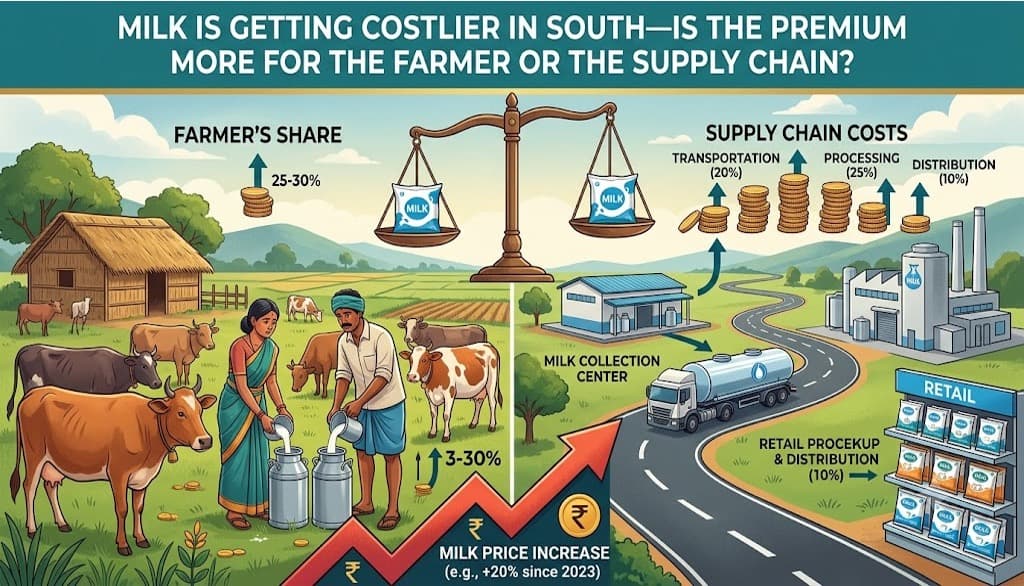
The recent round of retail milk price increases across South India and Maharashtra is no longer an episodic adjustment but a clear signal of structural stress building up in India’s milk economy. Over...Read More

Global Dairy News

Global Dairy Commodity Prices Show Signs of Rally
Mar 14, 2026

Global Dairy Commodity Prices Show Signs of Rally

Global dairy commodity prices have shown a rally in the first quarter of 2026, particularly for products originating from Australia and New Zealand, according to a new Q1 Global Dairy Quarterly report...Read More

How Walmart Keeps Great Value Milk So Affordable
Mar 14, 2026

How Walmart Keeps Great Value Milk So Affordable

Retail giant Walmart has managed to keep the price of its private-label Great Value milk significantly lower than many competing brands through a vertically integrated dairy supply chain and direct co...Read More

Lactose-Free Milk Seen as Growth Driver in Coffee
Mar 13, 2026

Lactose-Free Milk Seen as Growth Driver in Coffee

Lactose-free milk is emerging as a major growth opportunity for the dairy industry, particularly in the rapidly expanding coffee and café segment. A recent US-based study highlighted that lactose-free...Read More

DairyNews7x7
Advertisement
Dairy News 7x7

Your trusted source for all the latest dairy industry news, market insights, and trending topics.

FOLLOW US
CATEGORIES
  • Global News
  • Indian News
  • Blogs
  • Publications
  • Podcasts
SUBSCRIBE TO OUR NEWSLETTER

Stay informed with the latest updates and trending news in the dairy industry.

No spam, unsubscribe at any time

GET IN TOUCH
C-49, C Block, Sector 65,
Noida, UP 201307
+91 7827405029dairynews7x7@gmail.com

© 2026 Dairy News 7x7. All Rights Reserved.

Terms of ServicePrivacy Policy
Prefer Us
Prefer Us

Nutritional Strategies to Reduce Methane Emissions in Dairy Production

By DairyNews7x7•Published on August 16, 2024

Nutritional Strategies to Reduce Methane Emissions in Dairy Production
Prefer on

Methane - Green House Gas

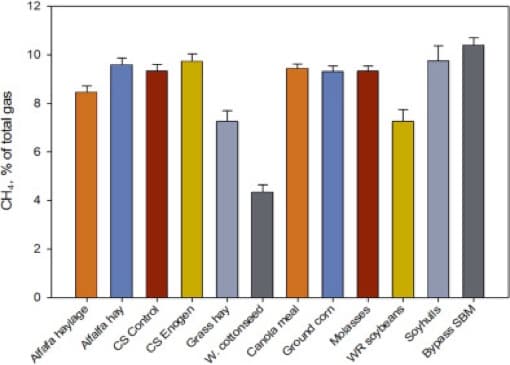
Methane, primarily from enteric fermentation and manure management, is the most significant greenhouse gas produced by ruminant livestock. Reducing methane emissions from livestock could substantially lower the carbon footprint of animal products and contribute to mitigating climate change. Although options may be limited, certain feeding practices can significantly reduce livestock enteric methane (CH₄) emissions. These practices can generally be divided into two categories: diet manipulation and feed additives.

In the first category, selecting specific forages and improving forage digestibility are likely to reduce enteric CH₄ emissions, though the impact, compared to current forage practices in the U.S. dairy industry, may be minimal to moderate. Increasing the dietary starch concentration presents another opportunity to decrease CH₄ emissions, but such interventions must be balanced against potential reductions in milk fat yield and farm profitability. Similarly, dietary lipids and oilseeds have been shown to reduce CH₄ emissions, but they can also negatively affect rumen fermentation, feed intake, and milk production and composition.

Feed additives as Methane inhibitor

There is strong scientific evidence supporting the effectiveness of certain feed additives, particularly the CH₄ inhibitor 3-nitrooxypropanol (3-NOP), in significantly reducing methane emissions from dairy and beef cattle. However, further research is needed to understand the long-term effects and external factors that influence the efficacy of this inhibitor. The practicality of applying other short-term mitigation practices, such as macroalgae, on a large scale is still uncertain.

More research is required to explore how different nutritional mitigation practices, including diet manipulation and feed additives, interact with one another and whether there is potential for synergy among feed additives with different mechanisms of action. Additionally, the impact of diet on manure composition and subsequent greenhouse gas emissions during storage (e.g., emission trade-offs) has not been thoroughly investigated.

Figure thumbnail gr3

Strategies for the future

Overall, if currently available mitigation practices prove to be consistently effective, and new, potent, and safe strategies are developed, nutrition alone could potentially achieve up to a 60% reduction in enteric CH₄ emissions from U.S. dairy farms. Diet manipulation, such as increasing the proportion of concentrate feeds and improving forage quality and digestibility, is a viable option to reduce enteric CH₄ yield and intensity, but the reduction is unlikely to exceed 10% to 15%. Further reductions in CH₄ emissions are likely to come from feed additives.

While bromoform-based macroalgae have shown promise, their practicality and consistency need further research, leaving 3-NOP as the most viable option for significant reduction of enteric CH₄ emissions in dairy operations. Continued research is needed to address questions around the consistency of these effects, potential rumen adaptation, and the broader impact of animal diets on manure composition and greenhouse gas emissions. If all current and future mitigation practices are effective, nutrition alone could deliver substantial reductions in enteric methane emissions from intensive dairy production systems.
Read more at

Advances in nutrition and feed additives to mitigate enteric methane emissions by A.N. HristovOpen AccessDOI:https://doi.org/10.3168/jds.2023-24440

Stay Updated

Get the latest dairy industry news directly in your feed.

Prefer Us on Google Search

Swipe to continue reading

Previous Article

Next Article